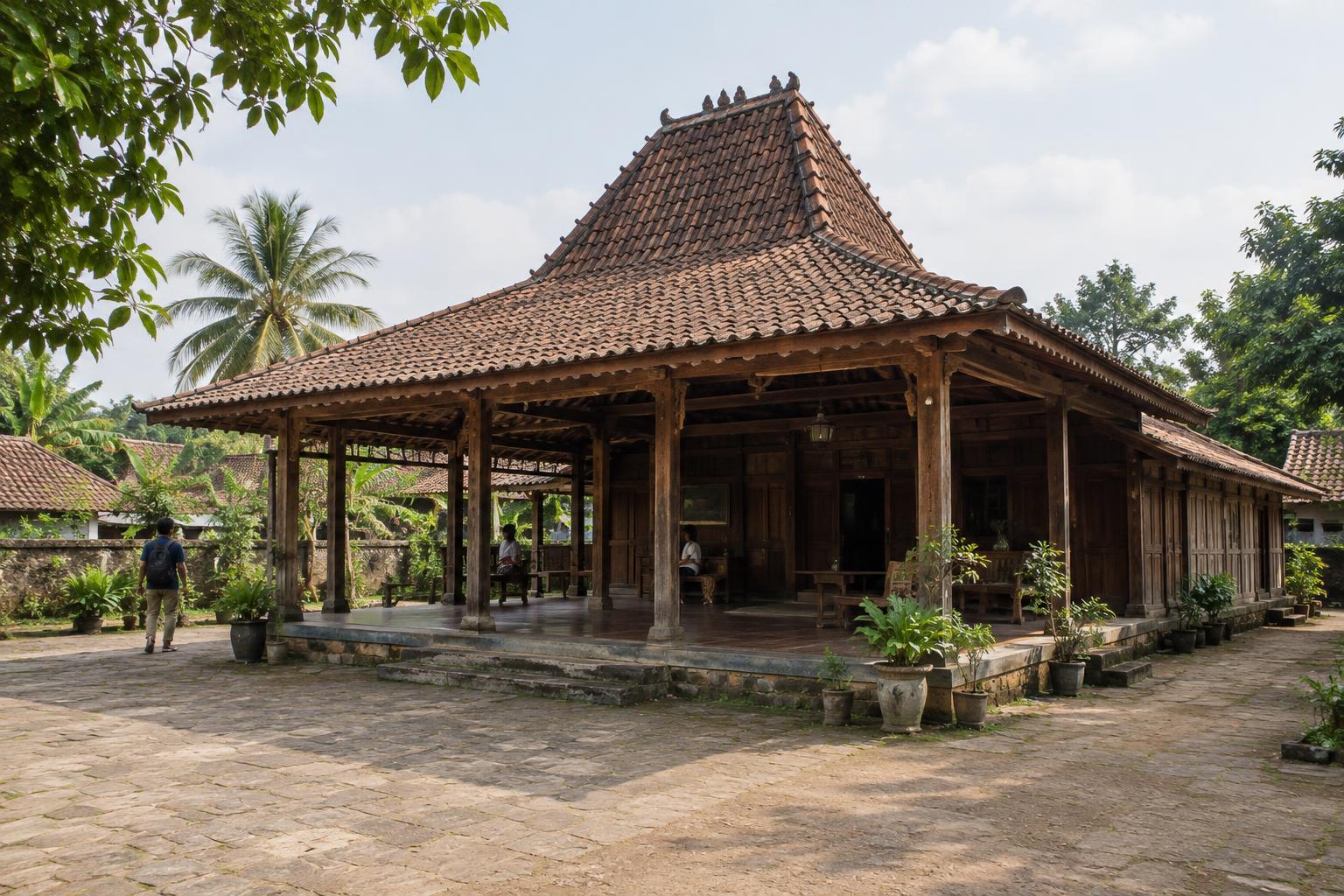
Cultural HeritageTraditional Javanese houses can be understood as more than distinctive rooflines. This guide explains what to notice in a joglo or limasan, how spaces may shape a visit, and why no single house stands for every household in Java.
Read article · 3 min↗
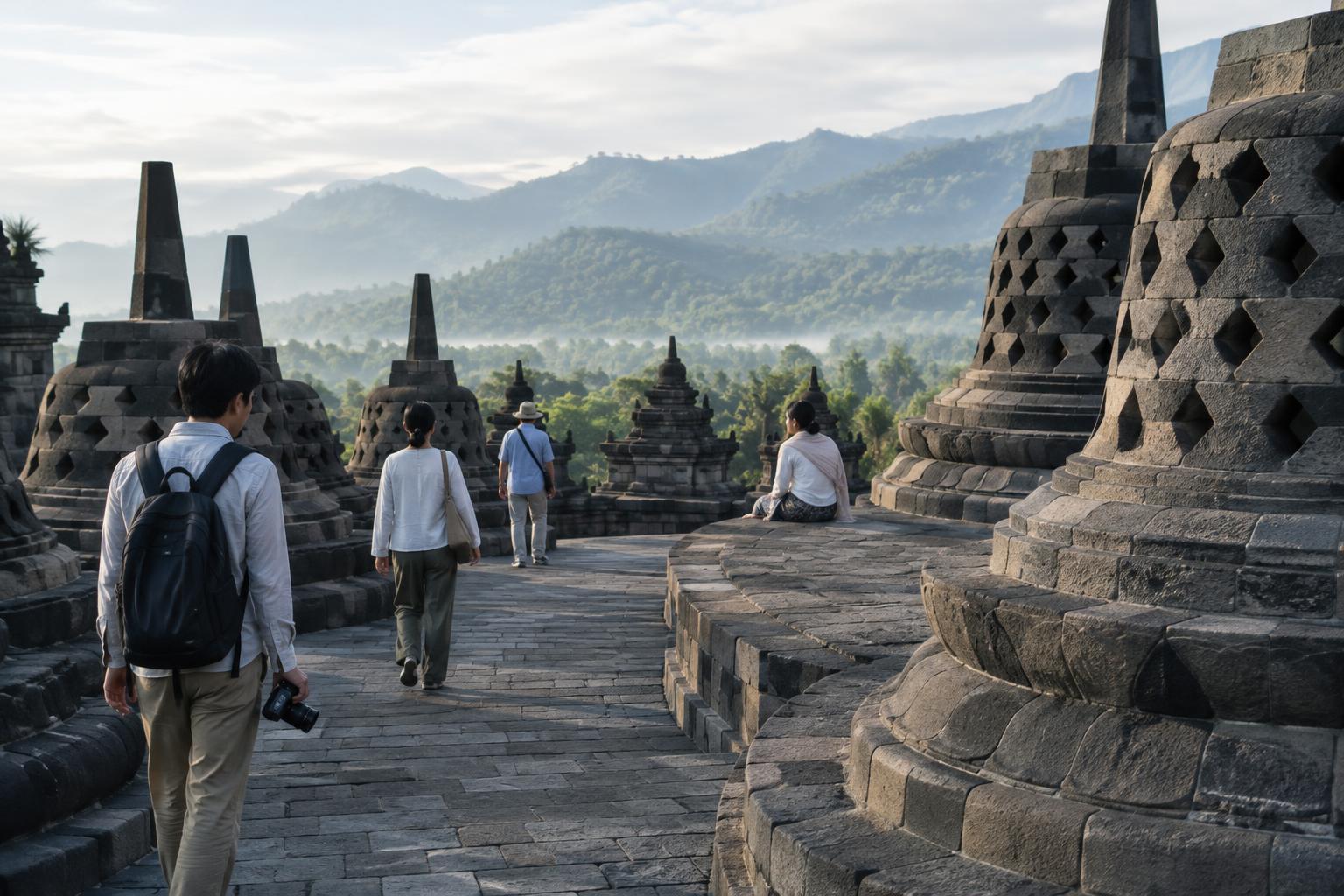
Cultural HeritageJava’s sacred places include active houses of worship, historic temple complexes and pilgrimage sites. This guide offers practical ways to dress respectfully, decide when to take a photograph and avoid disrupting the people who use these spaces.
Read article · 4 min↗
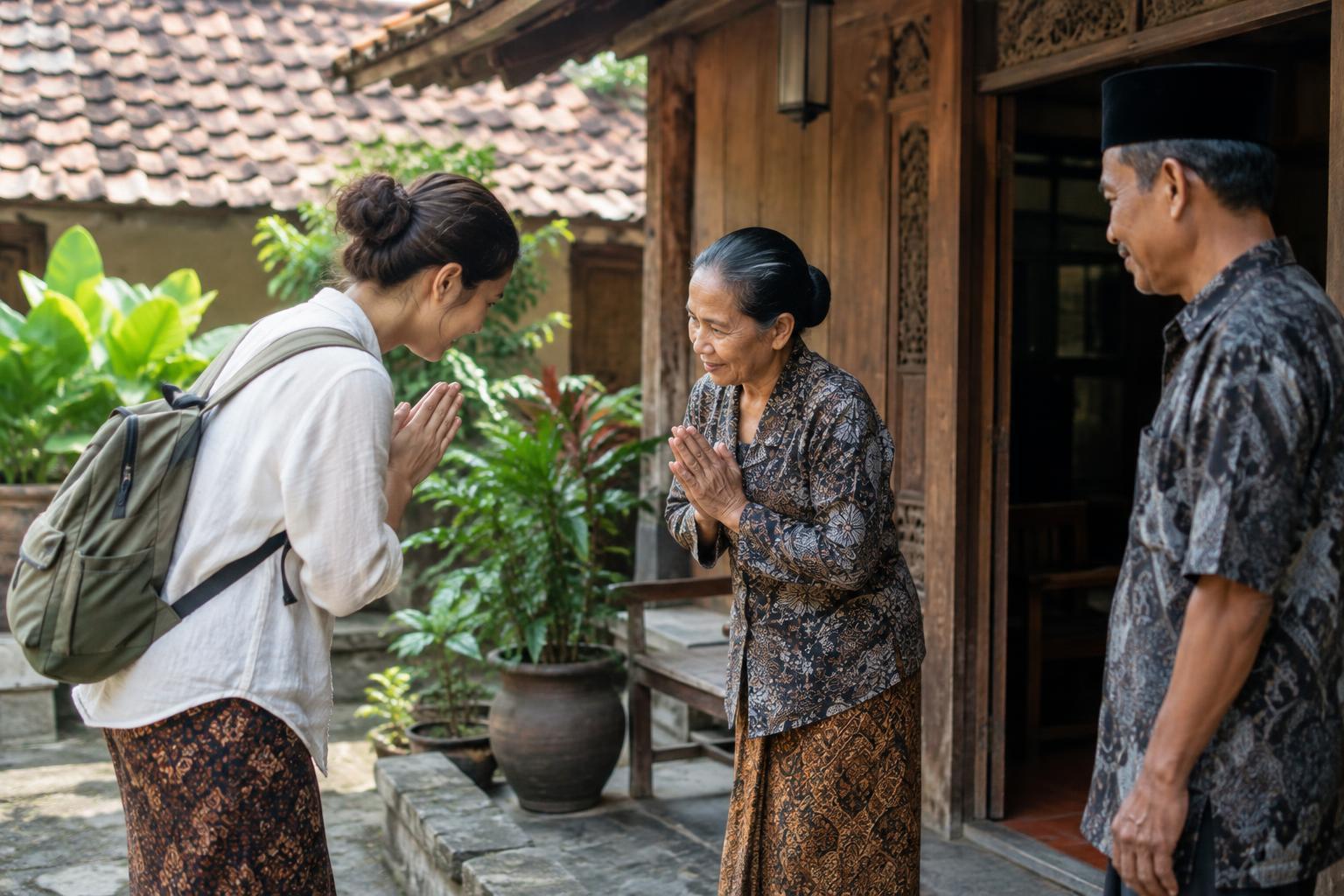
Cultural HeritageJavanese speech levels can make a simple greeting feel unexpectedly complicated. This practical guide explains where respectful language may matter, why Indonesian is often a good choice for visitors, and how to respond thoughtfully when you are unsure what to say.
Read article · 4 min↗
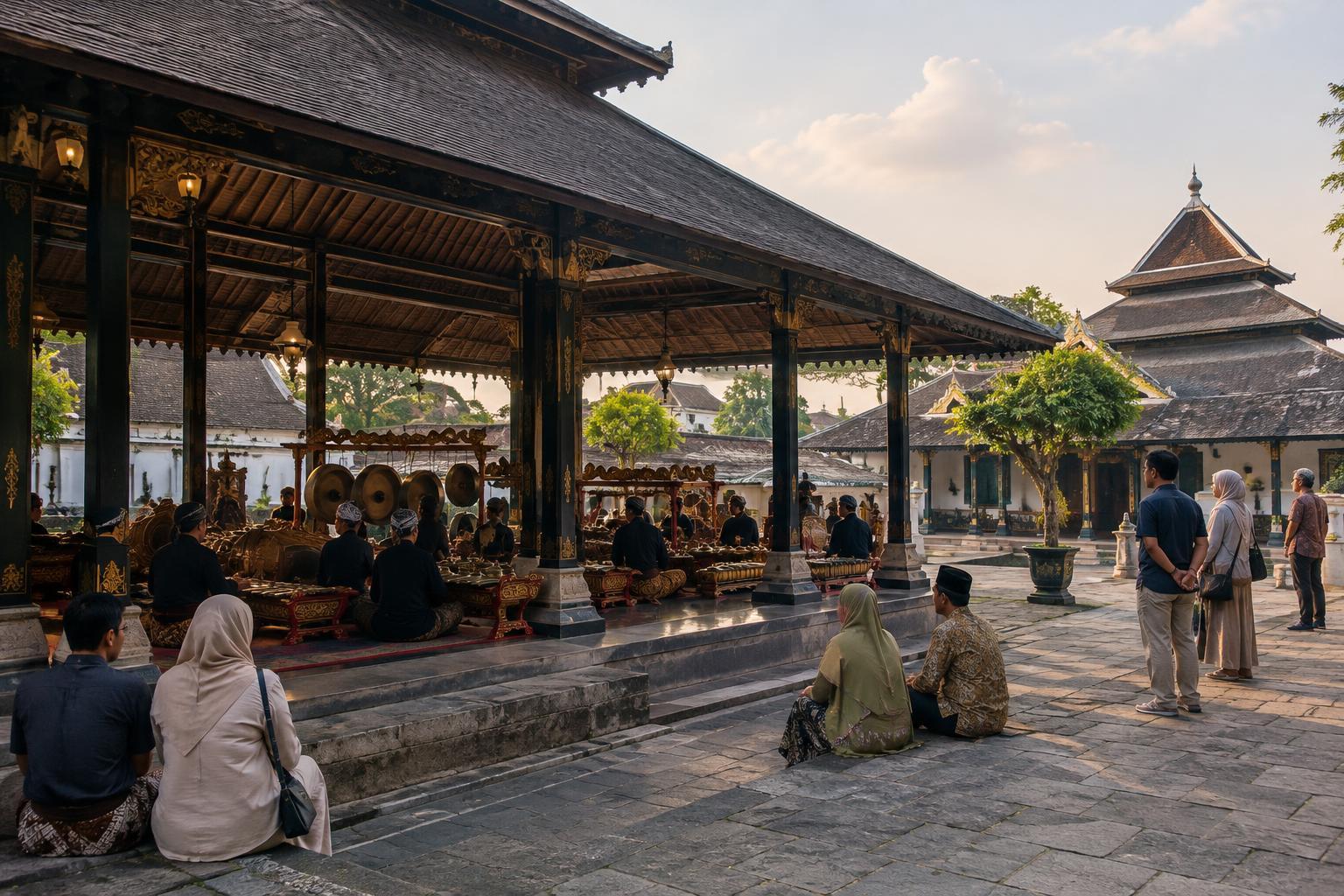
Cultural HeritageSekaten brings together Islamic commemoration, Javanese court traditions and public gatherings. Learn how to understand its layered history, what visitors may encounter in Yogyakarta and Surakarta, and how to observe respectfully.
Read article · 4 min↗
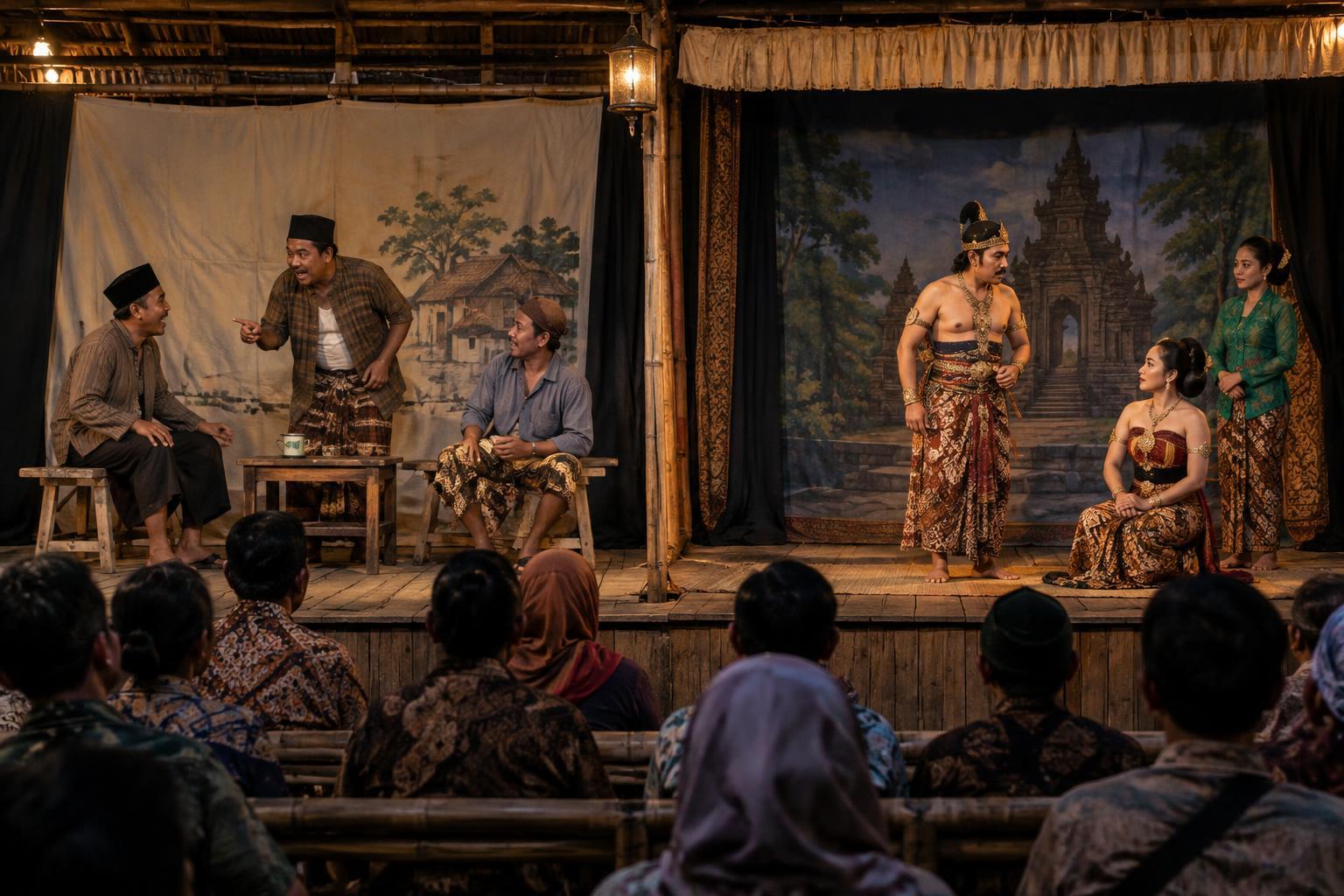
Cultural HeritageLudruk and ketoprak both bring Javanese stories to the stage, but they differ in regional roots, familiar settings, language and performance style. This guide offers a way to recognize each tradition and enjoy a show even if you do not understand every line.
Read article · 4 min↗
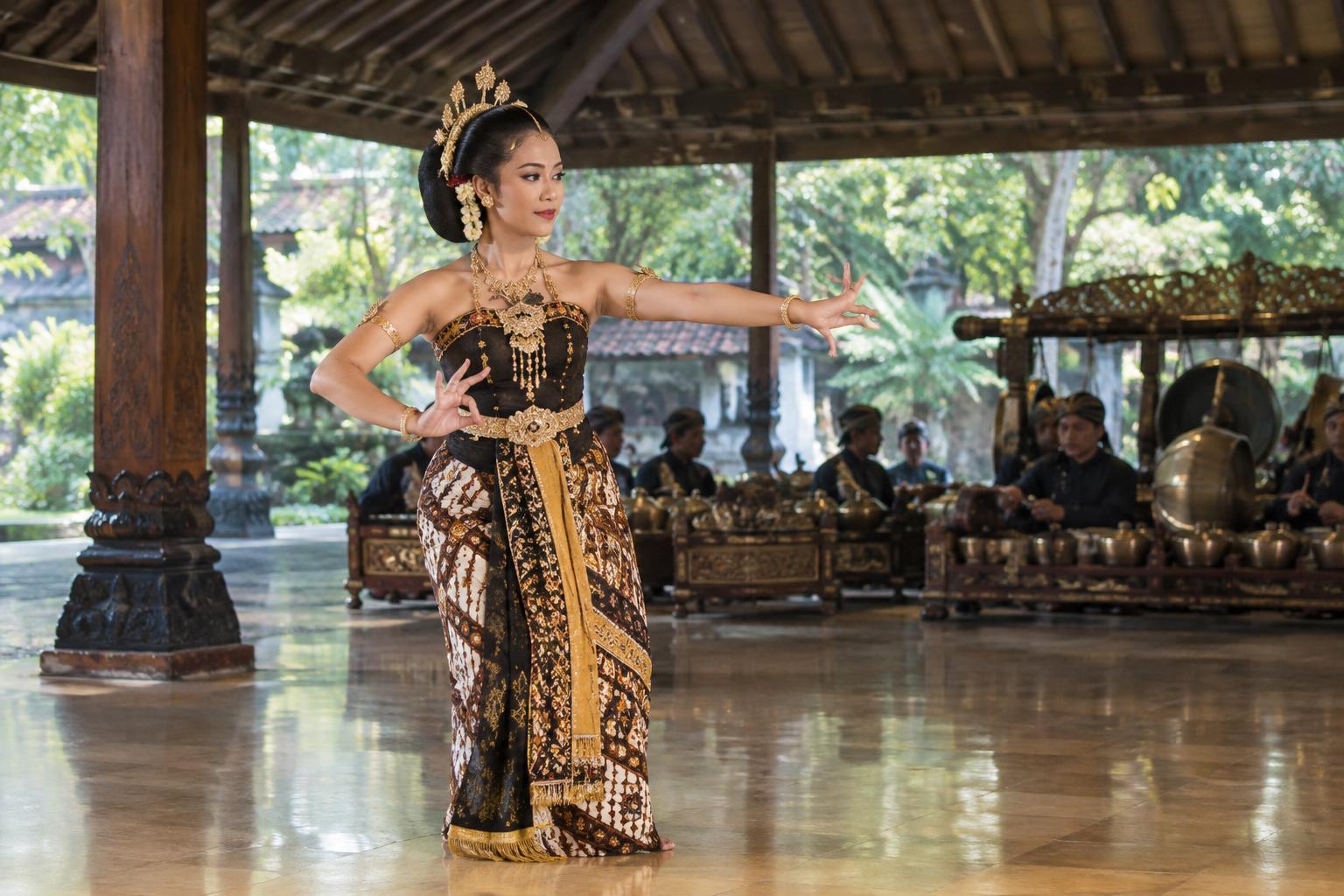
Cultural HeritageClassical Javanese dance rewards patient watching. Learn how controlled movement, elaborate dress and gamelan accompaniment work together, and how to approach a performance with curiosity and respect.
Read article · 4 min↗
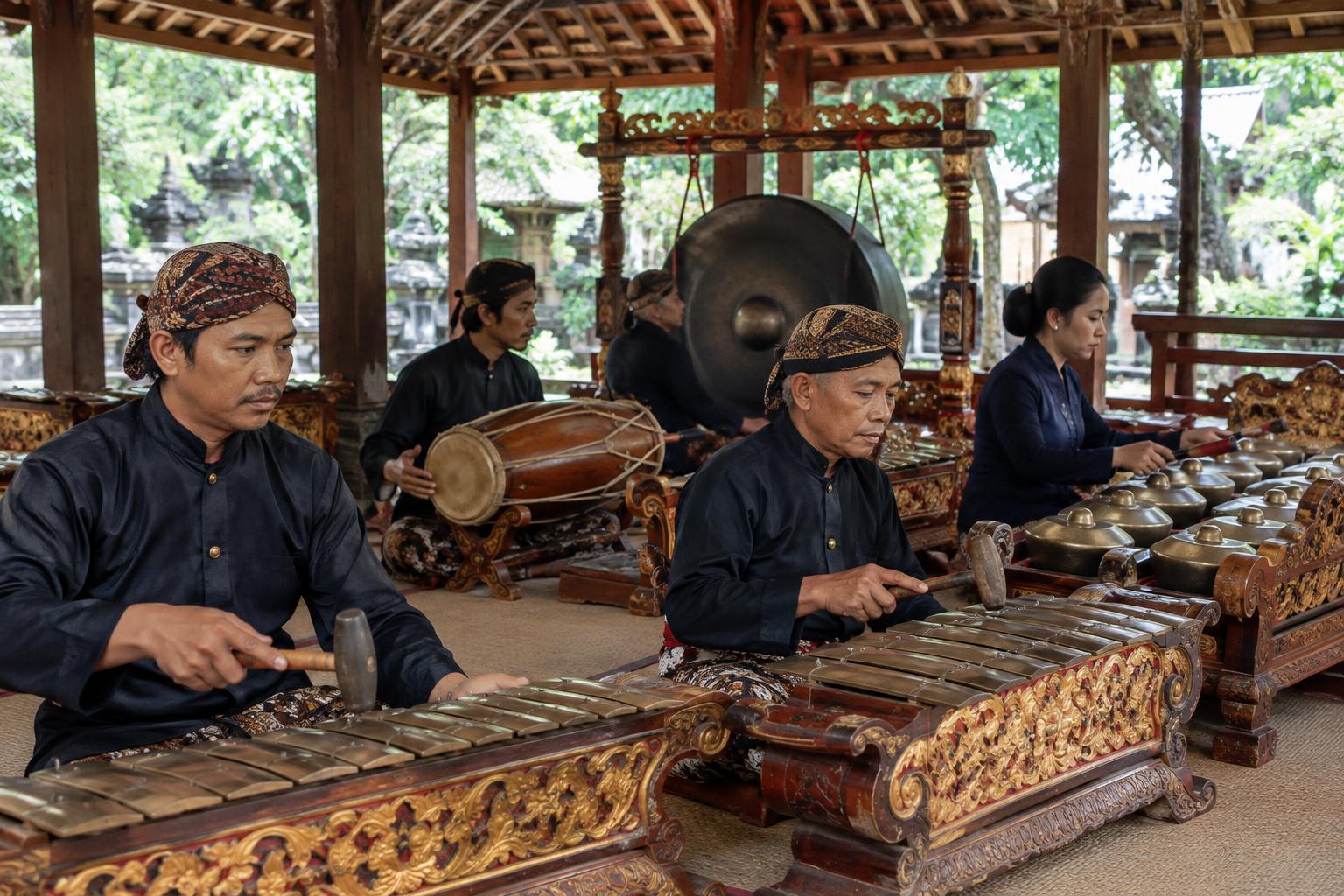
Cultural HeritageA Javanese gamelan performance is built from interlocking roles rather than one instrument carrying the whole piece. Learn how melody, drums and gongs shape the music, and what to listen for at a live performance.
Read article · 3 min↗
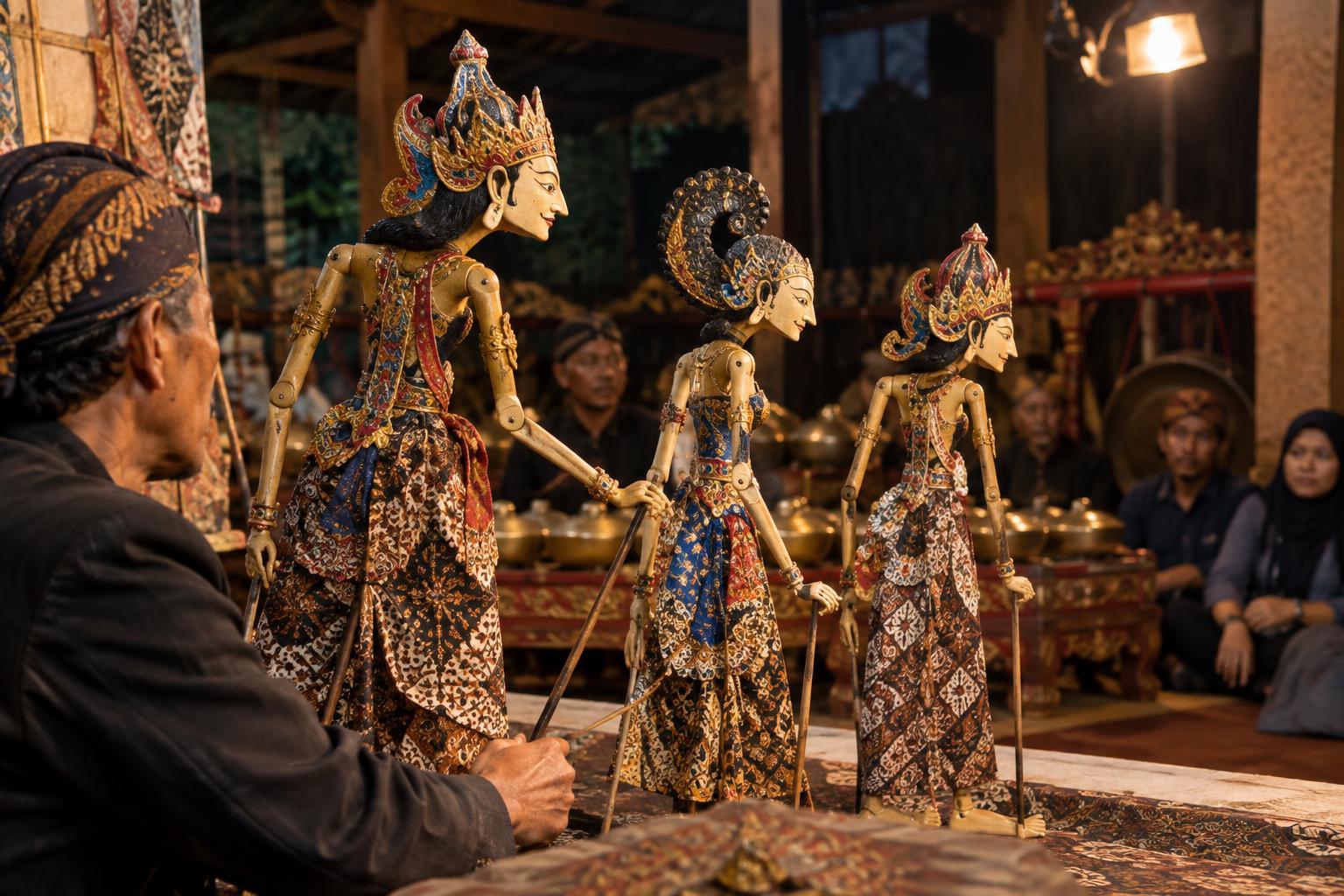
Cultural HeritageWayang golek brings carved wooden puppets, music, humor and storytelling together in West Java. Learn what the puppets do, how the dalang guides a performance and how to enjoy the experience even if you do not speak Sundanese.
Read article · 3 min↗
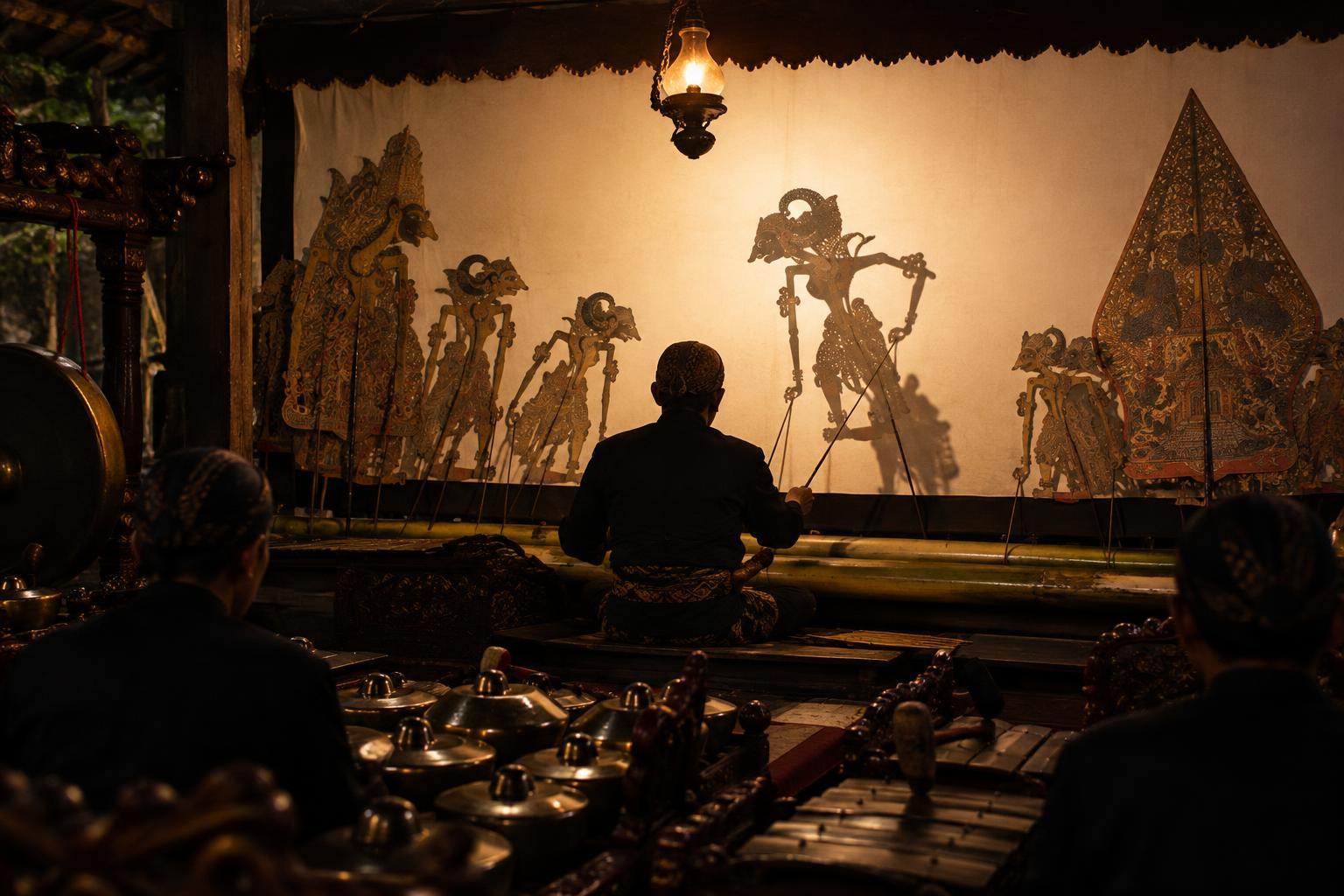
Cultural HeritageA first-time guide to Javanese wayang kulit: how a shadow-puppet performance works, which characters to look for, what the music does, and how to enjoy the experience even without understanding every word.
Read article · 3 min↗
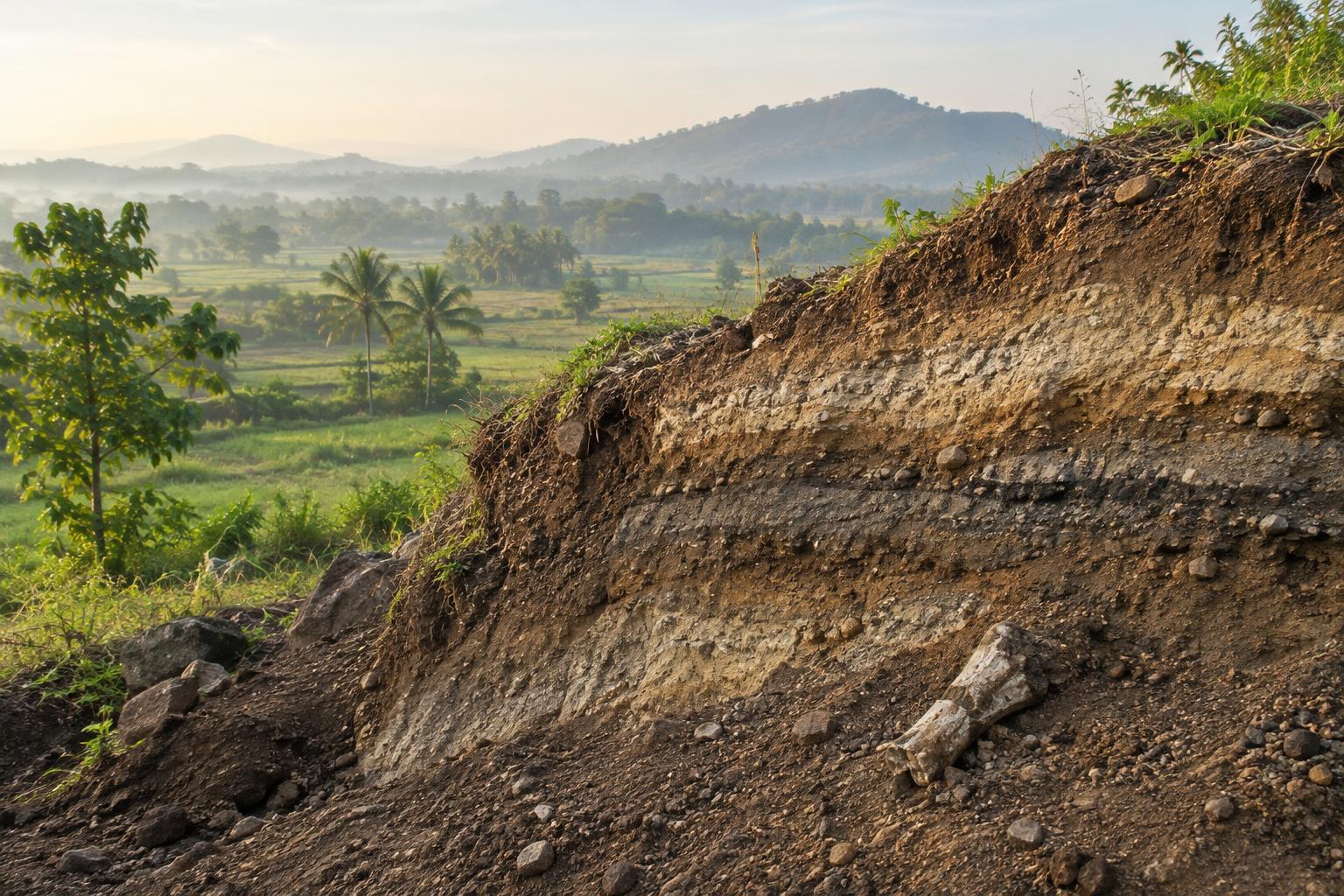
Cultural HeritageSangiran is more than a place to see ancient bones. Its fossils, stone tools and layers of earth help researchers piece together how early humans lived in Java’s changing landscapes. This beginner’s guide explains what visitors can learn—and what the evidence cannot tell us.
Read article · 3 min↗
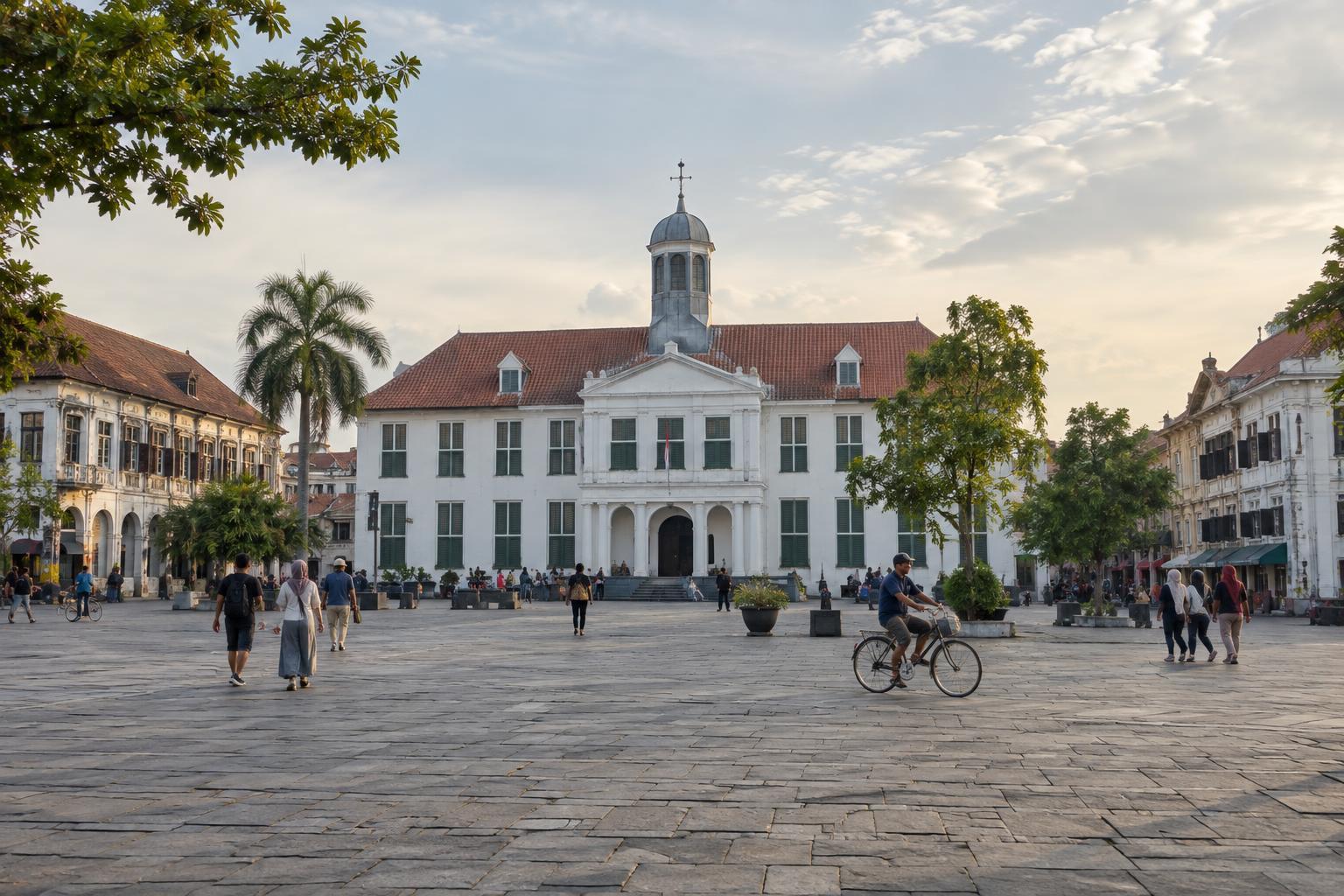
Cultural HeritageKota Tua is more than a collection of old buildings. Its square, street grid, canals and varied facades offer clues to how colonial Batavia was planned, used and changed. This guide suggests what to look for—and how to make room for the histories a preserved streetscape cannot show on its own.
Read article · 4 min↗
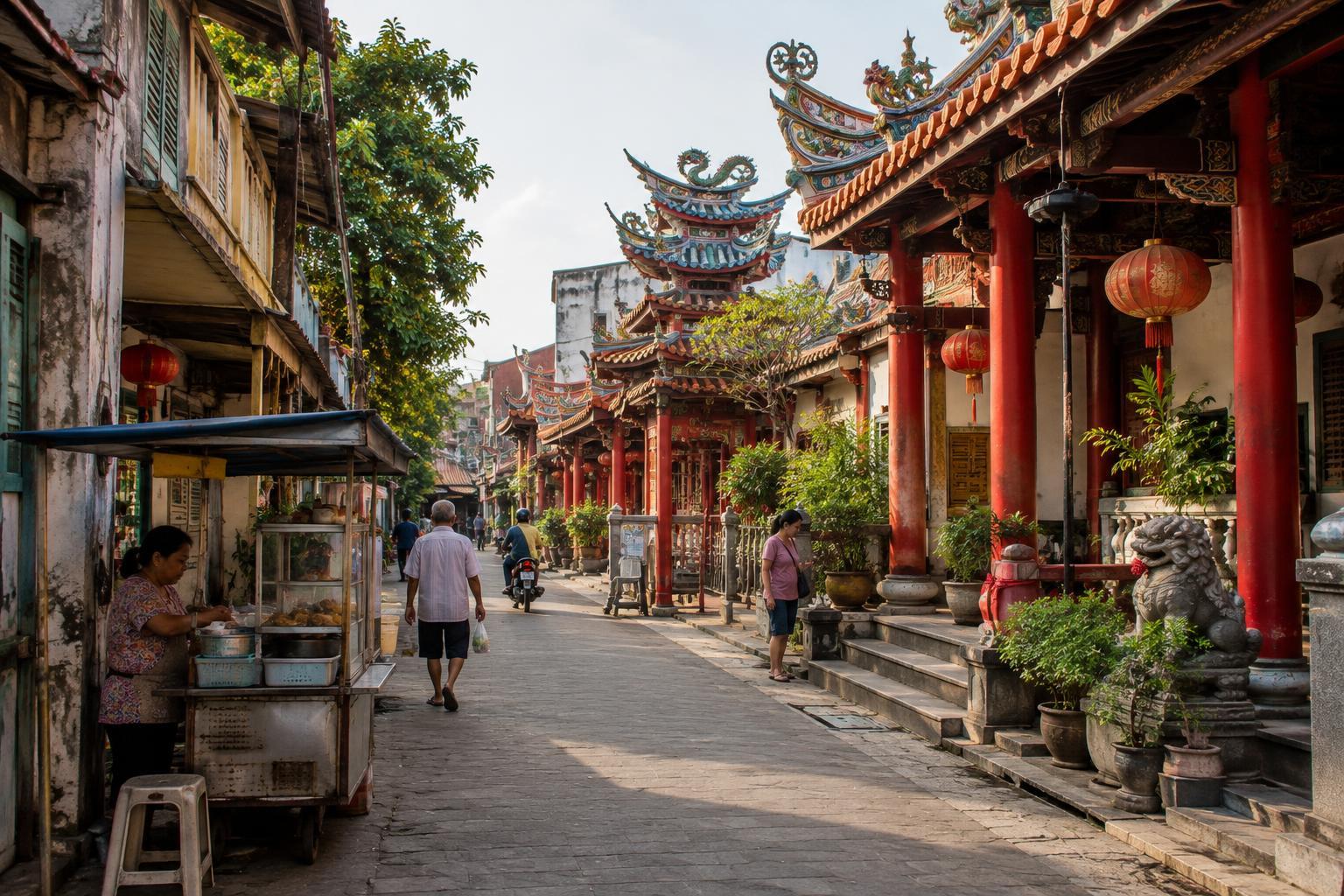
Cultural HeritageExplore Semarang’s Chinese heritage through the lanes of Pecinan, the city’s temples, familiar foods and living traditions. This guide offers context for a thoughtful visit without treating a working neighborhood as a museum.
Read article · 3 min↗
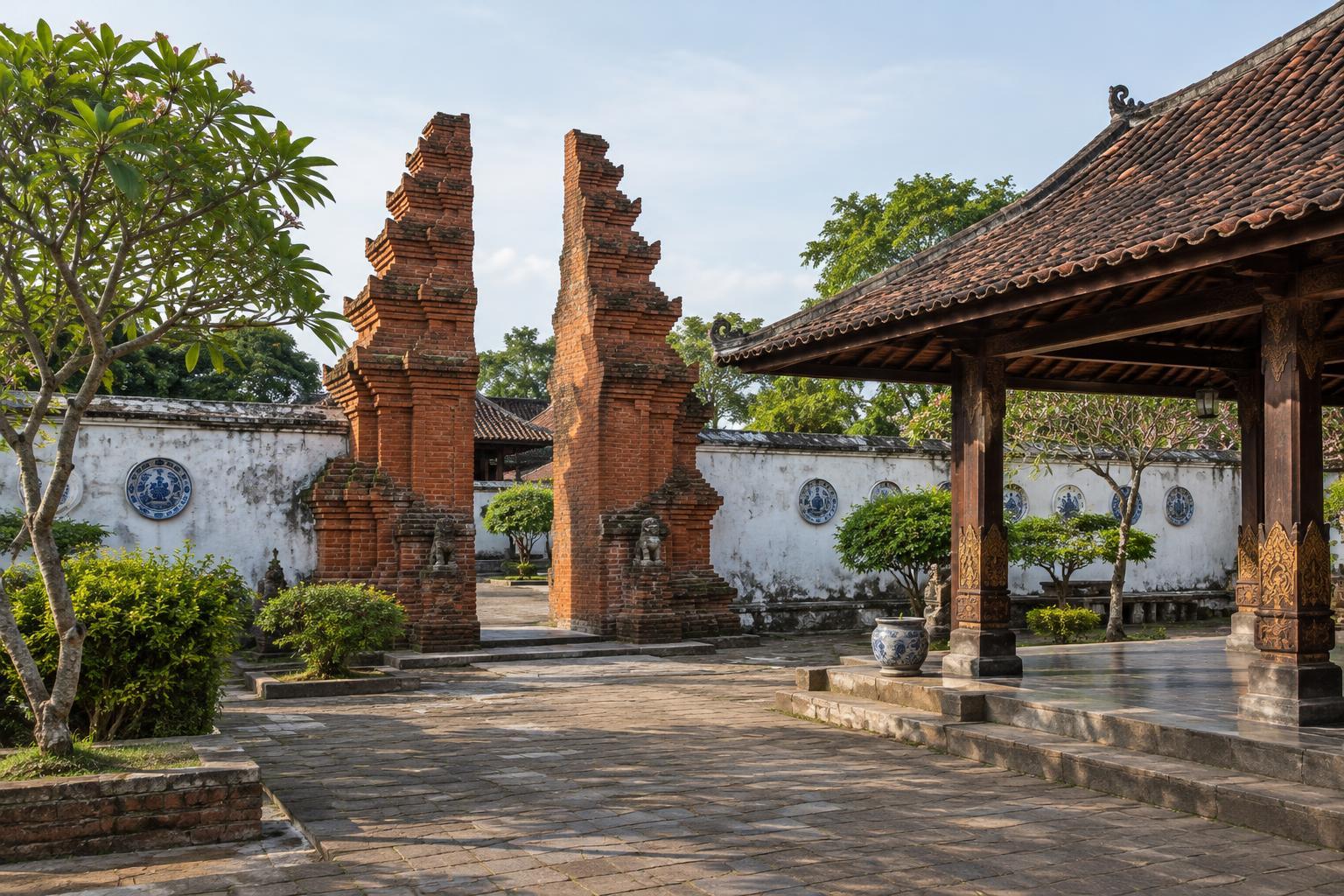
Cultural HeritageCirebon’s royal palaces bring together court traditions and design ideas shaped by the city’s coastal connections. Learn what to notice at Keraton Kasepuhan, Keraton Kanoman and Keraton Kacirebonan, and how to visit their historic spaces with care.
Read article · 4 min↗
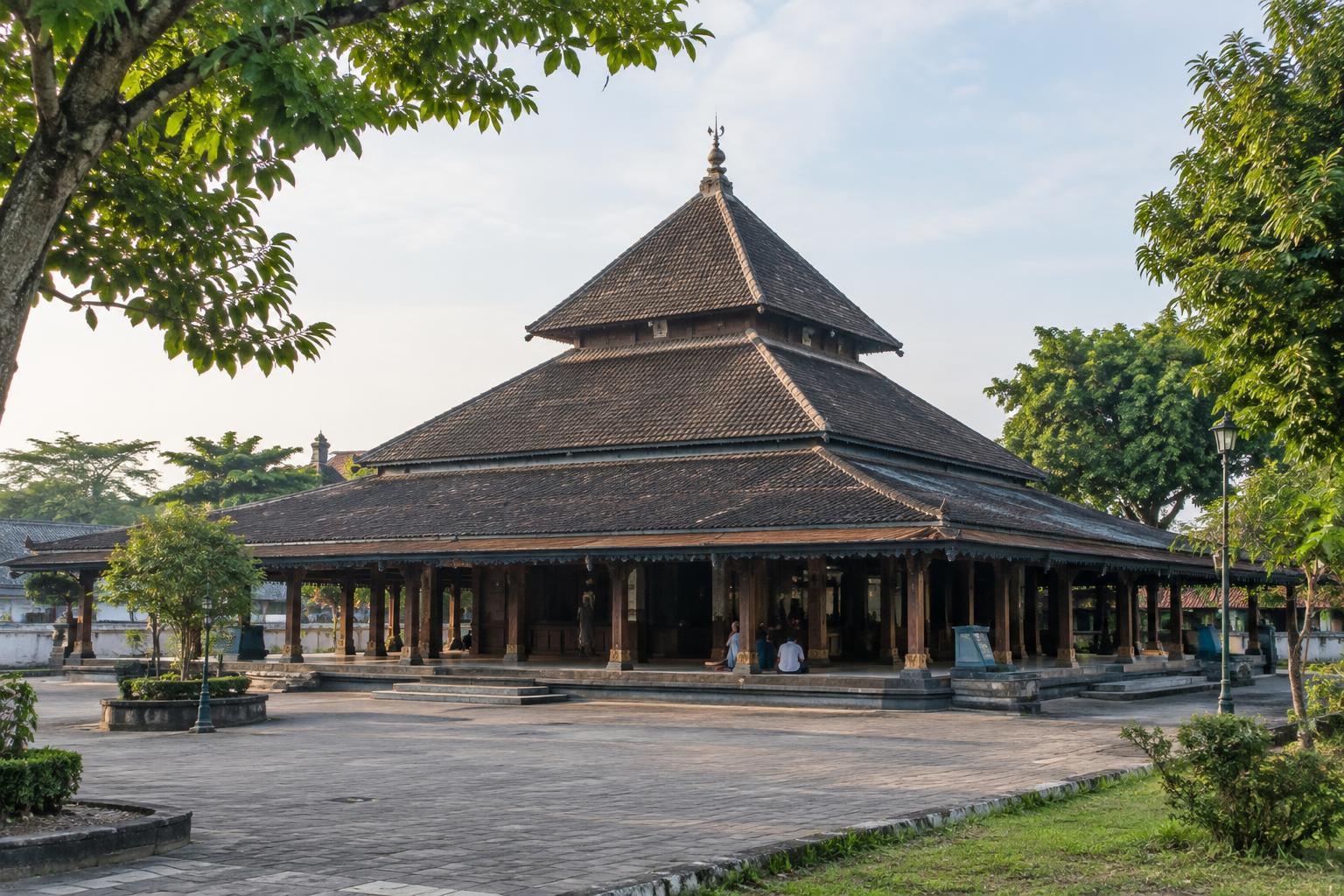
Cultural HeritageDemak’s Great Mosque is a place of worship and a landmark in the story of Islam in Java. Its layered roof, timber pillars and open spaces offer a way to see how familiar Javanese building traditions were adapted for a mosque. Here is what to notice—and how to visit with care.
Read article · 4 min↗
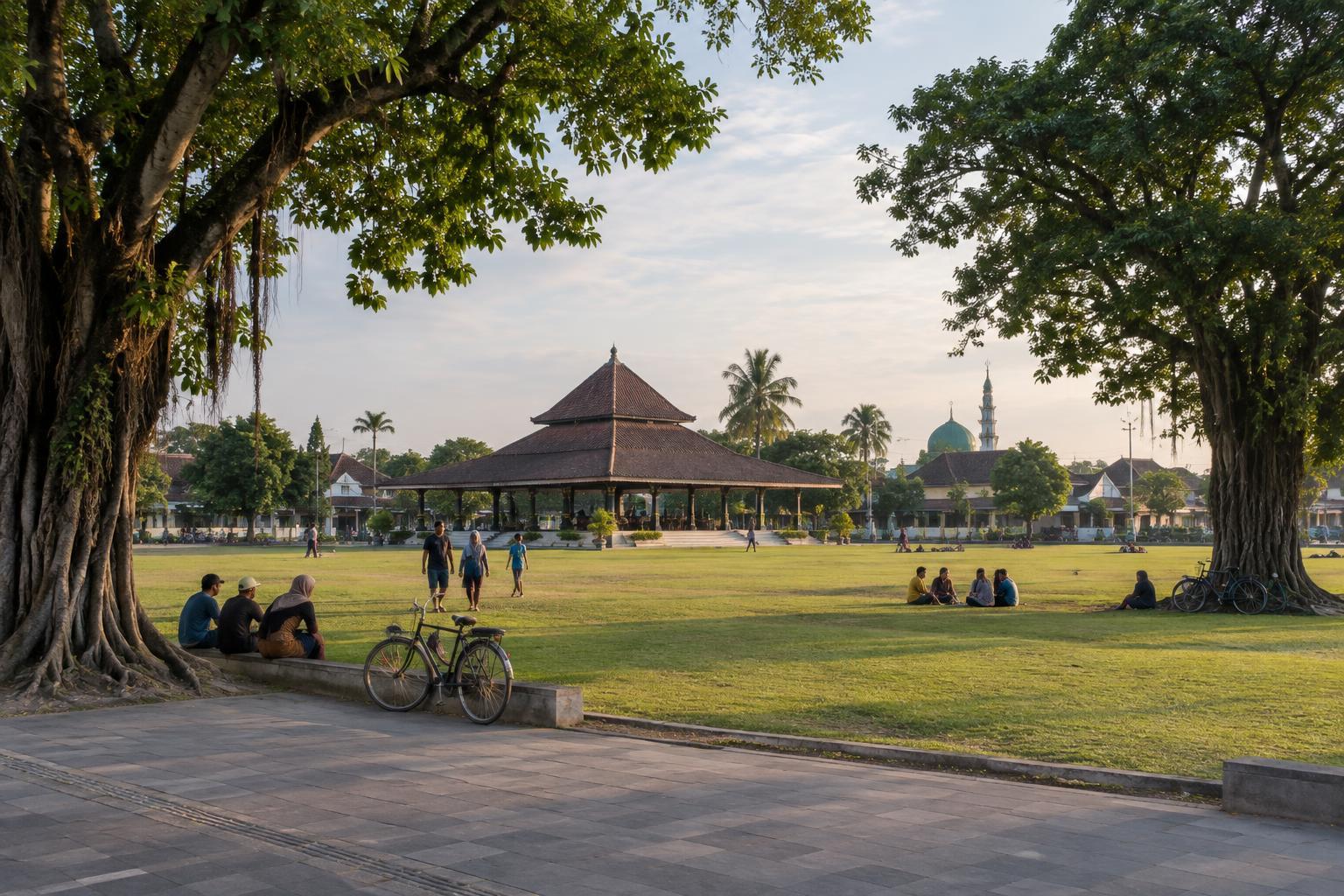
Cultural HeritageAn alun-alun can look like a simple patch of open ground, but it often reveals how a Javanese town has gathered, governed and changed. Learn what to notice around the square and how to enjoy its everyday life respectfully.
Read article · 4 min↗
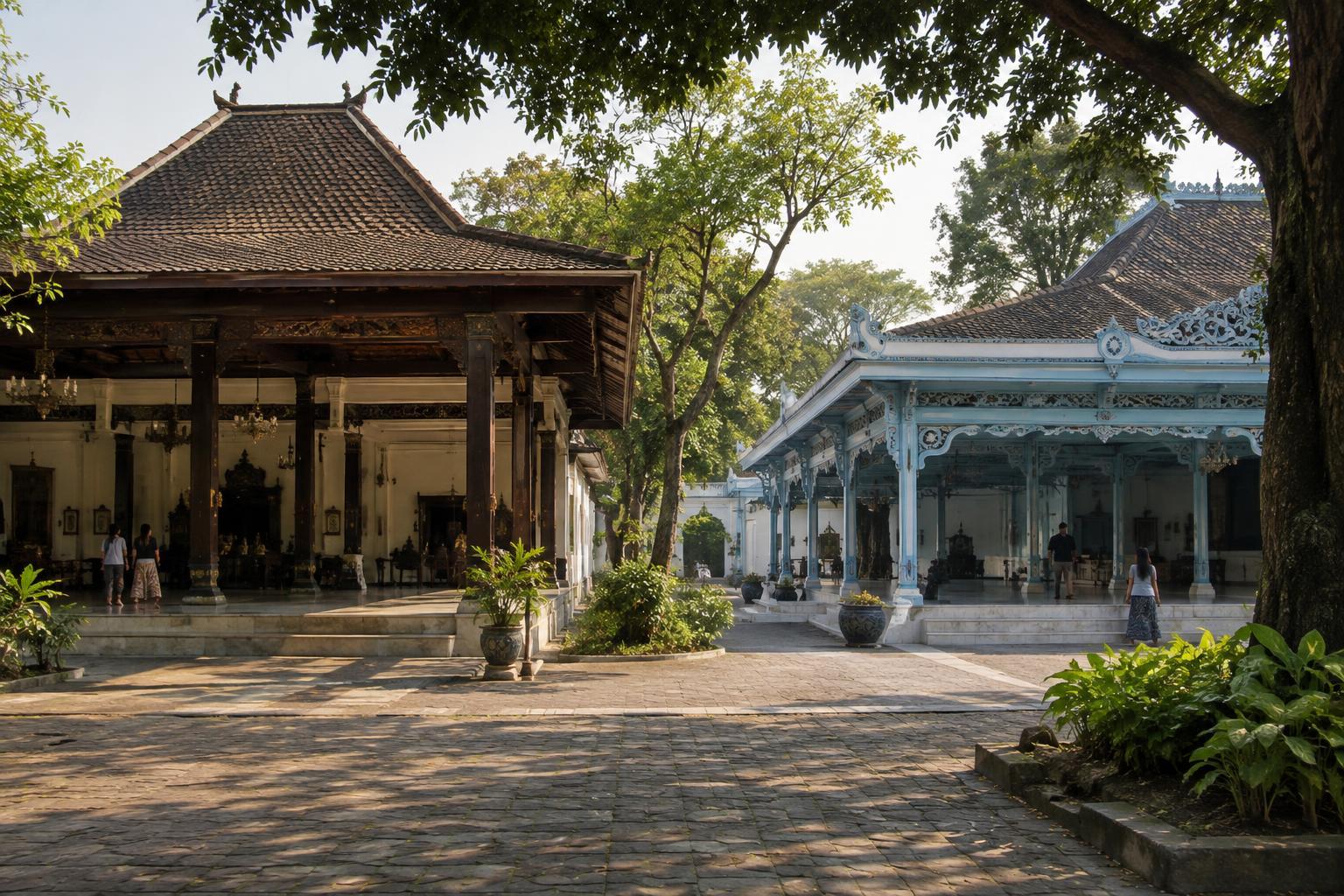
Cultural HeritageYogyakarta and Surakarta share a Javanese court heritage, but their palaces are not interchangeable. Learn how their histories, artistic traditions and public roles differ, and what to notice when visiting.
Read article · 3 min↗
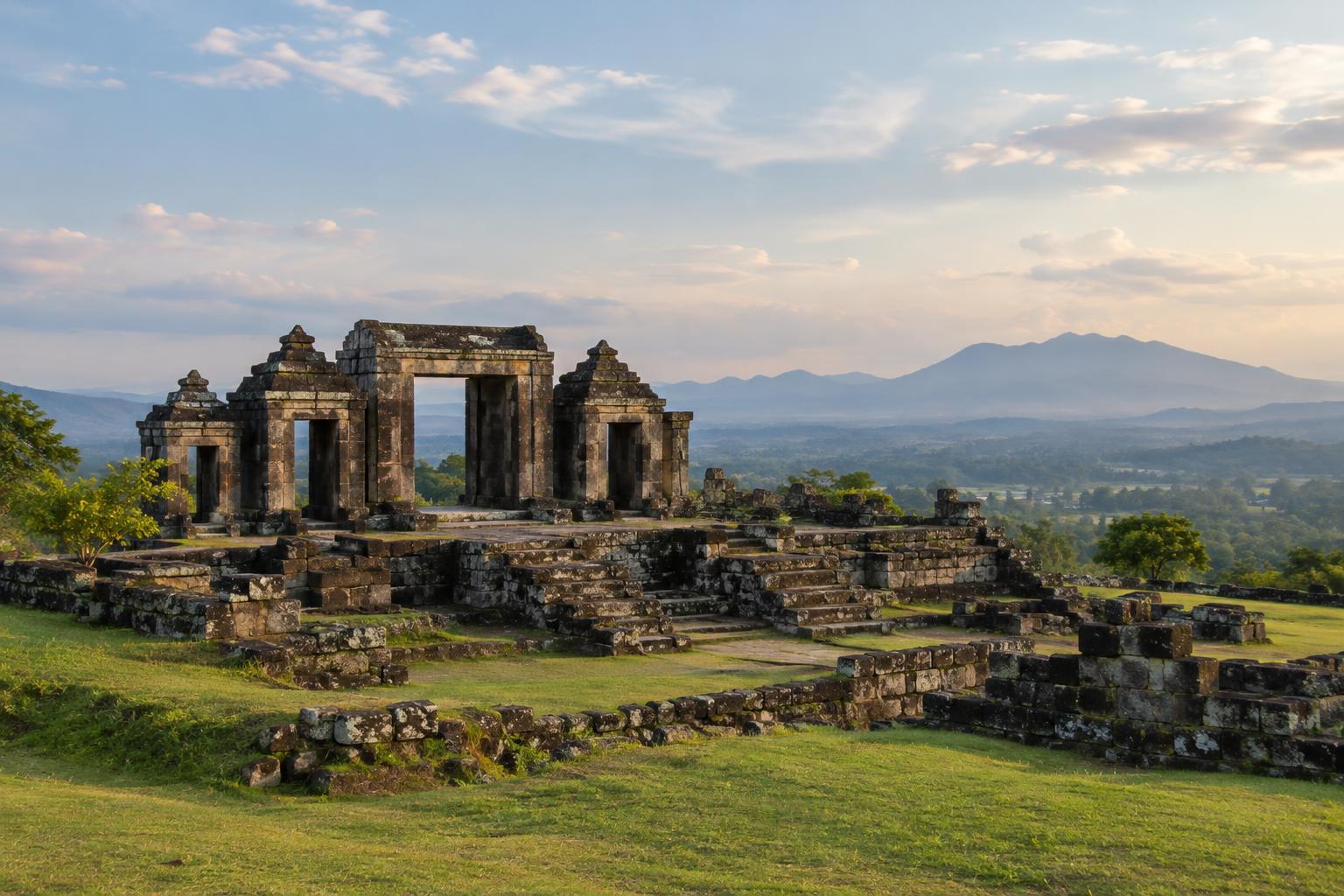
Cultural HeritageRatu Boko’s gates, terraces and hilltop views invite grand stories, but the surviving remains do not settle exactly how the site was used. Learn how to explore its architecture, landscape and unanswered questions without treating the word “palace” as a complete explanation.
Read article · 4 min↗
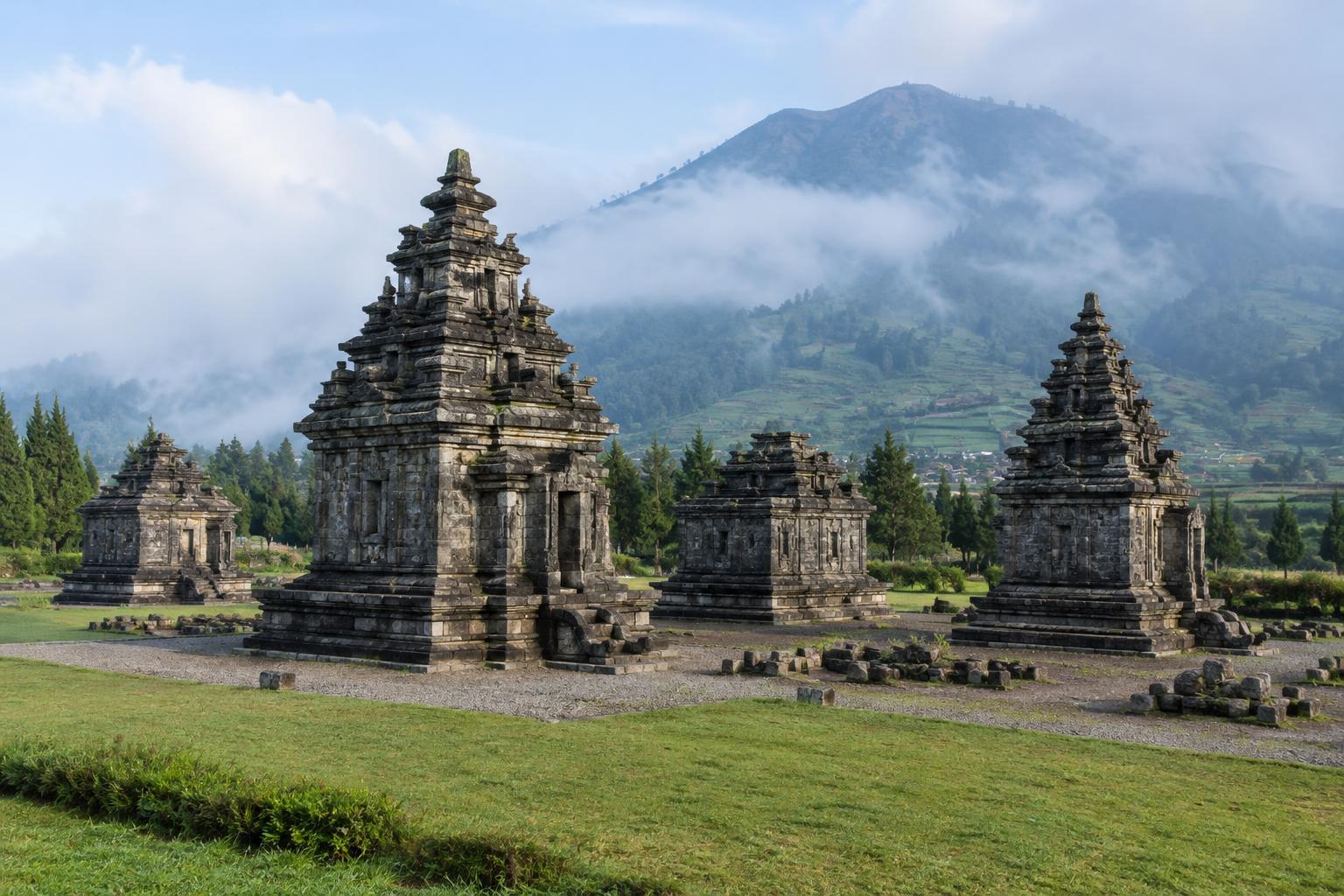
Cultural HeritageDieng’s small stone temples are easy to overlook amid the plateau’s dramatic scenery. Look at how the shrines stand together, face one another and sit within the mountain landscape, and they offer a more revealing glimpse of religious life in early Java.
Read article · 3 min↗
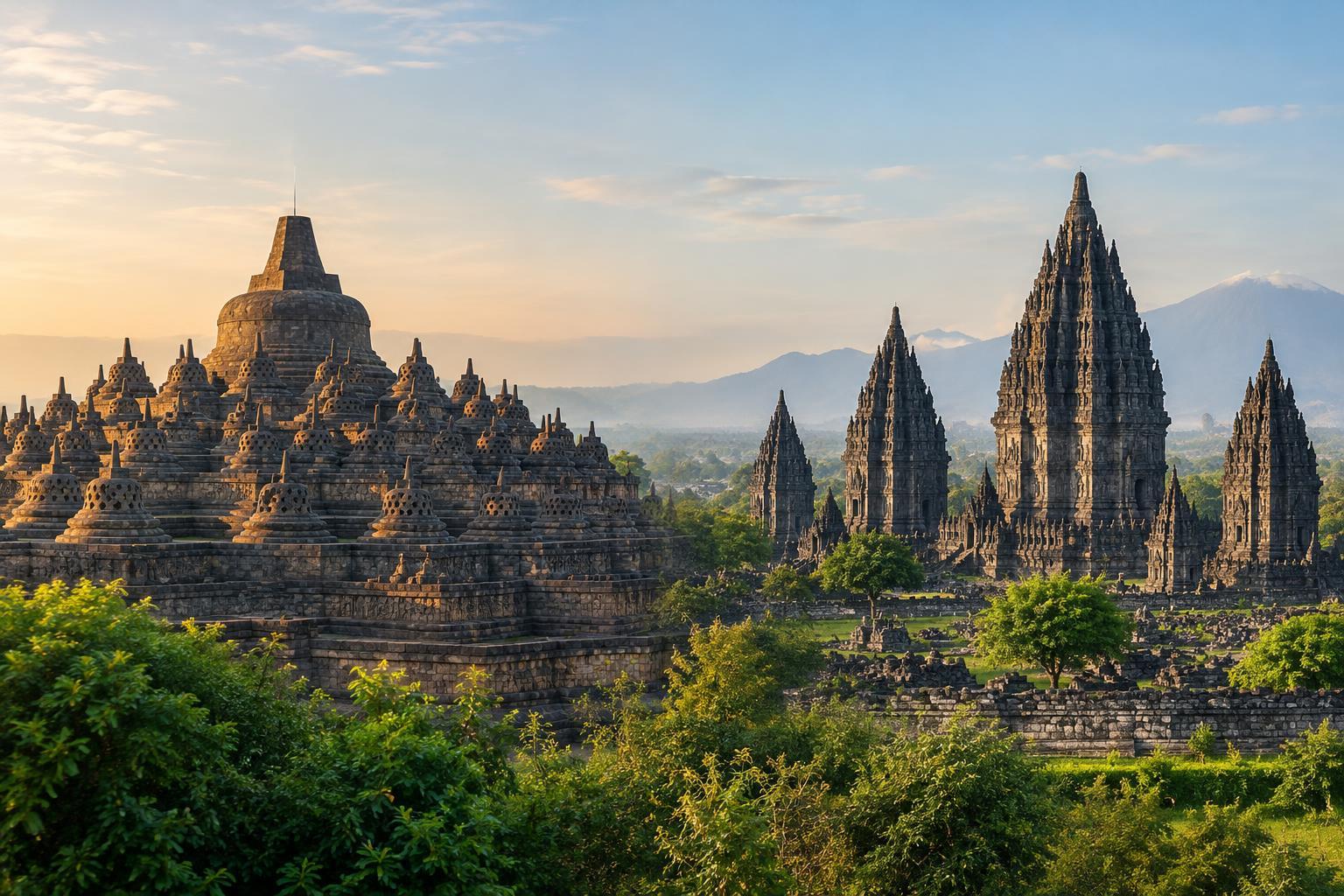
Cultural HeritageBorobudur and Prambanan are two of Java’s best-known temple sites, but they invite different ways of looking. This guide explains their Buddhist and Hindu traditions, contrasting layouts, stone carvings, and a few practical ways to explore them thoughtfully.
Read article · 4 min↗
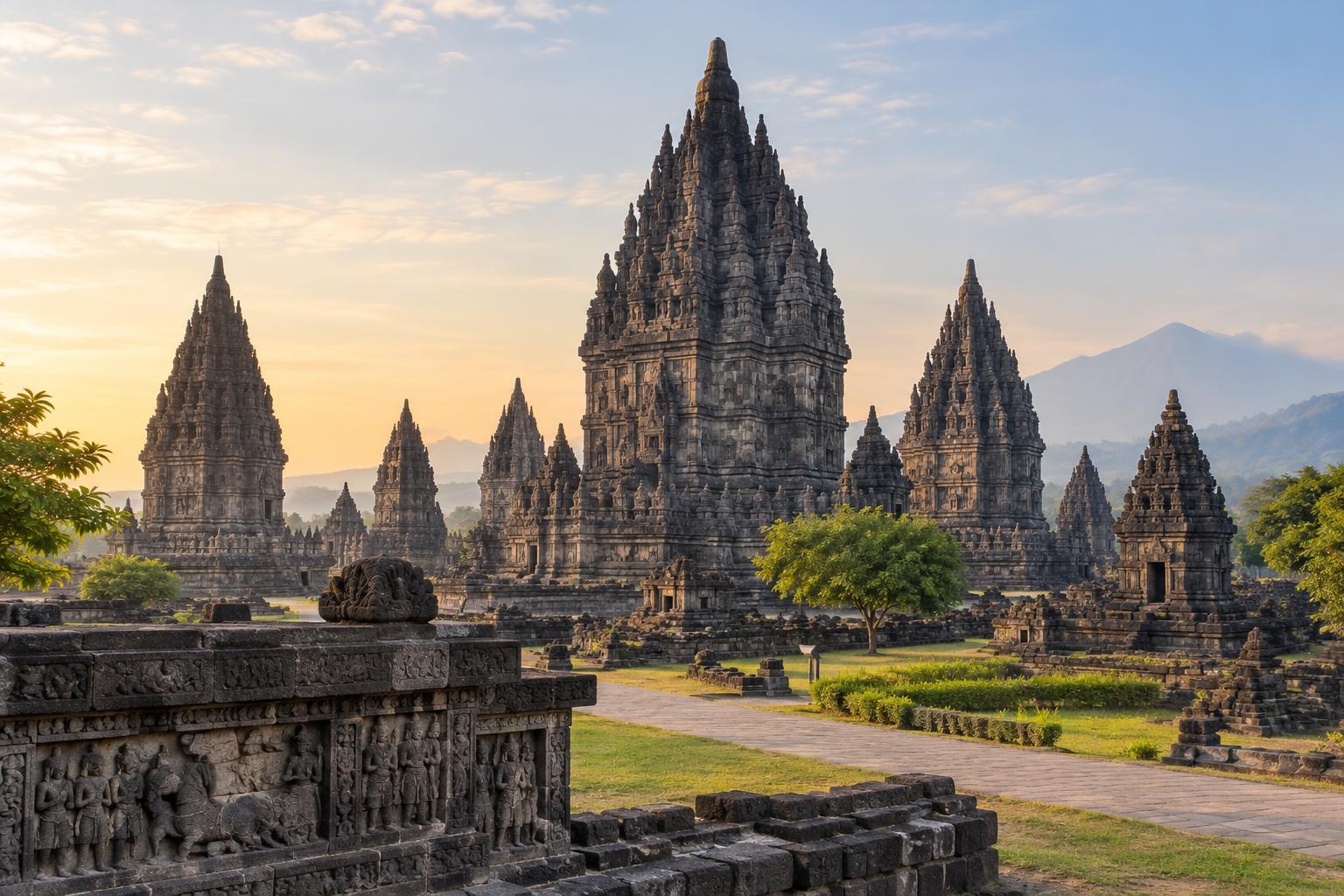
Cultural HeritagePrambanan’s tall stone towers, carved stories and inner shrines can feel complex at first. This beginner’s guide explains how to recognize the main temples, follow the Ramayana reliefs and explore the complex at a comfortable pace.
Read article · 4 min↗
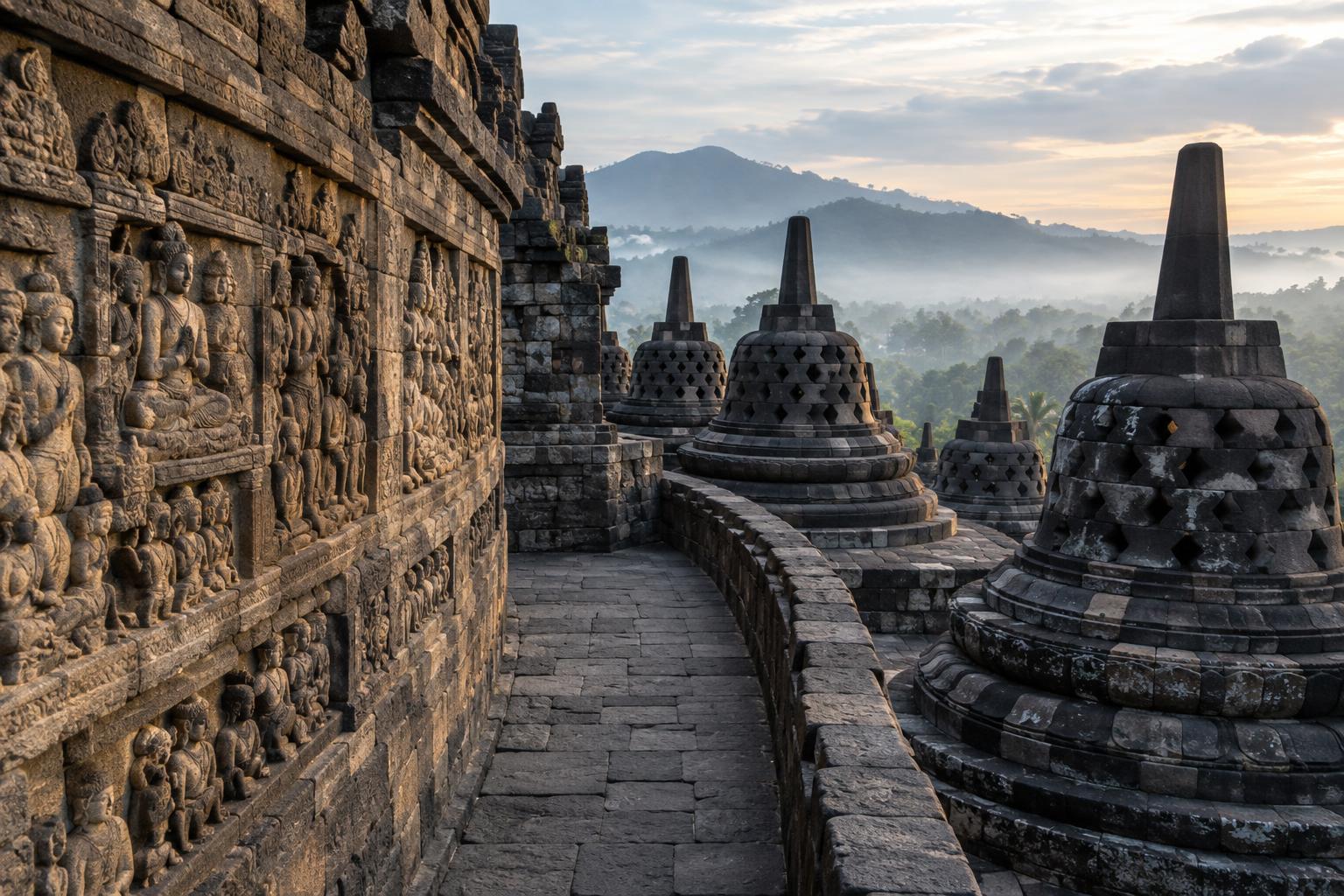
Cultural HeritageBorobudur is more than a monument to view from a distance. Its terraces, carved panels and stupas invite visitors to move through Buddhist ideas step by step. This guide offers a practical way to notice the symbolism and follow the reliefs without needing to identify every scene.
Read article · 4 min↗