What makes wayang golek distinctive?
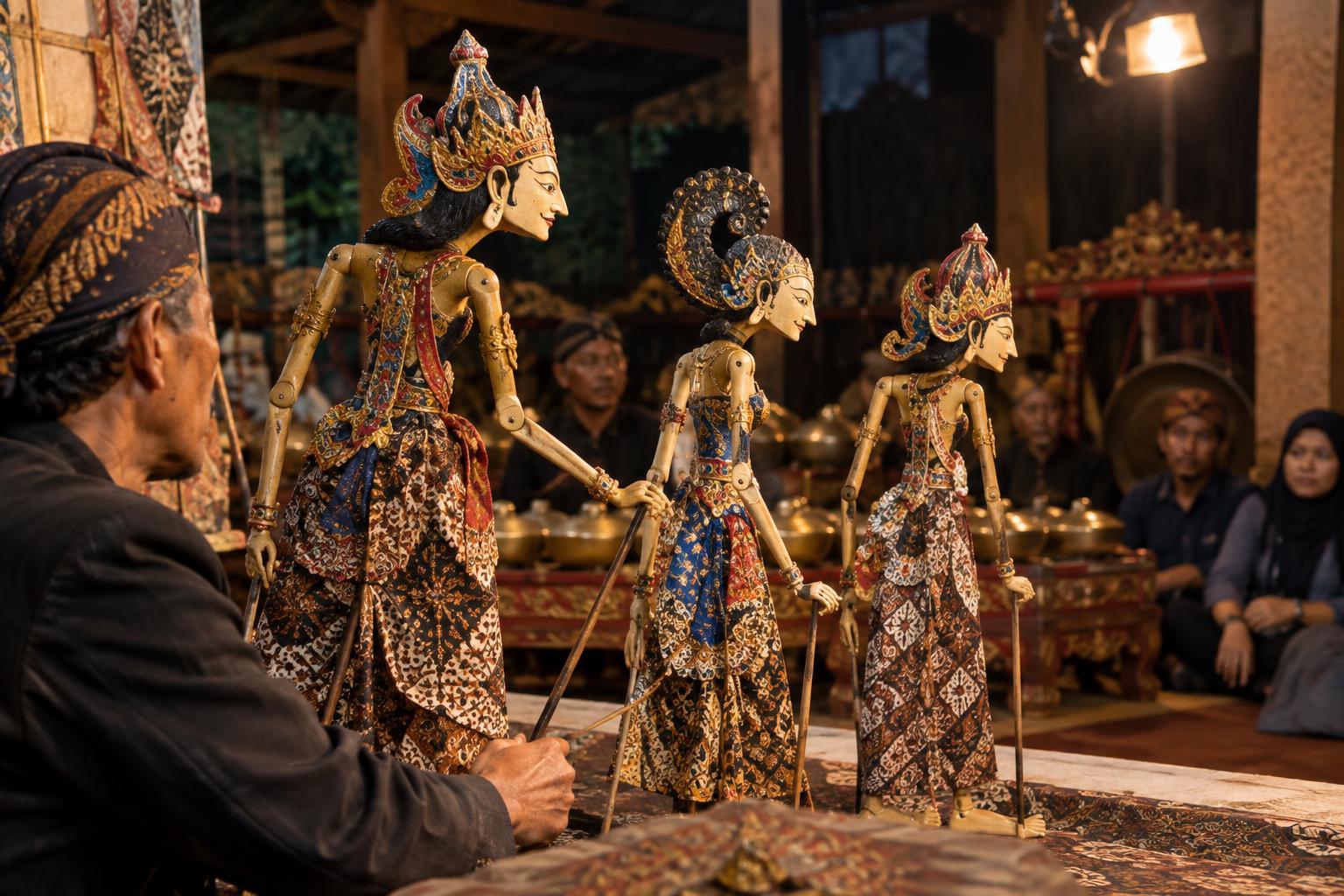
Wayang golek is a form of puppet theater closely associated with Sundanese culture in West Java. Unlike the flat figures used in shadow-puppet traditions, its characters are three-dimensional wooden puppets. Their painted faces, elaborate clothing and expressive movements make them engaging to watch, even from a distance.
A performance is more than a display of beautifully made objects. It is a live encounter between story, music and audience. The puppets may portray nobles, warriors, advisers, servants or comic characters. A change in posture or a quick turn of the head can signal a character’s mood before a visitor understands a word of dialogue. Styles, settings and running times vary, so it helps to arrive ready for a living art form rather than a fixed script.
The dalang and the sound of the performance
At the center is the dalang, the puppeteer who moves the figures and gives voice to their characters. The dalang also guides the pace of the story and works with the musicians. Following several characters at once calls for distinct voices and gestures: an upright stance might suggest dignity, while restless movement may bring out a comic personality.
Music is part of the storytelling, not simply background sound. A gamelan ensemble can mark an entrance, heighten tension or give a scene room to breathe. Singing may also be woven into the performance. Listen for the way speech and music respond to one another: a quiet exchange can turn into a lively passage, then settle again. You do not need to identify every instrument to notice those shifts.
Stories, characters and room for humor
Many wayang golek stories draw on the Mahabharata and Ramayana, whose characters and conflicts have been retold in Java in many forms. A performance might revolve around a struggle over power, a difficult choice or a journey that tests a character’s loyalty. These stories are not necessarily presented as a simple scene-by-scene retelling. A dalang may place familiar figures in episodes shaped for a particular audience and occasion.
Comic characters offer another way into the story. They can interrupt lofty conversations, make observations about ordinary life and invite laughter from the crowd. Cepot, a well-known figure in Sundanese wayang golek, is often associated with this playful side of the performance. If the audience suddenly reacts to a line you cannot translate, notice what happens next: the puppet’s movement, another character’s reply and the music may reveal whether the moment is teasing, tense or affectionate.
How to watch when you do not speak Sundanese
Not understanding every word does not prevent you from following the broad shape of a performance. Start with relationships. Who approaches confidently, and who hangs back? Does one character repeatedly challenge another? Look for changes in voice, pace and movement as clues to a scene’s emotional direction. The audience’s reactions can help, though a laugh may depend on local references that a newcomer will miss.
If an introduction or program is available, read it before the performance begins. Knowing a few character names can make a long sequence easier to follow. Otherwise, give yourself permission to watch a shorter stretch attentively rather than trying to decode every exchange. Notice the craftsmanship as well: facial features, clothing and the way a puppet’s hands move all contribute to its identity onstage.
Planning a respectful visit
Wayang golek may be presented in different kinds of settings, from community occasions to staged cultural programs. Before attending, check the venue’s practical details, including the start time, expected duration and any guidance about seating or photography. Some performances can run late, so plan your return journey rather than assuming the event will finish quickly.
Once there, let the setting guide your behavior. Keep conversations low while others are listening, avoid blocking sightlines for photographs and ask before taking close-up images of performers or audience members. If you can stay for only part of a performance, choose a natural pause to leave. Watching with patience and curiosity offers a richer introduction than treating the puppets as a quick photo stop: wayang golek’s craft lies in what the figures, dalang, musicians and audience create together.


