Two courts with a shared inheritance
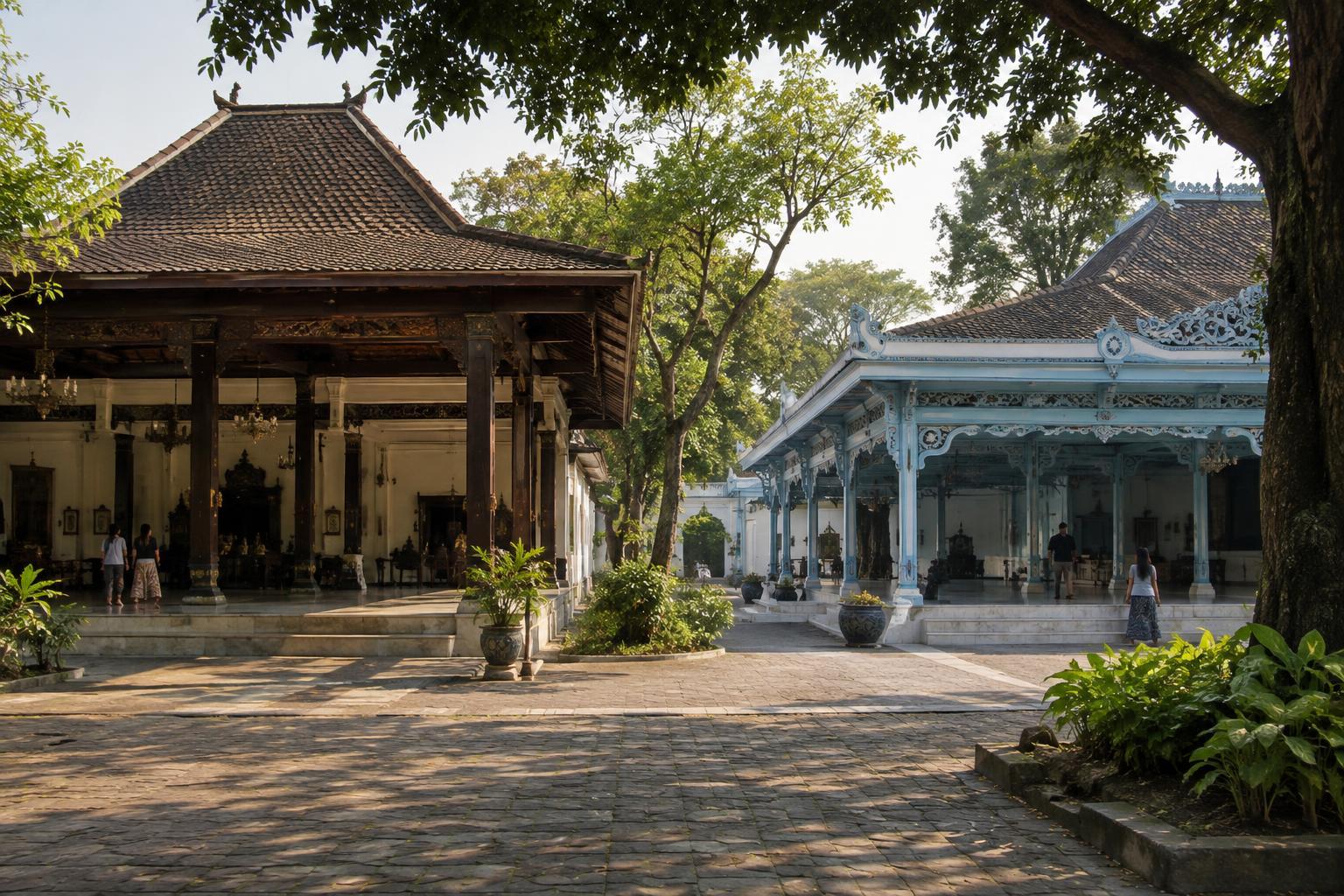
The kratons of Yogyakarta and Surakarta are often introduced together, and for good reason: both carry traditions associated with the Javanese Mataram court. A kraton is more than a palace building. It is also a court community, a setting for ceremonies and a place where forms of music, dance, dress and etiquette have been preserved and adapted. Their shared inheritance makes comparison rewarding, but it can also make the two courts seem more alike than they are.
A major turning point came in 1755, when an agreement divided the Mataram realm between the Yogyakarta Sultanate and the Surakarta Sunanate. Yogyakarta’s court is headed by a sultan bearing the title Hamengkubuwono; Surakarta’s is associated with the title Pakubuwono. Each court developed its own practices from related foundations. These histories also sit alongside those of other Javanese courts: Mangkunegaran in Surakarta and Pakualaman in Yogyakarta are distinct institutions, not alternative names for the two main kratons.
A different place in public life
One of the clearest differences lies outside the palace walls. Yogyakarta’s reigning sultan also serves as governor of the Special Region of Yogyakarta under its distinctive administrative arrangements. The kraton therefore has a visible connection to the region’s civic identity as well as its cultural life. That does not mean every court custom is a government activity; it means the sultan occupies both a court role and a public office.
Surakarta’s court remains culturally important, but its ruler does not hold an equivalent provincial governorship. For a visitor, this difference can help explain why the two palaces have different relationships with their surrounding cities. Neither is simply a museum frozen in the past. Court members, artists and staff continue to work within living institutions, even where visitors encounter them mainly through buildings, displays or scheduled performances.
How to notice differences in the arts
Both courts are associated with gamelan, classical dance, batik and elaborate ceremonial dress. The useful question is not which court “owns” an art form, but how each court interprets it. Dance traditions in both cities include refined group forms such as bedhaya and srimpi. Their repertoires, choreography, musical accompaniment and presentation can differ, while individual performances also depend on their purpose and performers. Rather than relying on a simple rule that one court is always restrained and the other always expressive, watch the dancers’ posture, spacing, hand movements and relationship to the music.
Batik offers another point of comparison. Court-associated cloth from Yogyakarta is often described through strong contrasts of dark color and white, while Surakarta styles are frequently associated with warm brown tones known as sogan. These are helpful starting points, not tests of origin: palettes, motifs and uses overlap, and contemporary makers may work beyond either convention. If an interpretation panel identifies a cloth’s motif or ceremonial use, it will tell you more than color alone.
Ceremonies can reveal distinctions that a short performance cannot. Dress, processions, music and the arrangement of participants all carry meaning within a particular court. Visitors may see only part of that context, so it is worth treating an explanation offered on-site as specific to that event rather than as a rule for every Javanese celebration.
Visiting with curiosity and care
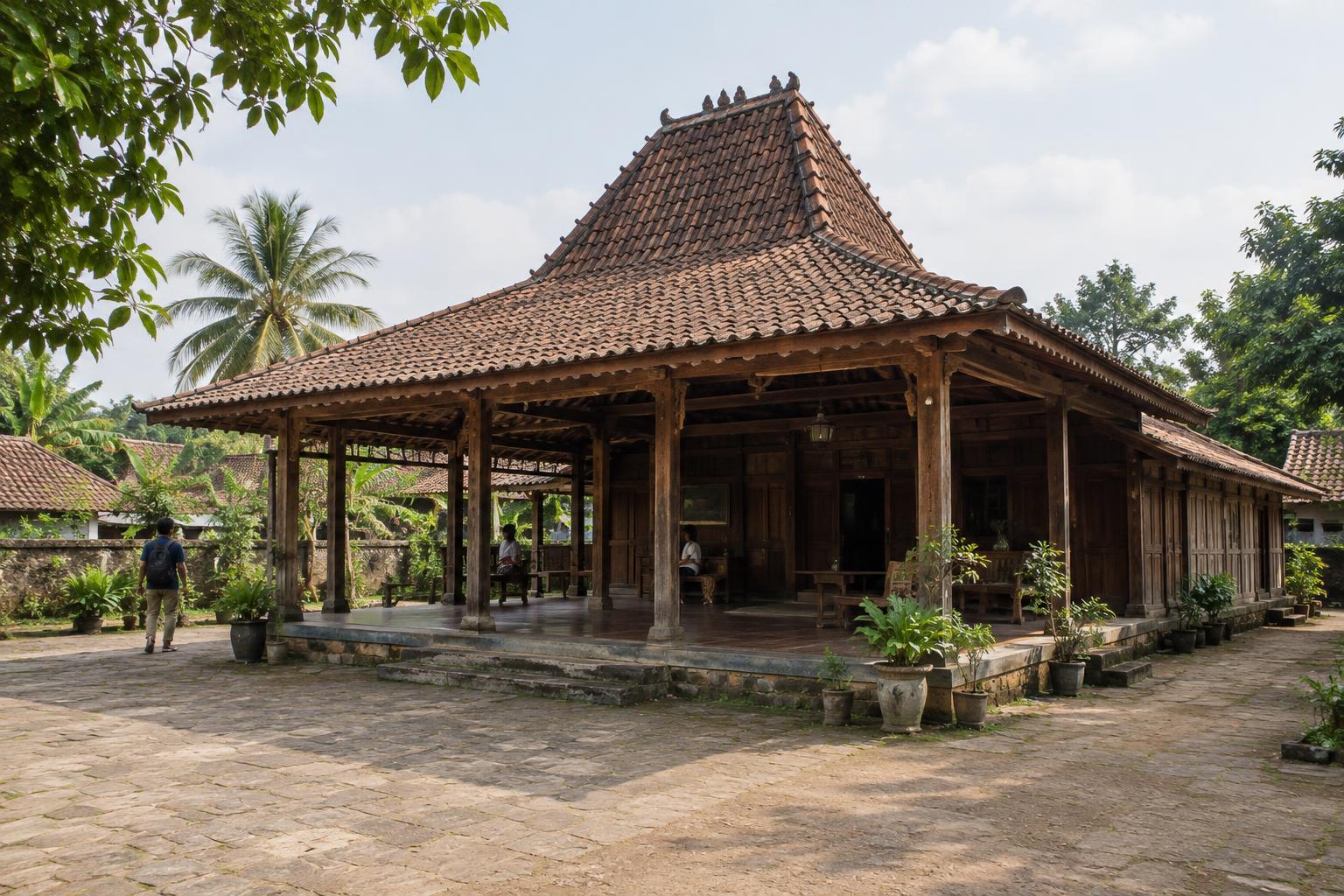
The best way to compare the kratons is to give each its own visit. Notice how you enter the complex, which spaces are open to guests and how the buildings guide your movement. Look for explanations of objects and performances, then ask what role they have within that court rather than assuming they serve the same purpose in both places. Allow time to look beyond a single photogenic courtyard; even a modest display of textiles, instruments or portraits can add context.
Public access, performance schedules and photography rules can vary, so check the arrangements for each palace before going. Dress respectfully, follow posted guidance and keep clear of activities that appear private or ceremonial. A kraton visit is most rewarding when approached as an encounter with a living tradition: observe the differences carefully, but leave room for practices that cannot be understood from one visit alone.