A mosque rooted in its setting
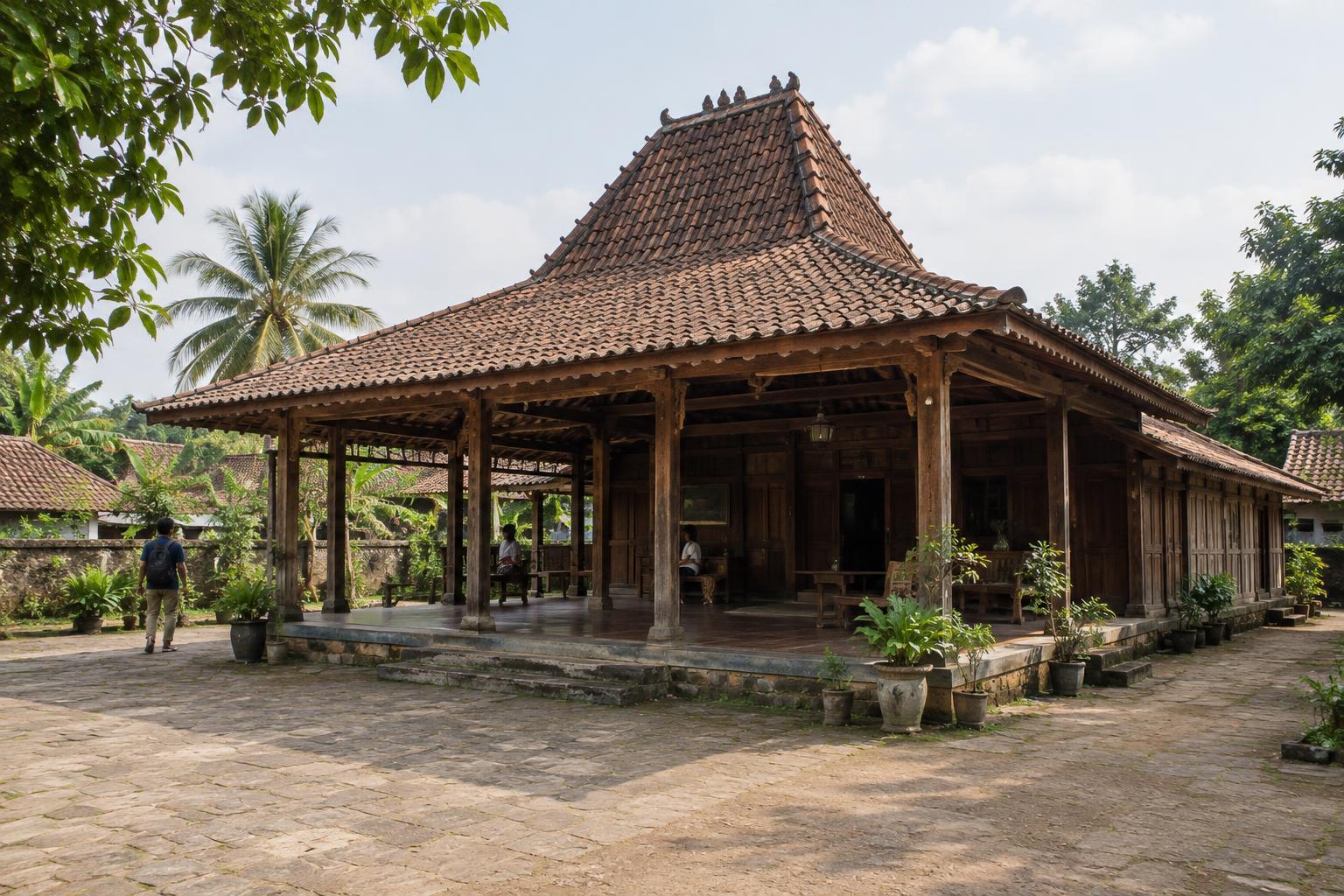
The Great Mosque of Demak, or Masjid Agung Demak, is closely associated with the early spread of Islam in Java and the history of the Demak Sultanate. It is also an active place of worship. Looking at it only as a monument can mean missing something important: its architecture makes sense within a wider Javanese landscape of shaded gathering spaces, timber construction and buildings designed for a warm, rainy climate.
The mosque’s early history is often told alongside traditions about the Wali Songo, the revered figures associated with the spread of Islam in Java. Those stories are part of the site’s cultural significance, though individual construction details and dates are not always straightforward to verify. Rather than treating every visible feature as unchanged from the mosque’s beginnings, look for the design ideas that give the building its distinctive character.
Start with the layered roof
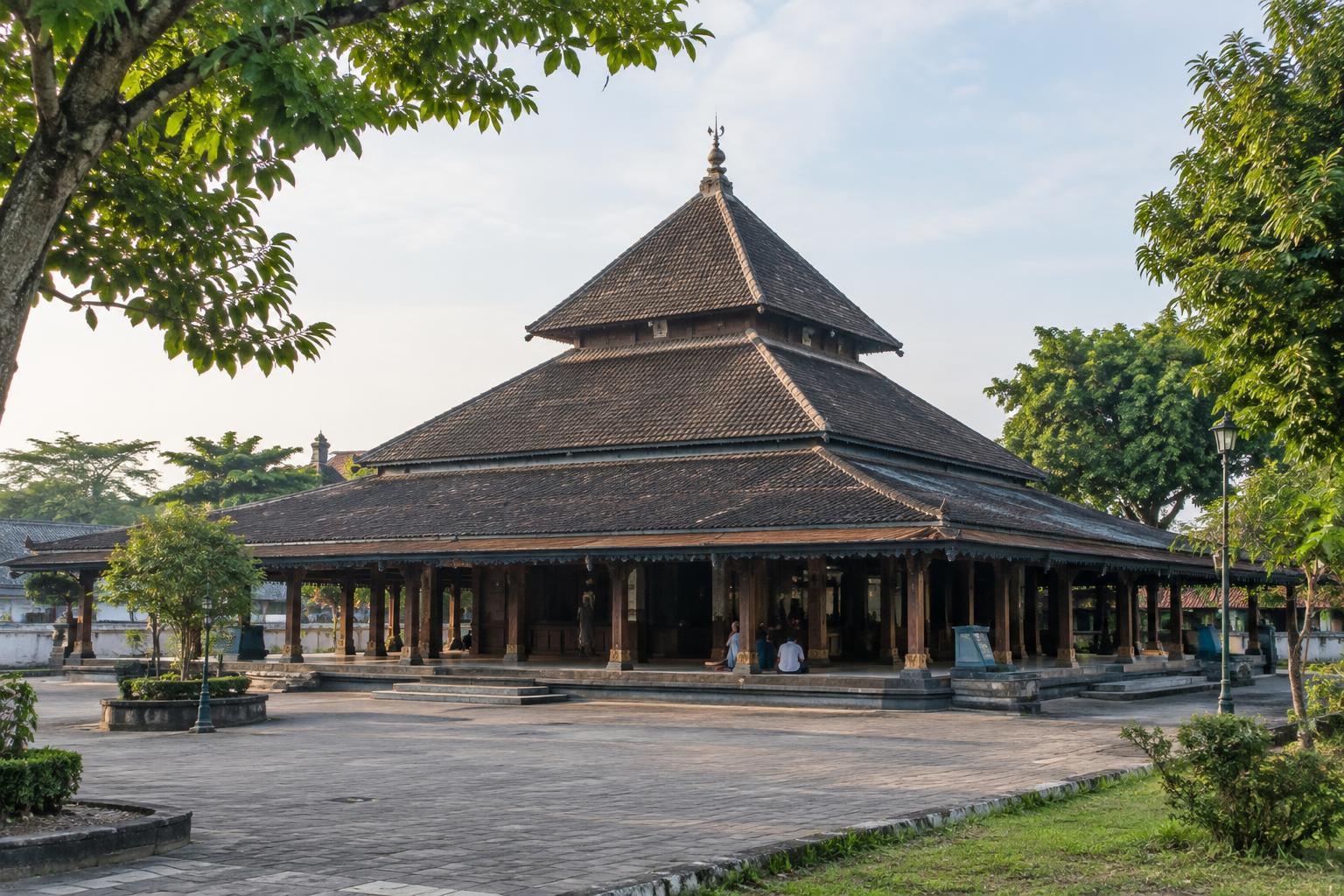
The roof is one of the clearest features to notice. Instead of the large central dome many visitors may associate with mosques elsewhere, Demak’s Great Mosque is known for a steep, tiered roof. Its stacked form creates a strong outline while helping shed rain. From a little distance, notice how each level narrows toward the top and how the broad lower roof gives shelter to the space beneath it.
Tiered roofs belong to a wider tradition of Javanese religious and ceremonial architecture. At Demak, that familiar form serves a Muslim congregation. It is a useful reminder that Islamic architecture does not have one required silhouette: a building can meet the needs of prayer while using materials and forms shaped by its local setting. Avoid reading any single roof detail as proof of a fixed meaning unless it is clearly explained in context.
Look at how the pillars organize space
Inside, timber posts draw attention to the structure holding up the roof. The four principal pillars, known as the saka guru, are especially important in descriptions of the mosque. Their arrangement helps define the main prayer space and directs the eye upward through the layers of the roof. Compare that central area with the surrounding space: the architecture creates a sense of focus without relying on a vast, uninterrupted hall.
One pillar is commonly linked in local tradition to saka tatal, a post said to have been assembled from pieces of wood. It is a memorable story, but it is best understood as a tradition associated with the mosque rather than a detail a visitor can establish by looking at the pillar. What you can observe directly is the importance of wood, joinery and carefully placed supports in the building’s character.
Notice the transition from outside to prayer hall
As you approach the mosque, pay attention to the sequence of spaces rather than rushing to the central room. The grounds and sheltered areas provide room to arrive, pause and move toward the prayer hall. A covered front space, often called a serambi in Javanese buildings, offers shade and a gentler transition between the outdoors and the interior. This kind of threshold suits both the climate and the social life around a place of worship.
Within the prayer space, features such as the direction of the mihrab relate to Islamic practice, while the building around them reflects local construction traditions. That combination is the main point to carry away: the mosque is neither simply a Javanese building with a new use nor a copy of a mosque from another region. Its form shows how a religious building can become rooted in a particular place.
Visit as a guest, not just an observer
Give yourself time to view the roof from outside before examining smaller details. If an area is open to visitors, move quietly and watch how people use the space; prayer takes priority over sightseeing. Dress modestly, follow signs and any guidance given on site, and ask before photographing people or worshippers. Access to particular areas may change during prayers or other religious activities.
A thoughtful visit does not require identifying every carving or assigning a symbolic meaning to every feature. Notice the roofline, the pillars, the movement between open and sheltered spaces, and the building’s continuing use. Together, these details make Demak’s Great Mosque an accessible introduction to the ways Javanese building traditions shaped early Islamic architecture on the island.