An ensemble with many roles
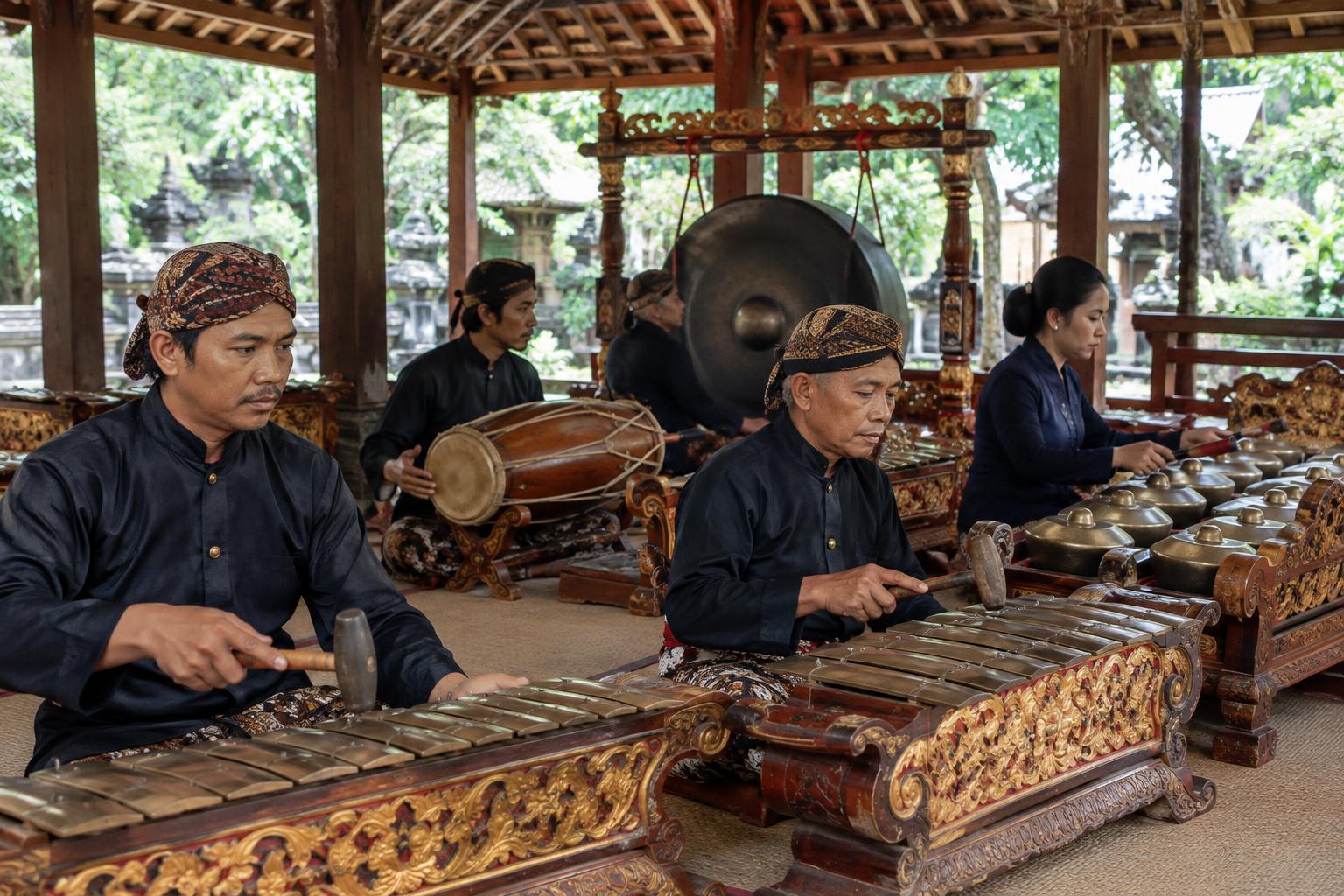
Gamelan refers to an ensemble and its music, not to a single instrument. Across Java, ensembles and performance styles vary. A Javanese gamelan may bring together bronze gongs, tuned metal instruments, drums, wooden instruments, a bowed string instrument, a bamboo flute and singers. Not every piece uses every available sound.
The instruments do not simply double one melody at different volumes. Some outline a core melodic path, while others add flowing variations around it. Drums help guide movement through the piece, and hanging or horizontal gongs mark points in its repeating structure. Listening to these layers separately, then hearing them come together, is one way into music that may at first seem difficult to follow.
The melody beneath the ornament
In many Javanese pieces, a relatively spare melodic framework, often called the balungan, gives players shared reference points. Instruments such as the saron strike clear notes that can make this framework easier to hear. Other parts are more elaborate. The bonang, a set of small kettle gongs, may trace patterns that anticipate or respond to the melodic direction. The gender, with thin metal keys and resonators, can weave softer, more intricate lines.
A rebab may add a flexible bowed melody, while a suling flute or voices can bring a different shape to the sound. These parts are not free of structure, but neither are they exact copies of one another. Players make choices within the piece’s conventions and listen closely to their neighbors. The result can feel both carefully ordered and gently shifting.
How gongs make time audible
Gamelan often organizes musical time in cycles. Instead of relying only on a regular beat you might tap your foot to, listen for gong strokes that divide a long span into smaller parts. A large gong ageng can mark the close of a cycle. Instruments such as the kenong and kempul may mark other points along the way, giving the music a sense of departure, approach and return.
These markers need not be equally prominent. A low gong may seem to arrive only after you have spent some time following the brighter instruments. Try listening through several repetitions of a passage: the sound between the gong strokes may change, while the recurring markers help you recognize where you are. Different pieces use different patterns, so noticing the return is more useful than trying to memorize a single formula.
The drummer’s cues and the ensemble’s response
The kendhang, a double-headed drum, has a guiding role in many performances. Its patterns can signal a change in pace, a shift between sections or a move toward an ending. Other musicians respond to these cues while keeping their own parts aligned with the melodic and gong structures. This coordination matters especially when the music accompanies dance or shadow-puppet theatre, where timing also serves action beyond the ensemble.
A performance is therefore not just a set of parts played side by side. Musicians watch, listen and adjust. A passage might feel spacious before becoming denser and more animated; the relationship among the parts can change without the ensemble losing its shared direction. If you hear a transition, listen back to the drum and ask which sounds began to move differently.
Listening thoughtfully at a performance
You do not need to identify every instrument to enjoy gamelan. Begin with one sound: perhaps the deep returning gong, a crisp metallophone line or the drum’s changing pattern. Then notice what happens around it. Does another instrument fill the space between its notes? Do voices enter while the underlying cycle continues? Following one relationship at a time makes the ensemble easier to hear.
Gamelan may be presented in a concert, as part of dance or theatre, or in a community setting. The setting affects how much attention belongs to the music alone. If you attend, observe local cues about seating, movement, photography and applause rather than assuming concert-hall habits apply. Allowing a piece time to unfold is worthwhile: its pleasure often lies in hearing how many distinct contributions create a shared sense of motion.