A story told through light, leather and voice
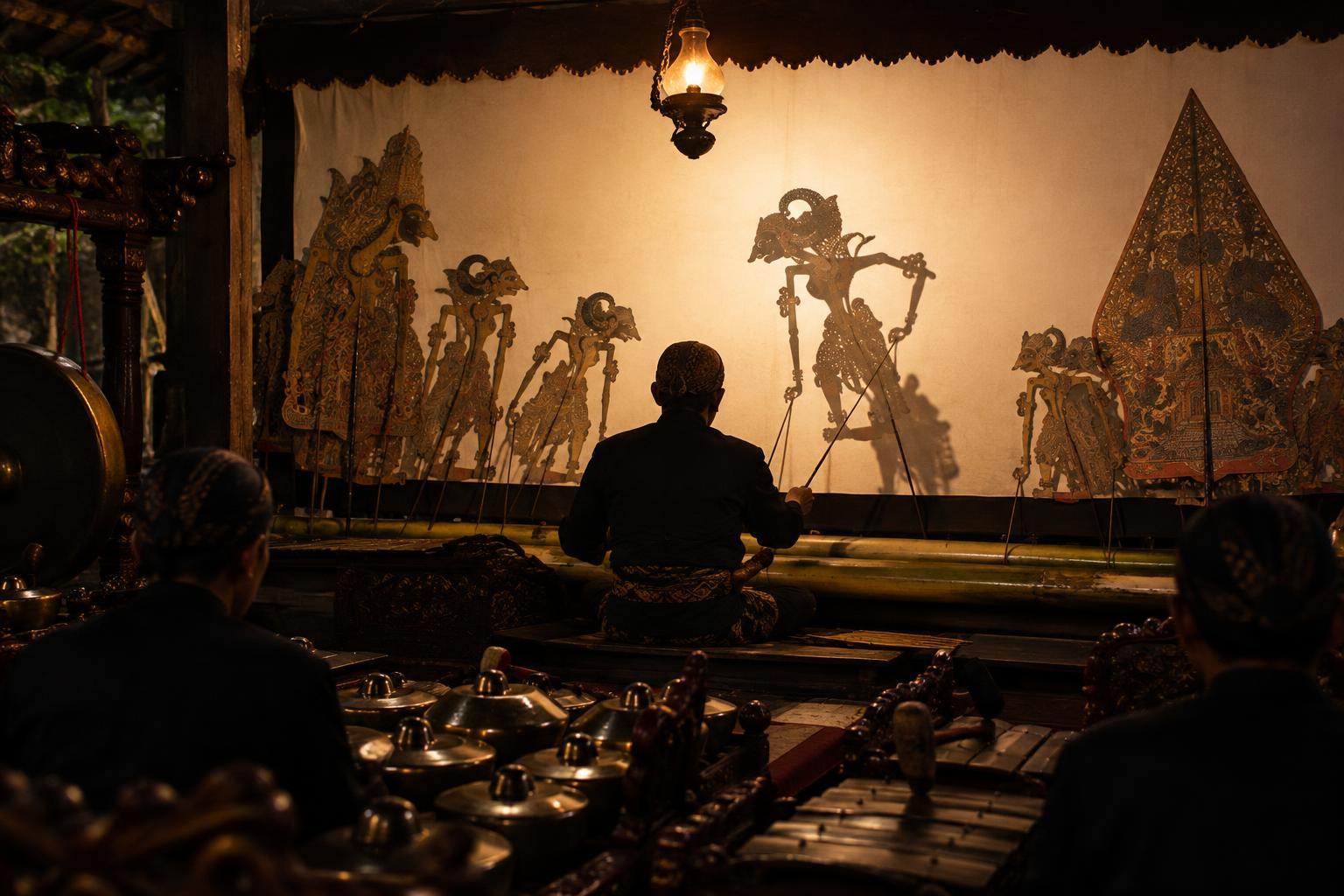
Wayang kulit is a form of shadow-puppet theatre in which a puppeteer, known as a dalang, moves intricately cut leather figures against a lit screen. From one side, the audience sees the puppets’ shadows; from the other, it may see their painted surfaces, the dalang and the musicians. The arrangement varies by venue, so neither view is the only right way to watch.
The dalang does much more than move the figures. They guide the story, speak for different characters and coordinate shifts in pace with the musicians. A branching, leaf-shaped puppet called a gunungan, or kayon, may mark a change of scene or signal a transition. Even if the dialogue is unfamiliar, the movement of the figures, the dalang’s voice and the changing music offer clues to what is happening.
Meeting the characters
Many Javanese wayang kulit stories draw on versions of the Mahabharata and Ramayana, shaped over generations of local storytelling. Depending on the performance, you may encounter royal families, warriors, advisers, giants and comic figures. A first-time viewer does not need to memorize a cast list: it is often easier to follow relationships—who confronts whom, who offers counsel and who interrupts a tense moment.
The puppets’ silhouettes can help distinguish characters. Their faces, posture, size and elaborate dress contribute to how they are presented, although these visual conventions take time to learn. In some Javanese stories, the punakawan, including Semar and his companions, bring humor and everyday observations into the action. Their scenes can provide a change of mood, but characters and story details differ among performances.
Listening to the gamelan
Music is part of the storytelling rather than a continuous background track. A gamelan ensemble may include gongs, metallophones, drums and other instruments, with singers in some performances. Rhythms and textures can change as a scene moves from conversation to travel, suspense or battle. A drum pattern may add urgency; a gong can give a phrase a sense of arrival.
Try listening for changes instead of trying to identify every instrument. A quiet passage might leave room for speech, while a fuller sound can make a character’s entrance or a conflict feel larger. The dalang and musicians respond to one another, so the performance can feel like an exchange rather than a story accompanied by a fixed soundtrack.
What to expect as an audience member
Wayang kulit performances come in different lengths and settings. Some are presented as shorter introductions, while traditional events can continue for many hours. Before attending, check the advertised duration and whether the performance includes an introduction or translation. Dialogue may be in Javanese or another local language, and a synopsis can be more useful than trying to translate every line in real time.
Audience customs can vary too. At an informal event, people may arrive or leave during a long performance; at a seated theatre presentation, expectations may be different. Follow the venue’s guidance, keep conversation and phone use from disturbing others, and ask before photographing or moving around the screen. If both sides are accessible, spending some time at each can reveal how shadows, puppets and musicians contribute to the same scene.
An easy way to begin watching
Start with a few simple questions: Which figures keep returning? When does the music become louder or faster? Does a character’s voice or posture change during an argument? These observations give you a way into the performance without requiring detailed knowledge of the story. If a synopsis is available, read enough to recognize the central conflict, then let the staging supply the rest.
Wayang kulit rewards patience, but it does not demand perfect understanding. You might remember a sudden comic exchange, the sound of an ensemble gathering force or the delicate outline of a puppet more clearly than the plot. Those details are part of the experience. Watching how the dalang brings voice, movement and music together is a satisfying first step into this enduring form of Javanese cultural heritage.


