Why the palace label is tempting
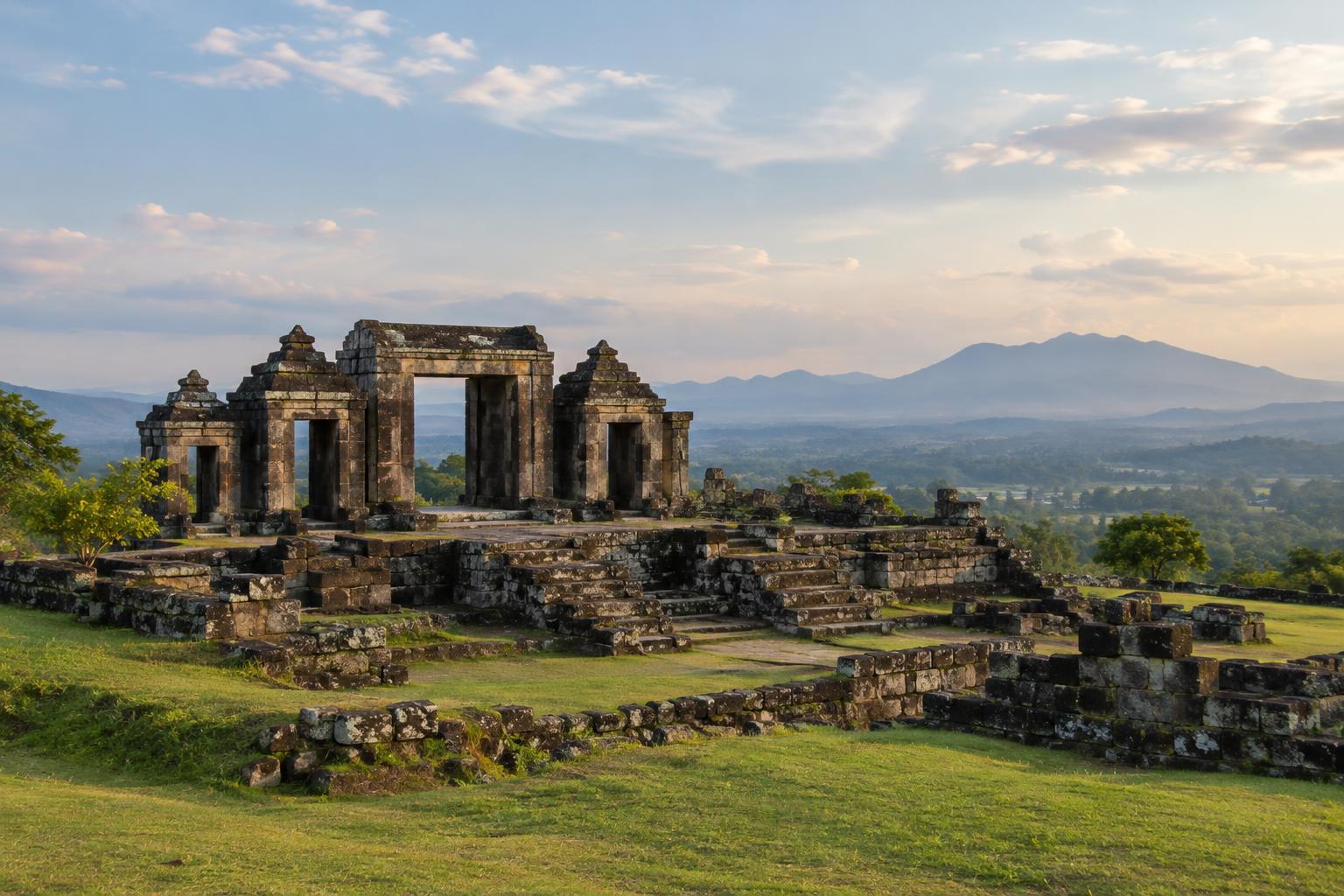
Ratu Boko occupies a hill south of the Prambanan area, with broad views across the surrounding landscape. Its monumental gates and extensive stone remains can feel like the entrance to a royal compound. It is easy to picture a ruler arriving there, and the name itself adds to that impression: Ratu Boko is linked to a figure in local legend. A memorable name, however, is not a floor plan.
The site is often called a palace, but that word suggests a clearer picture of daily life than the ruins provide. Walls, terraces, platforms and water features show that people planned and built on a substantial scale. They do not, on their own, tell us who slept there, which spaces were used for ceremonies, or whether every part of the complex served the same purpose. Calling it a palace can be a useful starting point for a conversation, as long as it is not treated as the final answer.
Read the landscape before the buildings
Begin with the hill. The elevated position changes how the site feels: paths rise and turn, open spaces frame distant views, and the gates create a strong sense of arrival. From this perspective, Ratu Boko is more than a collection of isolated monuments. Its builders worked with the slope, arranging levels and routes that shape how a visitor moves through the complex.
As you walk, notice the difference between what is still standing and what must be inferred. A gateway can show where movement was directed, but it cannot reveal the full appearance of structures beyond it. A low platform may mark a building’s footprint without preserving its roof or walls. Pausing at these transitions makes the site easier to understand than rushing from one well-known photo spot to another.
Look for several possible kinds of use
Ratu Boko includes features that encourage different interpretations. Gates and enclosed spaces may suggest controlled access or important gatherings. Pools and other water-related remains draw attention to how water was collected and used on a hilltop. Terraces and building foundations raise questions about where people met, worked or carried out rituals. The remains offer clues, but a feature that resembles something familiar today may have had a different role in its own time.
The wider cultural setting also matters. Java’s historic sites do not always fit neatly into a single category such as temple, residence or defensive place. Religious practice, authority and everyday activity could occupy connected spaces. At Ratu Boko, it is more helpful to ask what each area could have supported than to make every feature prove one theory about the entire complex.
Keep evidence and imagination separate
A satisfying visit leaves room for both curiosity and restraint. You can confidently describe the visible gates, stonework, terraces and views. You can also imagine how striking the approach may once have been. The important distinction is between an observation and a reconstruction: the first is something you can point to, while the second depends on evidence that may be incomplete.
Interpretive signs, if available during your visit, can help identify individual features. Read them alongside the remains rather than expecting one label to explain everything. When you encounter a confident-sounding story about a specific room or ruler, consider what physical evidence would be needed to support it. Uncertainty is not a flaw in the experience; it is part of encountering a place that has changed over many generations.
Visit slowly and leave the ruins intact
Give yourself time to walk between the main features and look back from several angles. The changing view can make the relationship between the gates, open areas and hillside clearer. Because parts of the site are exposed, water, sun protection and comfortable footwear can make a slow visit more pleasant. Take care on uneven surfaces, especially when looking through a camera rather than at the ground.
Stay on permitted paths and avoid climbing or leaning on fragile stonework. These simple choices protect both the remains and other visitors’ chance to study them. Ratu Boko does not need a definitive palace story to be compelling: its appeal lies in the combination of deliberate architecture, an expansive setting and questions that the surviving stones cannot entirely answer.


