A heritage woven into the city
Semarang’s Chinese heritage is not confined to a single landmark. It appears in temple courtyards, shopfronts, family businesses, food stalls and the everyday life of Pecinan, the city’s historic Chinatown. Looking closely at these places offers a richer experience than treating them as a checklist of photo stops.
Chinese Indonesian communities have helped shape Semarang over generations, while adapting to the wider culture of Java. Buildings, dishes and celebrations can reflect several influences at once. No one street or temple represents every family’s story, so it helps to approach the area with curiosity rather than expect a single, fixed picture of tradition.
Walking through Pecinan
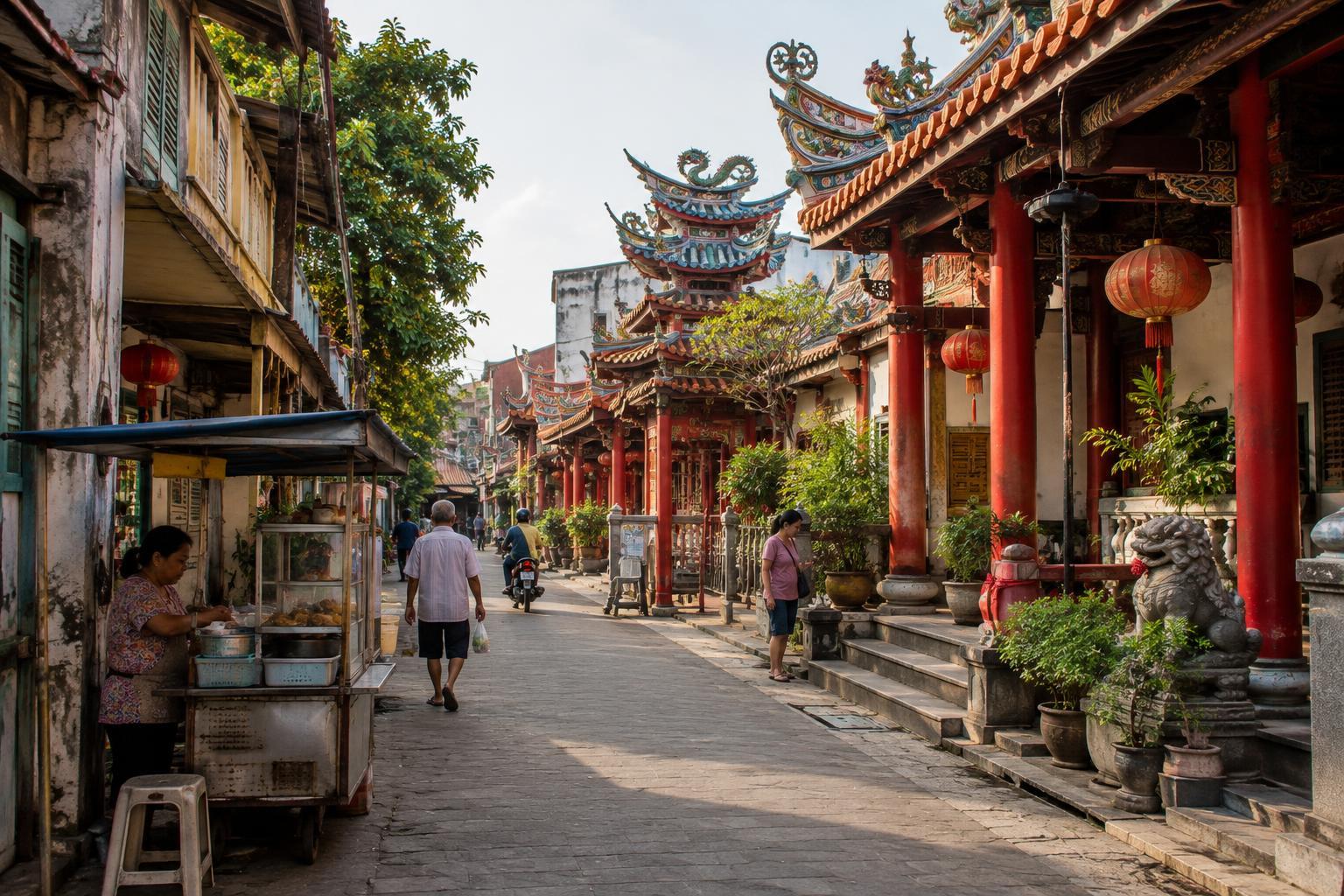
Pecinan is best explored at a gentle pace. Around lanes such as Gang Pinggir and Gang Lombok, places of worship sit among shops, homes and food businesses. Notice how a street changes from one block to the next: an ornate roofline may rise above a modest storefront, while a busy commercial lane gives way to a quieter residential corner.
This is a neighborhood where people work, shop and live, not an open-air exhibit. Keep entrances clear, take care around traffic in narrow lanes and ask before photographing people or the interiors of businesses. If a market or evening food area is part of your plans, check its operating times locally rather than assuming it runs every night.
Temples as places of worship
Tay Kak Sie, in the Pecinan area, is one of the temples that helps visitors understand the neighborhood’s religious landscape. Its decorative details and incense-filled spaces can draw attention, but its primary purpose is worship. Visitors should look for posted guidance, speak quietly and give people room to pray. Photography rules may differ between spaces or during ceremonies.
Sam Poo Kong offers a different setting beyond Pecinan’s compact lanes. The shrine complex is closely associated with stories of the seafarer Zheng He, known locally as Cheng Ho. It is often included in an exploration of Semarang’s Chinese heritage, although its history and religious meanings cannot be reduced to one simple label. Allow time to read information on site, and remember that a striking courtyard may also be a meaningful place for someone else’s visit.
Food and traditions in everyday life
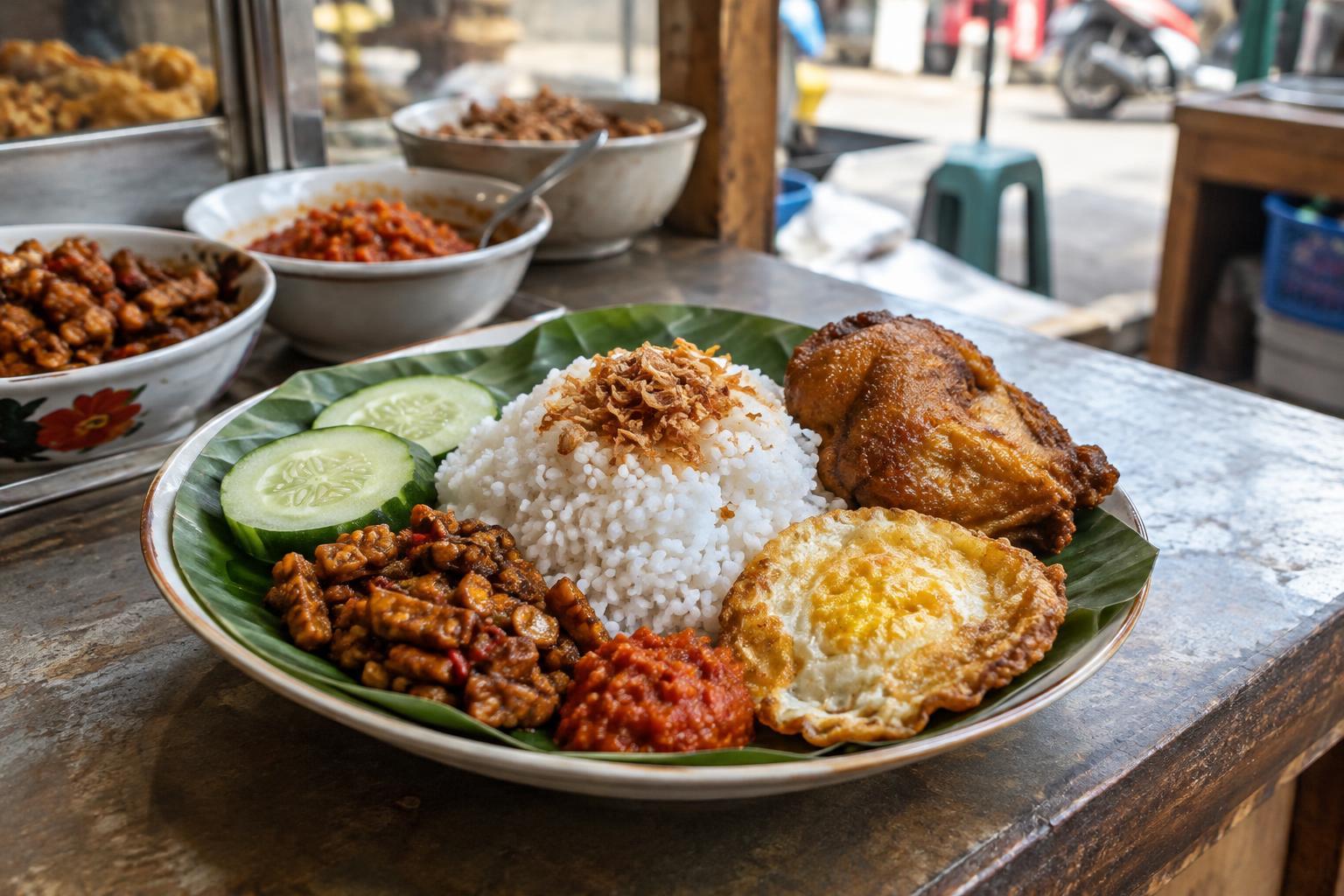
Food provides another way to notice how traditions meet and change. In Semarang, lumpia is a familiar example: the spring roll is closely associated with the city and reflects Chinese and local culinary influences. Recipes and fillings vary, so trying more than one version can be more interesting than searching for a supposedly definitive one. Around Pecinan, snacks and meals may offer further glimpses of family recipes and local tastes.
Festivals can bring temple activities, decorations or special foods into public view, but the neighborhood’s heritage continues between celebrations. A shop kept by successive generations, a family gathering for a meal or an ordinary visit to a temple may be just as important to the people involved. Visitors can appreciate these traditions without expecting private moments to become performances.
Planning a respectful visit
A manageable visit might pair a walk through Pecinan with time at Tay Kak Sie, then leave Sam Poo Kong for a separate stop. This gives each place room to make an impression and avoids rushing between sites. Conditions, access and opening hours can change, so confirm practical details before setting out. Comfortable walking shoes and a little flexibility are useful in a busy urban area.
Support local businesses when something genuinely interests you, whether that means buying a snack or browsing a shop. At religious sites, follow the lead of signs and attendants rather than assuming every space is open to visitors. The most rewarding way to experience Semarang’s Chinese heritage is often simple: slow down, pay attention to the life around the landmarks and let the neighborhood be more than its best-known sights.