Two traditions, not two fixed formulas
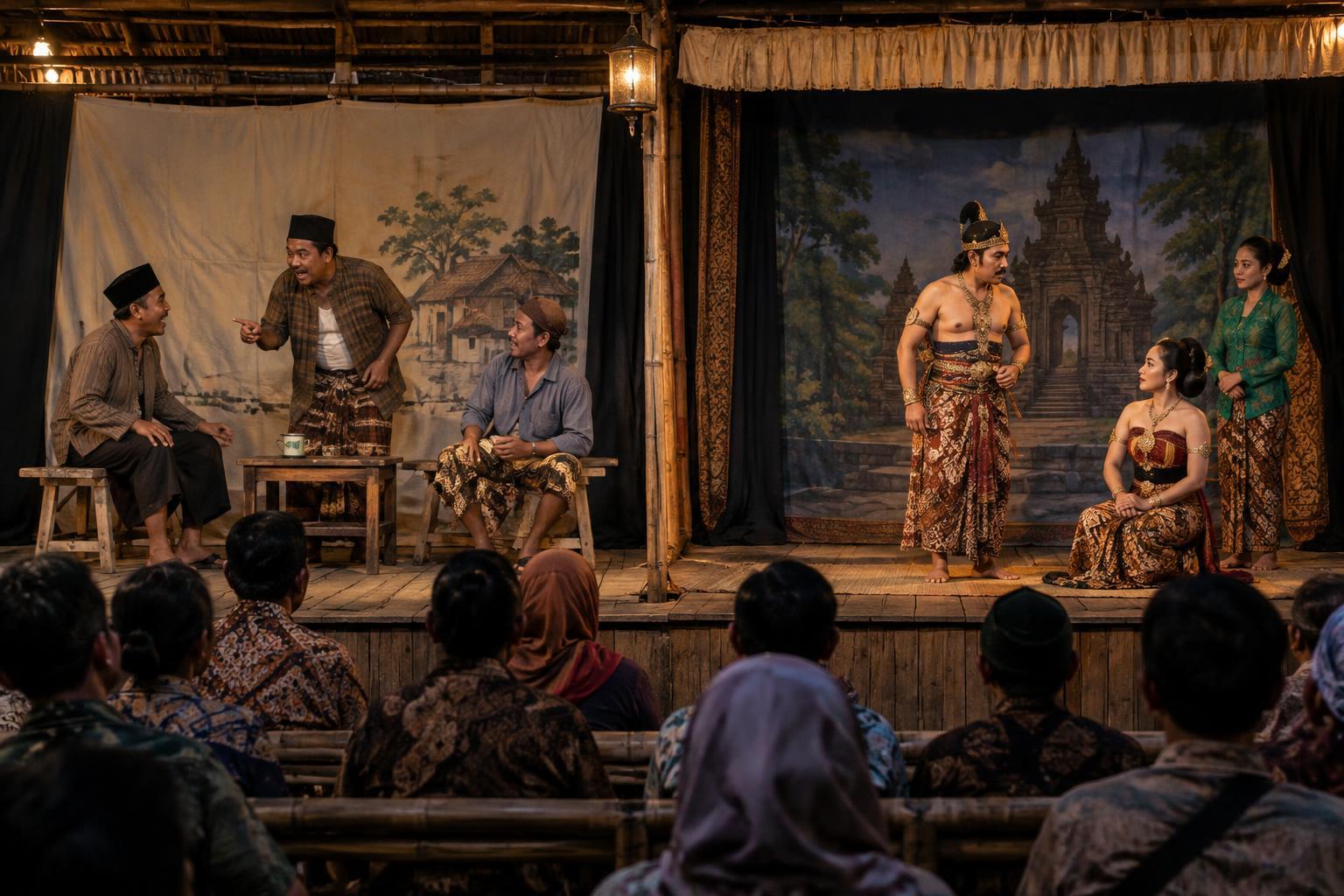
Ludruk and ketoprak are forms of popular theater associated with Java. Both can bring together acting, music, humor and stories familiar to an audience. Neither has a single unchanging script or style: performers and troupes shape each production, and contemporary shows may borrow from older conventions while trying something new. The most useful way to tell the traditions apart is to notice their usual regional associations and the kinds of worlds they place onstage.
Ludruk is closely associated with East Java and often draws energy from ordinary social life. Ketoprak is especially associated with Central Java and Yogyakarta and often stages tales of courts, heroes, legends or Javanese history. These are tendencies rather than rules. A ludruk play may turn to a historical subject, while a ketoprak production may make room for everyday jokes or present-day concerns. Expect variation, not a checklist that every performance must satisfy.
Ludruk: familiar voices and social humor
In ludruk, conversation is often the main attraction. Characters may speak in an East Javanese style, trading quick remarks that invite the audience to recognize a personality, a disagreement or an awkward situation. Domestic life, work and social relationships can all provide material. Comedy may sit beside serious conflict, so laughter does not mean the story has nothing important to say.
Music and sung verse can help set the mood or connect scenes. An opening may include Remo dance, a performance element strongly associated with East Javanese stages. Comic exchanges can feel especially lively when actors respond to one another’s timing and to the room. Historically, some ludruk troupes were all-male, with men also taking women’s roles, but that history should not be taken as a rule for every troupe a visitor might encounter.
A newcomer who cannot follow the dialogue can still watch how a scene works: who enters confidently, who hesitates, when the musicians answer an actor, and what makes the audience laugh. Those reactions offer clues, although a joke rooted in local language may remain difficult to translate.
Ketoprak: stories framed through another world
Ketoprak commonly invites viewers into a story world shaped by folklore, kingdoms or figures from the past. Costumes, character names and speech can signal differences in status or relationships. Javanese ways of addressing others may carry meaning beyond a literal translation: a change in tone can suggest respect, closeness or confrontation. For a visitor, the plot may be easier to grasp by following alliances and disputes than by trying to understand every sentence.
Music, often played with gamelan instruments, helps mark entrances, transitions and shifts in feeling. A ketoprak performance can be funny as well as dramatic; comic characters or moments of informal talk may interrupt a more elevated story. Productions differ in how elaborate their sets and costumes are, so visual grandeur alone is not a reliable way to identify the form.
The name can cause confusion for travelers: ketoprak is also the name of an Indonesian food dish. On a performance listing, look for clues such as a troupe, a play title or a venue before assuming which meaning is intended.
How to watch with curiosity and care
If you are choosing between the two, think about what you hope to experience rather than which form is more ‘authentic.’ Ludruk may appeal if you enjoy quick banter and scenes grounded in recognizable social behavior. Ketoprak may appeal if you like following a legend or historical-style drama through costume, music and character relationships. Either can challenge a visitor who does not speak Javanese, and either can be rewarding without complete comprehension.
Before a show, any available synopsis can help you identify the central characters. During it, listen for changes in musical pace and watch how performers use posture, movement and pauses. Try not to treat laughter as permission to talk over a scene: the audience may be responding to a line you have missed. If you want to take photographs or record, check the venue’s or performers’ rules first, and avoid obstructing other viewers.
Afterward, a simple question about a character or scene may open a conversation if someone is willing to explain. The goal need not be to decode everything in one evening. Watching how a particular troupe tells its story is a better introduction than expecting one performance to stand for all of ludruk or all of ketoprak.


