Why Cirebon’s palaces look different
Cirebon sits on Java’s north coast, where court life developed alongside trade and travel. Its royal palaces, known as keraton, reflect that setting. A visitor may encounter Javanese court layouts, Islamic cultural practices, Chinese decorative objects and European-style furnishings within the same complex. These elements do not form a single, uniform style. They were incorporated into spaces with different purposes over time.
The best-known palaces for visitors are Keraton Kasepuhan, Keraton Kanoman and Keraton Kacirebonan. Each has its own character and visiting arrangements. Rather than treating them as interchangeable stops, allow time to observe how a gateway leads into a courtyard, how a pavilion frames a gathering space, and where ornament appears. Those relationships often reveal more than any one decorative detail.
Start with the layout: gates, courtyards and pavilions
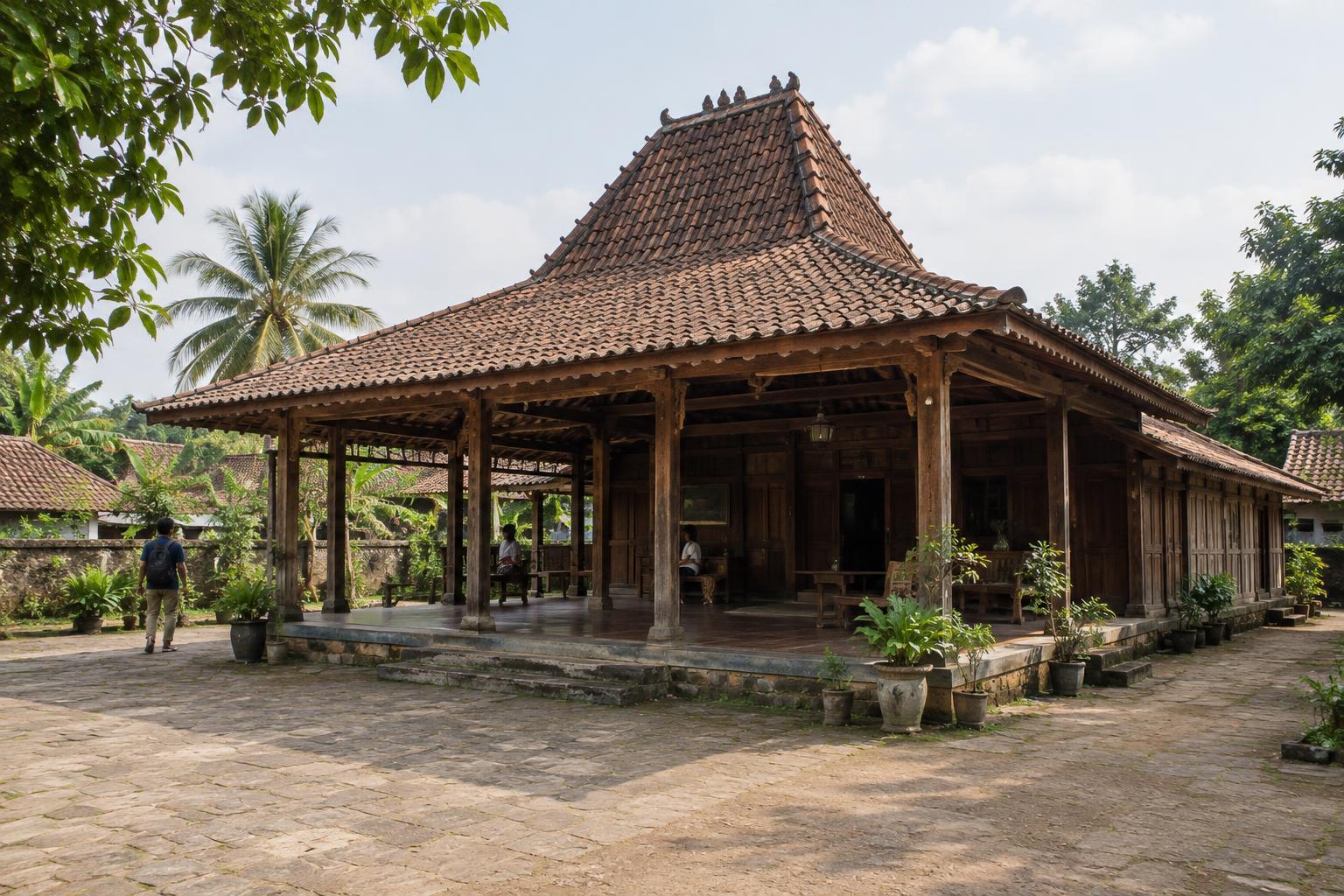
A palace visit usually unfolds in stages. Gates mark transitions between spaces, while open courtyards provide room for movement and gatherings. Roofed pavilions offer shade and places for formal or communal activity. This progression helps explain why a keraton is more than a single grand building: it is a compound in which access, ceremony and everyday use have all helped shape the layout.
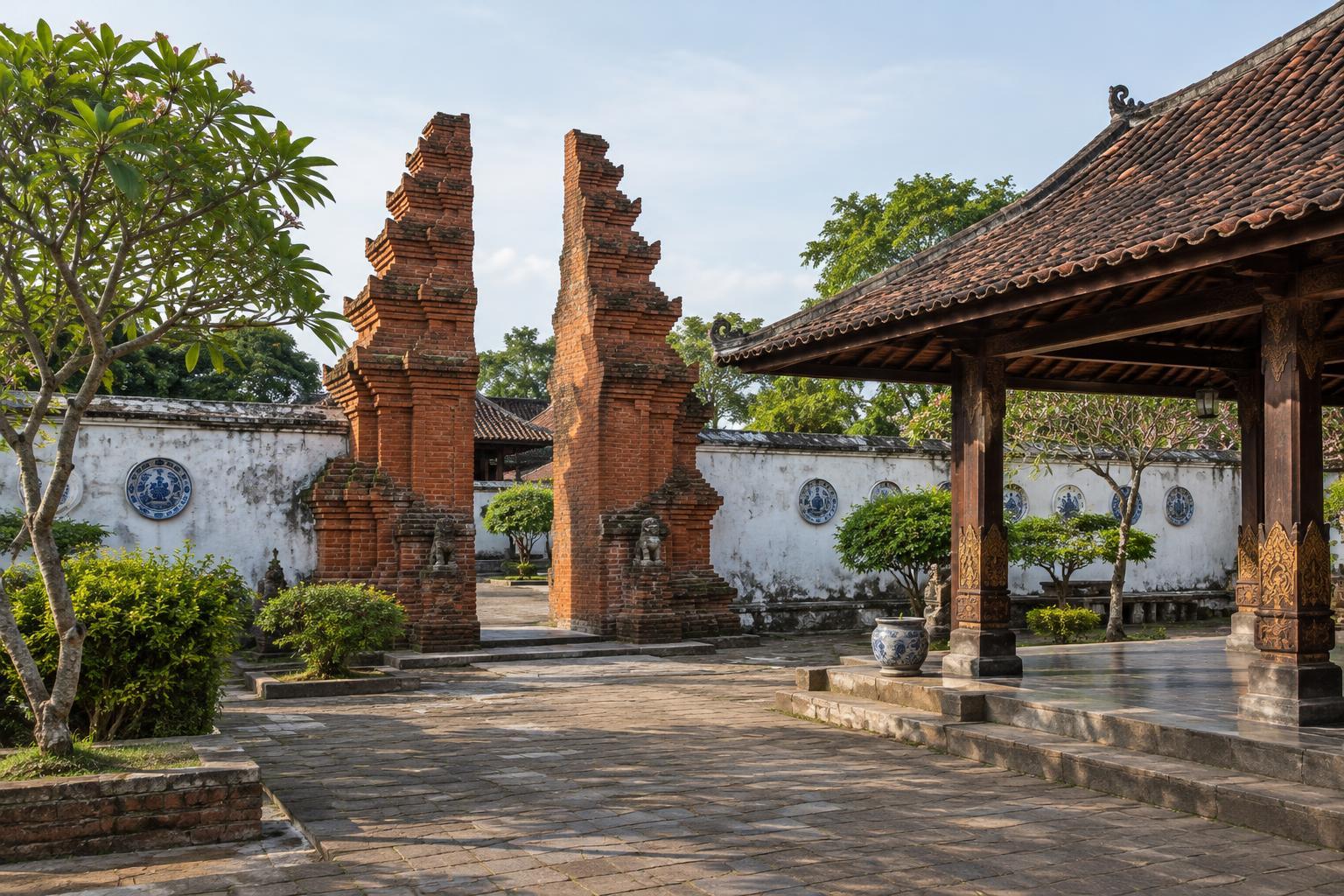
At Keraton Kasepuhan, look for the contrast between brick-built gateways and the lighter forms of open-sided pavilions. The Siti Inggil area is especially useful for observing how several structures relate to a shared open space. Brickwork may feel familiar from other Javanese heritage sites, but its role here is part of a living palace setting. Avoid assuming that every courtyard or building is open to visitors; some areas may remain private or be used for palace activities.
Read the details without reducing them to labels
Cirebon’s palaces are often described through their blended influences, but a detail rarely has just one simple meaning. Ceramic plates set into walls, for example, can draw attention to the city’s long-standing connections beyond Java. They also work as decoration within a local architectural setting. European-style furniture or windows may appear near features associated with Javanese court design, showing how objects and building choices from different contexts could coexist.
Islamic traditions are important to Cirebon’s court culture, yet they are not always expressed as a distinct architectural shape. The use of a space, its relationship to ceremonial life and the care given to particular objects can matter as much as visible ornament. Similarly, Chinese influence should not be reduced to a single color or motif. Look closely at materials, placement and repeated patterns, then use any available interpretation to understand them in context.
Compare the palaces at a comfortable pace
Keraton Kasepuhan offers a good introduction to the scale and layered design of a royal compound. Keraton Kanoman rewards attention to its sequence of spaces and to the ways its own identity differs from Kasepuhan’s. Keraton Kacirebonan provides another perspective on Cirebon’s continuing court traditions, often on a more intimate scale. Seeing more than one palace can make the variety within the city clearer than trying to identify a single representative style.
If you have limited time, choose one palace and explore it slowly rather than rushing through several. Pause where you can see a building in relation to its courtyard and gateway. Note which surfaces are plain and which carry decoration. A guide or on-site explanation, where available, can help distinguish a room’s purpose from an impression based only on appearance. Keep in mind that displays, routes and access may vary.
Visit as a guest in a historic setting
Cirebon’s keraton are heritage sites, but they are also connected to families, traditions and local communities. Follow posted routes, ask before entering an uncertain area, and check whether photography is permitted, especially around interiors or ceremonial objects. Dress and behave respectfully, and give any event in progress space rather than treating it as a performance arranged for visitors.
For planning, check opening arrangements close to your visit and leave room for changes. Comfortable footwear and water make it easier to spend time in open courtyards, where shade may be uneven. Most importantly, bring curiosity without expecting every influence to be neatly separated. The interest of Cirebon’s palaces lies in how their layouts, objects and details share space while retaining the character of each court.