A dance tradition shaped by the courts
Classical Javanese dance is often associated with the courts of Yogyakarta and Surakarta in Central Java. These courts helped preserve and develop distinctive approaches to movement, music and presentation. Their traditions are related, but they are not interchangeable: a familiar story or character may be performed with different emphases in each style. Today, dancers also learn and perform outside palace settings, so a performance need not take place in a court to draw on courtly forms.
The first impression may be one of calm. Steps can be small, transitions unhurried and expressions restrained. Yet stillness and slowness do not mean that little is happening. A dancer’s posture, the angle of a hand and the timing of a turn all contribute to the performance. Rather than looking for constant dramatic action, notice how movement changes gradually and how the dancer sustains a particular presence.
Reading gesture without expecting a fixed code
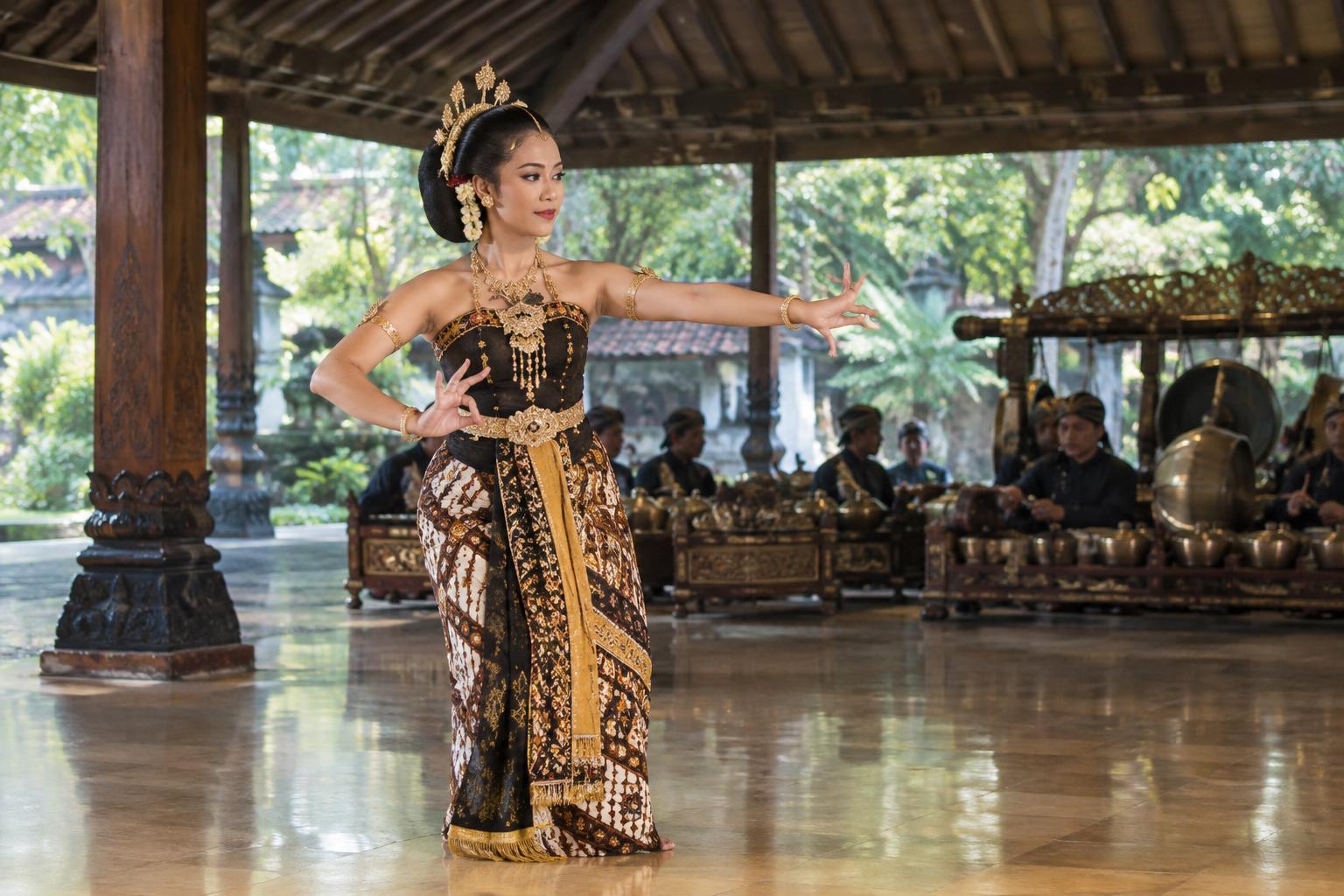
Hands are an inviting place to begin watching. Fingers may extend and curve while the wrists turn with great control. A dancer may direct their gaze toward a hand, then shift attention through the head and shoulders before moving across the floor. These details create a sense of intention, even when a visitor does not know the story. The way a dancer walks or holds their body can also suggest a character’s bearing.
It is tempting to treat every gesture as a word with a single translation, but meaning depends on the dance, its characters and its setting. In a story-based performance, movement can help distinguish a refined figure from a forceful one; elsewhere, the emphasis may be on a sustained mood or a carefully organized group pattern. A program note or an introduction from the performers, when available, can provide useful context without replacing the experience of watching.
Group dances offer another way in. Observe how dancers relate to one another: whether they move together, answer one another or form changing arrangements. Repeated movements may reveal subtle differences in timing and position. Paying attention to these relationships can make an unfamiliar performance easier to follow than trying to identify every gesture at once.
Costume as part of the movement
Costume helps establish the visual world of a dance. Wrapped cloth, fitted upper garments, sashes, jewelry and carefully arranged hair or headpieces can shape a dancer’s silhouette. Details vary with the form, role and performance setting. In a character dance, dress may offer clues about status or temperament; in an ensemble, coordinated clothing can strengthen the impression of unity.
Cloth is not merely decoration. A long sash or scarf can extend the line of an arm and make a turn more visible. The way fabric falls may draw attention to measured steps and controlled pauses. Headpieces and ornaments, meanwhile, ask the dancer to move with awareness of balance and posture. When viewing costume, it helps to look beyond its intricacy and consider how it works with the body.
Music, story and atmosphere
Classical Javanese dance is commonly accompanied by gamelan, an ensemble that may include gongs, metal instruments and drums, sometimes alongside voices. The relationship between dancer and music is close but not always obvious to a first-time listener. Instead of expecting each step to match a prominent beat, listen for recurring musical phrases and changes in pace. A gong or drum cue may help mark a transition, while quieter passages leave room to notice fine movement.
Some dances draw on stories and characters familiar from Javanese performance traditions, including tales also seen in wayang, or shadow-puppet theatre. Others are best approached through their atmosphere and structure rather than a plot summary. Knowing a little background can deepen appreciation, but it is not a prerequisite. Following the interplay of sound, movement and costume is a worthwhile way to experience the dance on its own terms.
How to watch thoughtfully
If you have a choice of performances, check whether an event presents a full work, selected excerpts or an introductory demonstration. These formats offer different experiences, and a short presentation may be especially helpful for someone encountering the form for the first time. Arriving before the performance begins gives you time to read any available notes and settle in without interrupting others.
Follow the venue’s guidance on photography, recording and audience movement. Flash and raised phones can distract performers and block other viewers, even where photographs are permitted. Most of all, allow the dance its own pace. Choosing one element to follow—the gaze, a sash, a group formation or a musical phrase—can reveal more than searching for an immediate explanation of everything onstage.


