A landscape that holds a long record
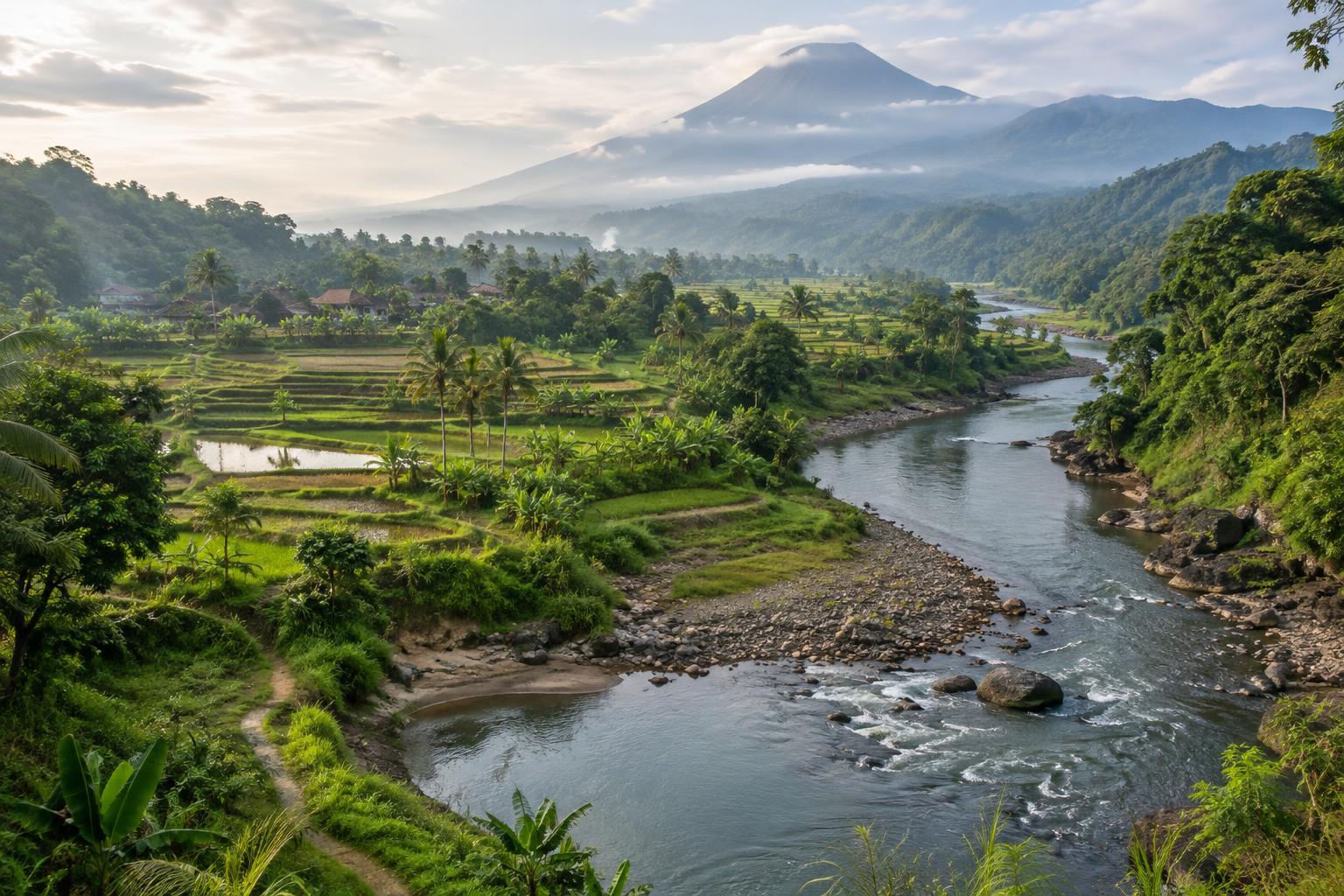
Sangiran, in Central Java near Surakarta, is known for evidence of early human life. It is not one cave or a single excavation pit. The wider area contains layers of sediment that have yielded human fossils, animal remains and stone tools. Museums and displays help visitors make sense of finds that might otherwise look like isolated fragments.
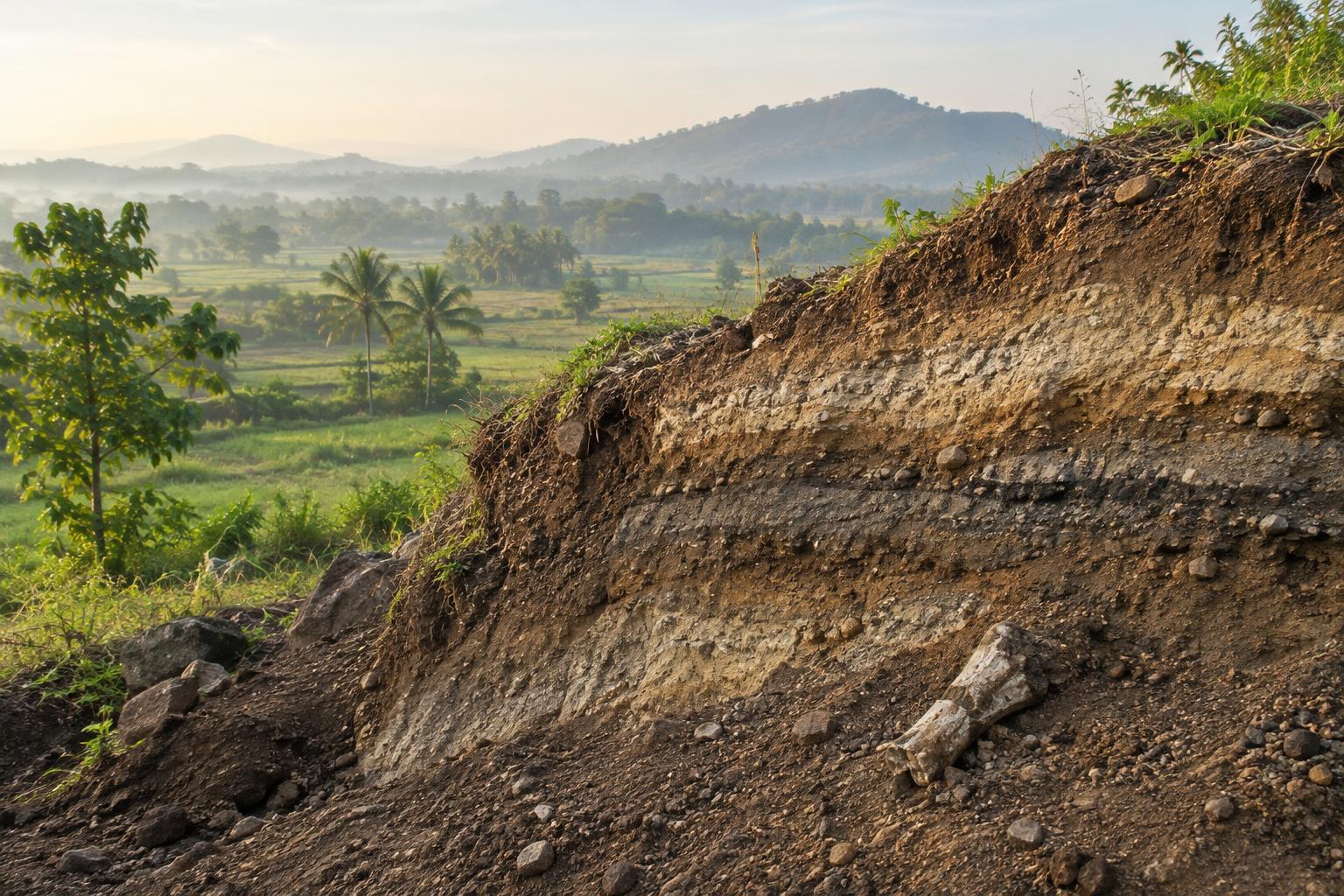
Those layers are central to Sangiran’s story. Over a long span of time, water and other natural processes deposited material across the landscape. Later changes in the ground exposed some of those older deposits. By studying where an object was found and the sediment around it, researchers can place it within a broader sequence of environmental change. A fossil on its own is interesting; a fossil with a well-recorded location and layer can tell us much more.
What the human fossils show
Many of Sangiran’s best-known human remains are associated with Homo erectus, an extinct human species. Skulls, jaws and teeth can offer clues about anatomy, including the shape of the head and the structure of the face. Comparing remains from different places helps researchers examine variation among early humans without assuming that every individual looked or lived alike.
It is worth keeping expectations modest. A fossil skull cannot tell us a person’s name, language or beliefs. Nor does one fragment provide a complete portrait of daily life. Bones survive unevenly, and the record has gaps. Museum reconstructions can make early humans easier to imagine, but details such as hair, clothing and expression may involve interpretation rather than direct fossil evidence.
Animals, tools and a changing environment
Sangiran’s animal fossils broaden the picture beyond human anatomy. They show that other creatures occupied the region during different periods and give researchers material for thinking about past habitats. Stone artifacts provide another kind of evidence: early humans selected and worked materials for practical purposes. Their shapes and the traces left by their manufacture can help researchers study how tools were made.
These finds do not mean that every animal, tool and human fossil on display belonged to one moment or one community. Sangiran’s deposits represent a long, layered history. Understanding that difference makes a visit more rewarding. Instead of asking what a single prehistoric village looked like, ask how the evidence points to changing landscapes and to the different ways early humans may have used them.
How to read an exhibit like a beginner
Start with the simplest questions: What is this object? Where was it found? Is it an original fossil, a cast or a reconstruction? Then look for information about its geological layer and how it was identified. A tooth, a worked stone and a model of a human figure each support different kinds of conclusions. Separating the object from the explanation beside it helps you see how knowledge is built.
You do not need specialist vocabulary to enjoy Sangiran. Terms such as fossil, sediment and artifact are enough to begin: a fossil is preserved evidence of past life, sediment is material deposited over time, and an artifact is an object shaped or used by people. If a display offers more detail than you can take in at once, follow one thread—perhaps human remains or environmental change—rather than trying to memorize every label.
Planning a thoughtful visit
Allow time for both the exhibits and the surrounding landscape, if the parts you hope to see are accessible during your visit. Check current opening information locally before setting out, as arrangements can change. Comfortable footwear, water and sun protection can make moving between stops easier. Treat signs and marked boundaries as part of the visit: exposed ground and fossil-bearing areas are not invitations to dig or collect.
Sangiran is a place to practice careful curiosity. Ask what each find can support, notice where an explanation includes uncertainty, and leave objects where they are. The strongest takeaway is not a single image of “the first human.” It is the patient work of connecting fragments—bones, tools and layers of earth—to understand a much longer human story.