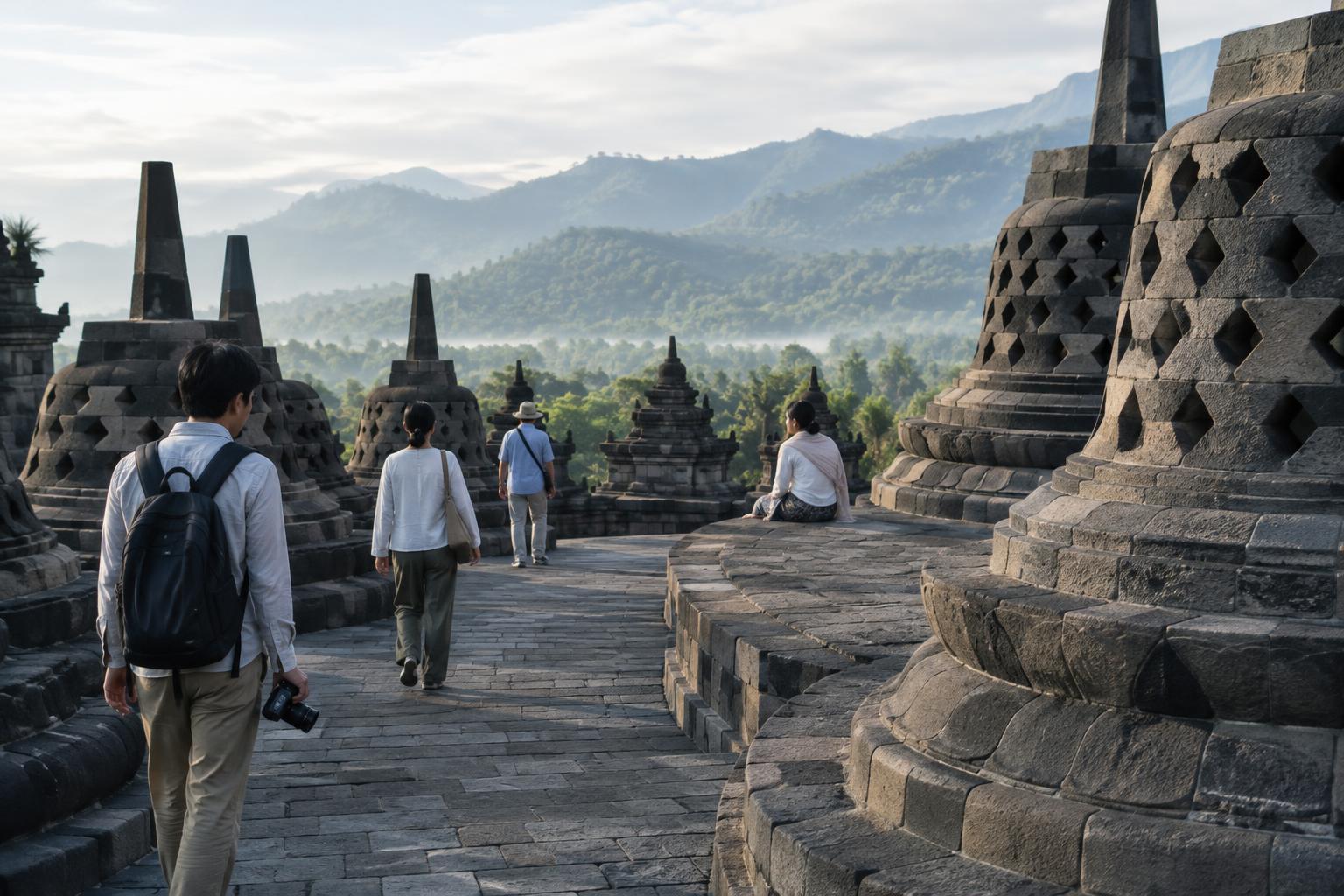
Remember that a sacred site may still be in use
A visit to a sacred site in Java can be part of a journey through history, architecture or landscape. It can also bring you into a place where people are praying, making offerings or marking an important moment in their lives. A temple complex, mosque, church, shrine or pilgrimage site may welcome visitors while still serving a religious community. Approach it as a shared space rather than a backdrop arranged for sightseeing.
Before entering, pause and look for signs, designated routes and any instructions given by staff or caretakers. Access may differ between a courtyard, a main prayer area and a smaller inner space. A ticket or an open gate does not necessarily mean every doorway is open to visitors. If you cannot tell whether an area is appropriate to enter, ask politely or stay in the clearly marked visitor space.
Dress for the place, not just the weather
Java can feel warm, but lightweight clothing can still offer good coverage. A practical starting point is to cover your shoulders and knees and choose clothes that are easy to move in. Bring an extra layer or scarf if your day includes both outdoor sightseeing and visits to places of worship. Some sites have more specific rules, and those local rules should take priority over any general packing advice.
You may be asked to remove your shoes before entering a prayer area or another designated space. Watch where other visitors leave theirs, and avoid placing them where people walk or pray. If coverings or wraps are provided, use them as directed and return them afterward. Rather than assuming that every sacred site follows the same custom, take a moment to observe the entrance and follow the guidance given there.
Treat photography as a question, not a right
A site may allow photographs of its exterior but restrict them inside, during worship or near particular objects. Check signs before lifting your camera. If the rules are unclear, ask a staff member or caretaker where photography is permitted. A quiet phone is usually less intrusive than repeated shutter sounds, flash or a long photo session that blocks a narrow passage.
Permission to photograph a building is not permission to photograph everyone in it. Avoid close images of people praying, grieving or taking part in a ritual unless they have clearly agreed. Be especially careful with children. Do not interrupt someone’s activity to arrange a portrait, and accept a refusal without pressing for an explanation. If an image would depend on standing in a restricted area, climbing on a structure or moving an object, leave the camera down.
Avoid small actions that cause large disruptions
Common mistakes often come from inattention rather than bad intentions. Speaking loudly across a courtyard, playing audio without headphones or taking a call beside a prayer space can disturb others. Keep your voice low, silence your phone and step away if you need a conversation. Give processions, worshippers and people carrying offerings room to pass; do not cross directly in front of them to get a better view.
Historic features can be fragile even when they look sturdy. Stay on permitted paths, do not touch carvings or ritual objects unless invited, and resist the temptation to sit or pose on steps, walls or platforms that may have a religious purpose. Food, litter and footwear also deserve attention: follow site rules about eating, carry away what you bring and notice where shoes are allowed. When a mistake is pointed out, a brief apology and a prompt change of behavior are usually more helpful than a long defense.
Make room for different customs
There is no single set of rules for every sacred place in Java. Practices can vary by tradition, community, building and occasion. At one site, visitors may be encouraged to join a guided route; at another, the most respectful choice may be to remain outside an active worship area. Plan enough time to read signs and adapt, rather than trying to fit every stop into a rigid photo schedule.
If you want to learn more, ask questions at an appropriate moment and listen without treating a worshipper as an on-demand guide. Staff or designated guides may be better placed to explain visitor access. A thoughtful visit does not require you to understand every practice you see. It asks you to respect boundaries, notice the people around you and let the place be more than a stop on your itinerary.


