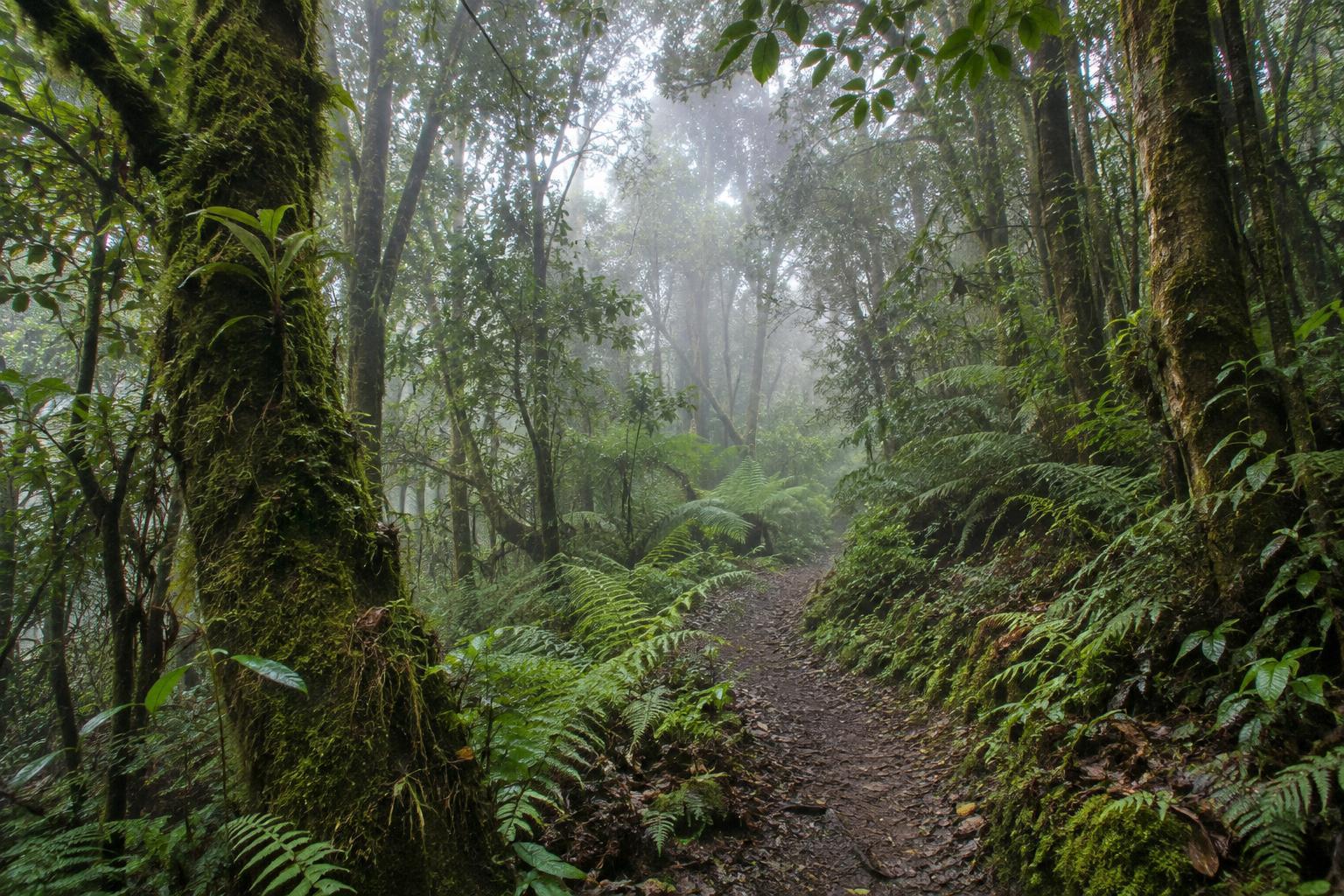
Why a highland forest feels different
Step from an open mountain road into a highland forest, and the change can be immediate: less wind, softer light and a dampness that settles on leaves and clothing. Elevation often brings cooler air, while trees shelter the ground from direct sun. Clouds or mist may move through the canopy, though not every highland forest is misty on every visit. The experience depends on the location, weather and time of day.
A forest can also change over a short walk. An exposed ridge may have smaller, wind-shaped trees, while a sheltered slope supports a denser canopy. Clearings and forest edges receive more light than the interior. Rather than expecting one continuous view, notice how each turn in the trail changes the light, moisture and plants around you.
Read the small details before seeking a viewpoint
Mist can hide a distant panorama, but it brings nearby details into focus. Look at the textures on a fallen branch, the shapes of leaves along the path and the way water gathers at a leaf tip. Mosses and other small plants may grow on damp surfaces, especially where shade helps them retain moisture. Their presence is a reason to look closely, not to step off the trail for a photograph.
Listen as well as look. Drops falling from the canopy can continue after rain has stopped, and birds may be easier to hear than to see among dense leaves. Pause in a safe place without blocking other walkers. A few quiet minutes often reveal more than a rushed search for a dramatic view. If wildlife appears, give it space and avoid feeding it or playing recorded calls.
Plan for changing conditions under the canopy
A short forest walk can feel longer when the path is wet, uneven or steep. Wear footwear with reliable grip, carry water and bring a light layer for cooler conditions. A rain jacket is useful even when the sky looks clear at the trailhead. Keep a phone or camera protected from moisture, and allow enough daylight to return without hurrying.
Before setting out, check the access rules and trail information for the particular area. Some paths have entry requirements or sections that are unsuitable in poor weather. Follow signs and barriers rather than relying on an old route description. If visibility drops, rain becomes heavy or the ground feels unstable, turning back is a sensible way to keep a pleasant walk from becoming a difficult one.
Leave the forest as you found it
Highland vegetation can be easily disturbed where many feet take the same shortcut. Stay on established paths, even when a bend seems to offer a quicker route. Avoid pulling moss from bark, picking plants or moving fallen wood for a clearer picture; those surfaces and materials are part of the forest habitat. Pack out any litter, including food scraps that may seem harmless.
Thoughtful travel also means setting modest expectations. Mist may lift, linger or never arrive, and wildlife encounters cannot be promised. A highland forest is worthwhile without either one: its changing light and close-up textures reward an unhurried visit. Choose a walk that matches your ability, make room for other trail users and let observation, rather than a checklist, guide the day.