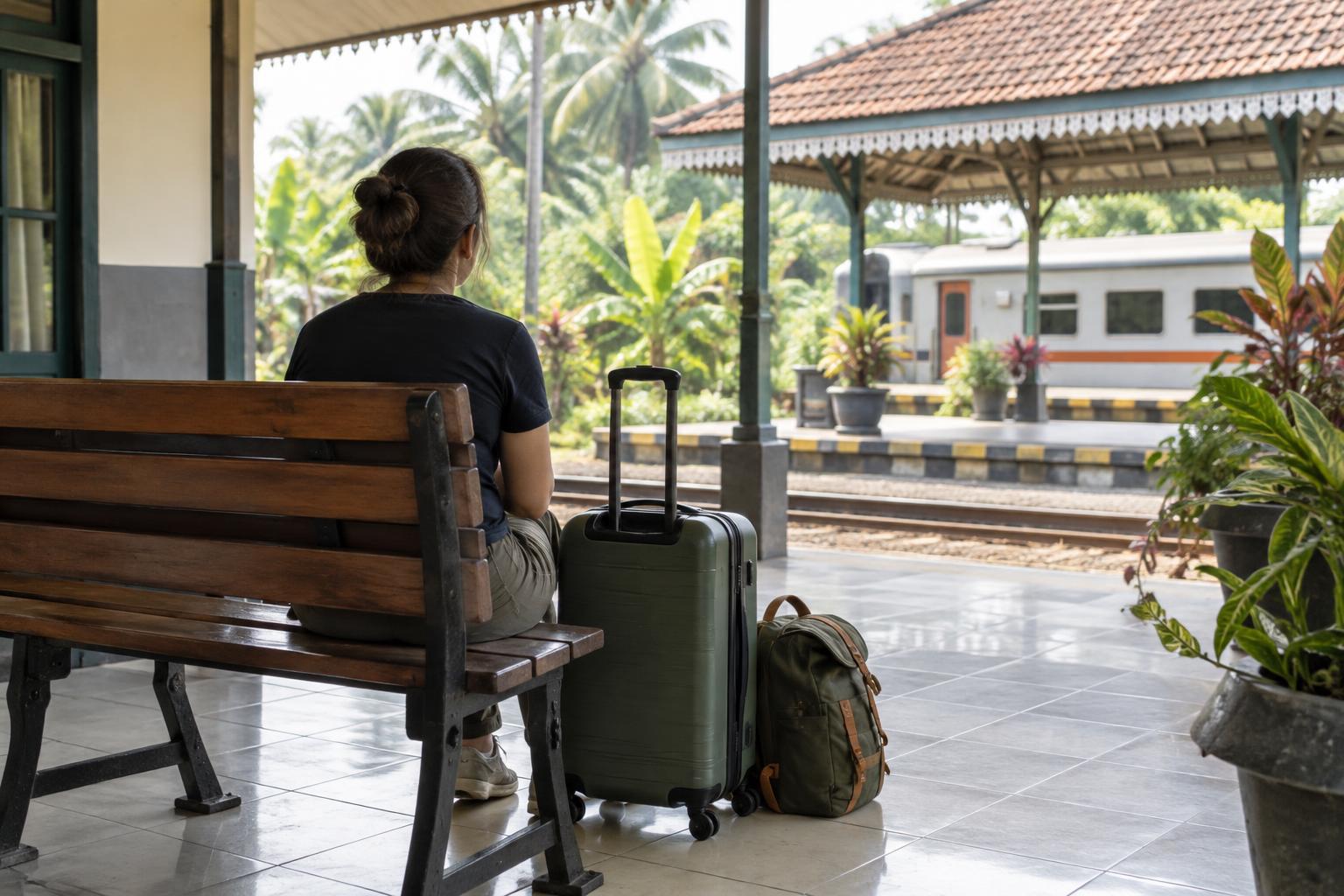
Plan for the hours between rooms
A travel day does not always run neatly from one hotel room to the next. You might check out in the morning, travel for several hours and arrive before your next room is ready. Or you might have an evening departure after a full day in town. Thinking about those gaps while planning your route can save you from spending sightseeing time carrying everything you own.
Before booking a connection, sketch out the whole day: checkout, the journey to the station or terminal, waiting time, arrival and the onward trip to your accommodation. If you hope to visit a market, museum or neighborhood along the way, ask whether you can comfortably bring your bags. A stop that looks convenient on a map may feel less appealing with luggage, especially if it involves stairs, uneven pavement or several vehicle changes. When in doubt, make the transfer your main task and leave sightseeing for after you have settled in.
Choose bags you can move yourself
The most useful luggage test is whether you can lift and carry it for a short distance without help. Wheels are convenient on smooth floors, but a bag may still need to be lifted into a vehicle or carried over steps. A backpack frees your hands but can become tiring if it is overpacked. Neither style is automatically better for Java; choose according to the places you plan to visit and what you can manage comfortably.
Keep the number of separate items small. A main bag plus a compact day bag is generally simpler to track than several loose totes. Pack items you need during the journey where you can reach them without unpacking on a platform or sidewalk. Before departure, check the current luggage rules for each transport service you intend to use, including any size, weight or item restrictions. Do not assume that a bag accepted on one leg will suit every vehicle on your route.
Check storage options before relying on them
Accommodation may be able to hold luggage before check-in or after checkout, but availability, hours and conditions can vary. Ask directly before building a day around that option. Useful questions include when bags can be dropped off or collected, whether a charge applies and whether someone will be present when you return. If storage is essential to your plan, get a clear answer rather than treating it as a standard service.
Consider how you will get back to collect a stored bag. Leaving it at your first hotel may make sense if you are exploring nearby, but it can add a long detour before an onward departure. Storage at your next accommodation may work better if you can go there first. Keep passports, money, medication, electronics and other irreplaceable items with you rather than in a stored main bag. Avoid leaving luggage unattended, even for a brief errand.
Build a day bag for delays and changes of plan
Your day bag should cover a longer-than-expected transfer without becoming another heavy piece of luggage. Start with travel documents, payment options, your phone and charging cable, water and any personal essentials you might need before reaching your room. A light layer or rain protection can be useful depending on your route and the conditions you expect. Pack so that the items you will need at a ticket check or during a stop are easy to find.
Finally, give yourself an uncomplicated arrival plan. Save your accommodation details somewhere accessible offline, decide how you expect to travel from your arrival point and allow time to change that plan if necessary. If you have a tight connection or a late arrival, skip optional stops that require unloading and reloading bags. A good luggage plan is not about finding a perfect way to pack; it is about making each transfer manageable, even when the day unfolds differently from expected.