What is serabi?
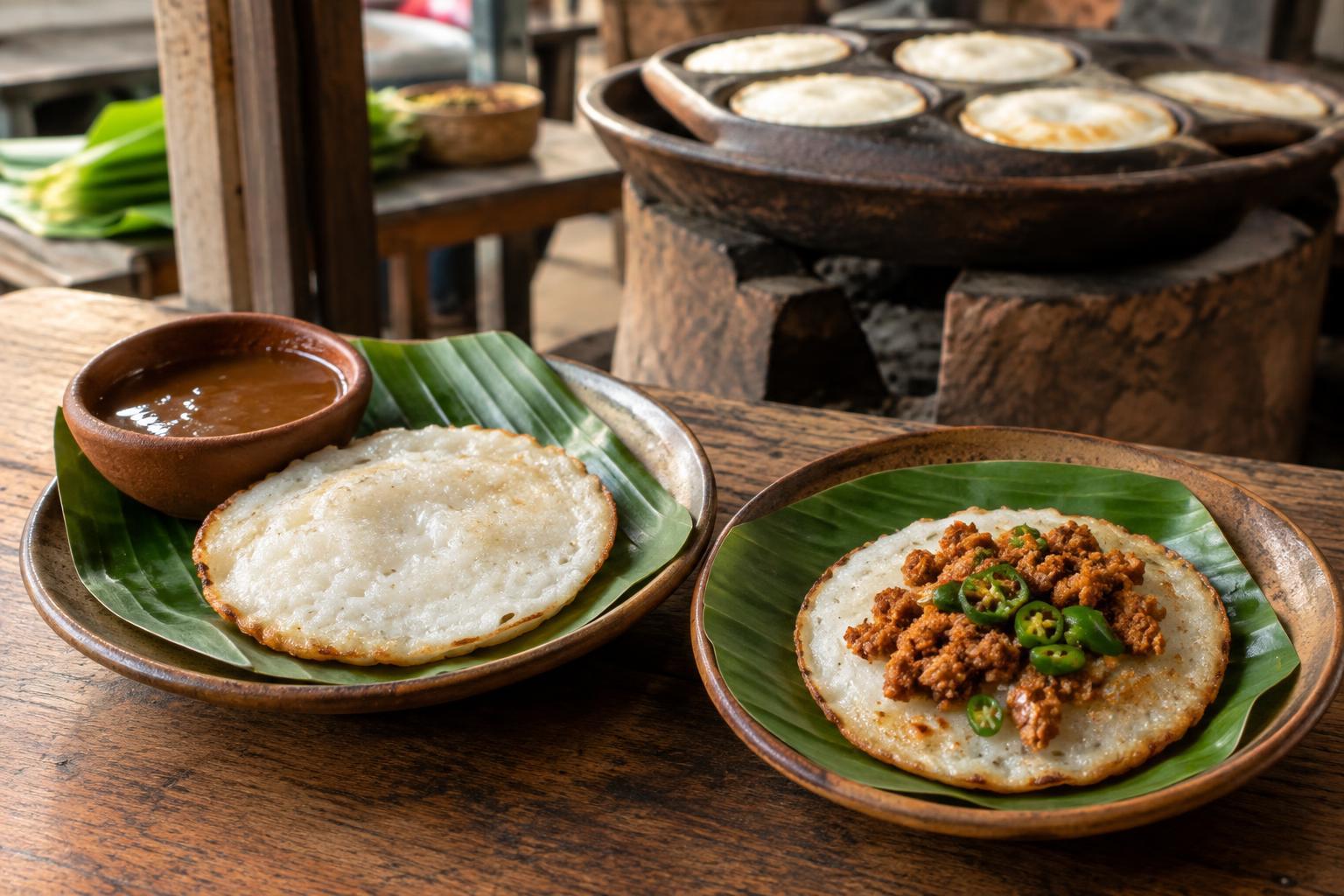
Serabi is a small pancake commonly made from a batter containing rice flour and coconut milk, although recipes vary by cook. It is often prepared in individual pans, producing a soft center and edges that may be lightly browned or crisp. Some versions are served plain, while others come with a topping or sauce. For a first-time visitor, the most useful thing to know is that serabi names a family of snacks rather than one fixed recipe.
You may encounter serabi as a morning snack, an afternoon treat, or something to take away from a market stall. Look at what is being cooked before ordering: some sellers make each pancake while you wait, and others display ready-to-eat portions. Freshly cooked serabi is often warm and tender, but a packaged portion can be convenient if you want to carry it for a short time. Ask how it is served before assuming that the sauce or topping is included.
Sweet versions: plain, topped or served with sauce
A plain serabi gives you the clearest sense of its base flavor: mildly sweet, with coconut often more noticeable than sugar. Sweet versions may come with a palm-sugar-and-coconut-milk sauce, sometimes called kinca, that can be poured over the pancakes or offered separately. Other stalls put a sweet topping directly on the batter as it cooks. The result can range from a simple snack to a richer dessert, so it helps to glance at neighboring orders before choosing.
In Solo, you may find thin, soft serabi folded or rolled for easy eating, sometimes with coconut or a sweet topping. Elsewhere, a thicker pancake might arrive with sauce in a separate container. These descriptions are useful starting points, not strict rules: individual sellers have their own recipes. If you prefer less sweetness, ask whether a plain version is available or whether the sauce can be served on the side. Eat a sauced portion soon after it is prepared if you want to enjoy the contrast between the soft pancake and its topping.
Savory serabi and the importance of checking toppings
Serabi does not always mean dessert. In parts of West Java, you may see a savory version topped with oncom, a fermented ingredient often seasoned with chilies and aromatics. The topping changes the character of the snack: expect a more assertive, savory bite rather than a coconut-and-sugar finish. Heat levels depend on the seller’s seasoning, so ask about chili if you are unsure. When several varieties are offered, specifying “manis” for sweet or “asin” for savory can help you start the conversation.
Toppings also matter if you avoid particular ingredients. A pancake batter that looks simple may still contain ingredients you would not expect, and a savory topping may have its own seasoning mixture. Rather than relying on the appearance of the finished snack, ask the seller what goes into the variety you want. If you have a serious food allergy, a quick verbal answer may not resolve concerns about shared pans or utensils; choose food prepared under conditions you can assess with confidence.
How to order and enjoy a portion
At a stall, first check whether serabi is sold individually, in a set, or by flavor. Pointing to a displayed variety is often the simplest way to order, particularly when several toppings are available. You can ask whether it is ready to eat or still being cooked, and whether sauce comes with it. If you are buying more than one type, keeping sweet and savory portions separate makes it easier to identify them later. For takeaway, ask for sauce to be packed separately if that option is available.
Serabi is easiest to appreciate when you treat it as a snack rather than expecting a full meal. Try a plain piece first if one is offered; it gives you a reference point for the batter’s texture and coconut flavor. Then compare it with a topped or sauced version. A freshly cooked pancake may be hot in the center, so give it a moment before taking a bite. Whether you choose a sweet portion in Solo or a savory one in West Java, paying attention to the seller’s particular style is more rewarding than looking for a single definitive serabi.