Start with the cloth, not a motif dictionary
Batik is a way of decorating cloth through resist dyeing. Wax is applied to selected areas so they resist color when the fabric is dyed. The process can be repeated to build up a design. In Java, batik is also a form of clothing with a place in family occasions, workplaces and ordinary routines. Looking at both the technique and the way a cloth is used gives a fuller picture than treating it only as a pattern.
It is tempting to search for a single translation of every motif: this shape means courage, that one means harmony. Some designs do carry associations with particular places, histories or occasions, but meanings can vary by context. A motif may also be chosen because someone likes its color or because it suits an outfit. When a name or explanation is offered, take it as an invitation to ask another question: Who uses this design here, and how is the cloth usually worn?
Notice how making methods shape the result
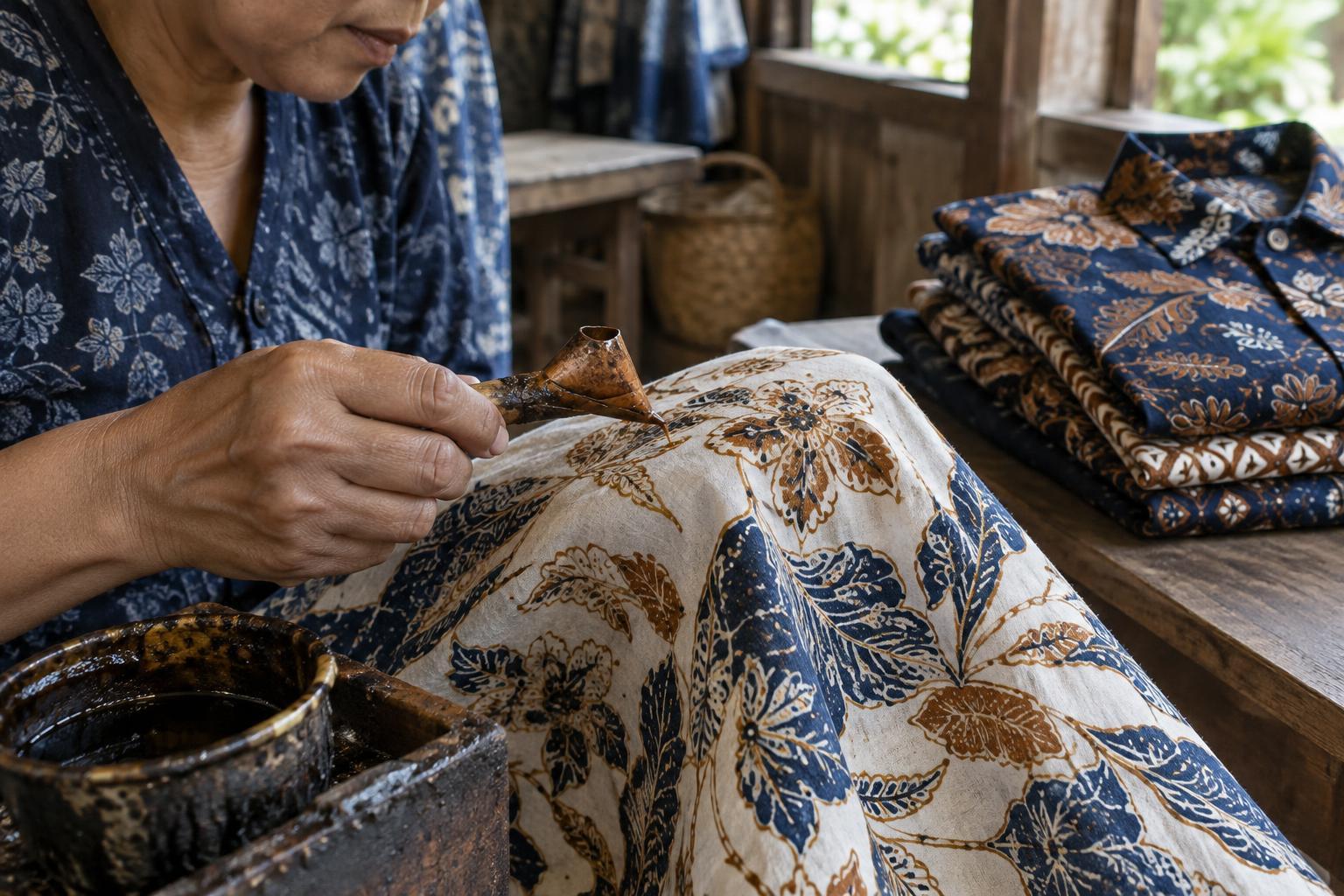
Different approaches to applying wax leave different visual traces. In batik tulis, a maker draws with a wax-filled tool, allowing for fine lines and small variations. In batik cap, a patterned stamp applies wax repeatedly. Some cloth combines the two methods. These distinctions are useful when examining a piece, but they do not tell you whether its design will appeal to you or whether it will be comfortable to wear.
Try looking closely at repeated shapes, the edges between colors and the reverse side of the fabric. Ask how the design was made rather than guessing from its price or appearance alone. A shop or workshop may be able to explain its own pieces; if that information is unavailable, it is better to leave the question open than to invent a maker or technique. Taking time to compare cloths can make the choice more rewarding than buying the first familiar-looking pattern.
Look at where and how batik is worn
Batik appears in many forms, from uncut lengths of cloth to shirts, skirts and other tailored garments. A single household may use it differently for work, celebrations and informal visits. This range is part of its cultural life: heritage is not limited to garments kept for ceremonies. As you travel, notice how fabric, cut and occasion work together, rather than expecting everyone to wear batik in one traditional style.
Dress expectations depend on the setting. An invitation, a place of worship or a formal gathering may call for more care than a casual outing. If you are unsure, ask a host or local contact what clothing would be appropriate; avoid assuming that a batik print makes any outfit suitable. Batik can be a useful starting point for noticing how appearance communicates belonging and respect. If that broader subject interests you, browse Styling Techniques · Wig and Hairwear Guide for a separate look at hairwear styling.
Choose a piece you can understand and use
When shopping, begin with practical questions. Is the item a finished garment or a length of fabric? Can you check its measurements, feel the material and learn how it should be washed? A cloth that works with your habits is more likely to remain in use than one bought solely because its pattern has a memorable name. If you plan to have fabric tailored, ask what quantity and width the intended garment requires before purchasing.
You can also ask a seller what they know about a design’s local associations or the process used to make it. Listen without expecting every piece to have an elaborate story. If you visit a workshop, follow its rules on photography and keep clear of tools, hot wax and work in progress. These small courtesies make room for the people and labor behind the cloth. The most useful thing to take away may be a better habit of looking: notice the fabric, ask about its use and allow its meaning to depend on context.