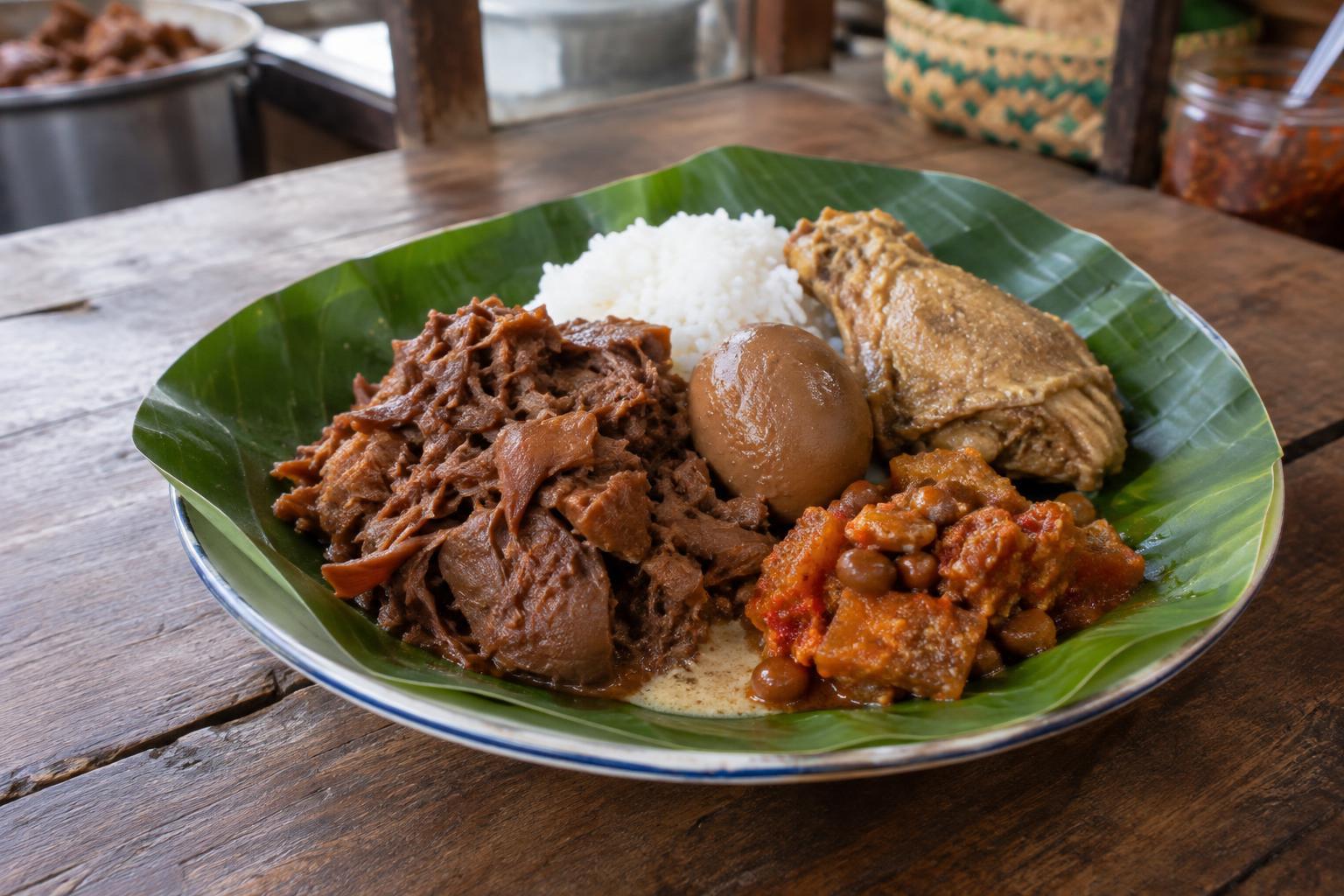
A slow-cooked young jackfruit dish
Gudeg begins with young, unripe jackfruit. At this stage, the fruit is firm and relatively mild rather than tasting like ripe, sweet jackfruit. Cooks cut it into pieces and simmer it with seasonings until it softens and absorbs the cooking liquid. The result is tender, savory-sweet jackfruit that is usually eaten as part of a meal, not as a dessert.
In Yogyakarta, gudeg is commonly served over rice with several accompaniments. Recipes and plates vary between kitchens, so there is no single combination that defines every serving. What makes the dish recognizable is the contrast between its gently sweet jackfruit and the richer, saltier or spicier foods placed alongside it.
Where the sweetness comes from
Palm sugar is a principal source of gudeg’s sweetness. As it dissolves into the cooking liquid, it seasons the jackfruit throughout rather than sitting on the surface like a glaze. Coconut milk contributes richness and a rounded flavor. Aromatics such as shallots, garlic, galangal and bay leaves may also be used, depending on the cook’s recipe. Together, they keep the dish from tasting simply sugary.
Time matters as much as the ingredient list. Slow cooking gives the jackfruit a chance to soften and take on the sweet, savory liquid. Some cooks add teak leaves during cooking to deepen the jackfruit’s reddish-brown color; the leaves are not what makes gudeg sweet. The balance of sugar, salt and seasoning differs from one kitchen to another, so a first taste can be sweeter or more savory than expected.
What comes with a plate of gudeg
A common starting point is nasi gudeg: gudeg served with steamed rice. It may be topped with an egg cooked in the seasoned liquid, chicken, or both. Tofu and tempeh are also frequent companions. Some servings include areh, a thick, rich coconut-milk topping that adds a soft, creamy contrast to the jackfruit and rice.
For heat, look for sambal goreng krecek, a spicy side made with cooked cattle-skin crackers, often in a seasoned sauce. Its chili kick can cut through the sweetness of gudeg. Not every plate includes every side, and portions may be assembled to order. If you prefer a milder meal, ask about the spicy components before ordering; if you want more contrast, try a bite that combines gudeg, rice and a little krecek.
Wet, dry and other differences worth noticing
You may see gudeg described as wet or dry. Wet gudeg has more cooking liquid or sauce and can feel especially soft and rich. Dry gudeg has been cooked down further, leaving less visible liquid and a more concentrated coating on the jackfruit. Both can have a sweet flavor; the choice is largely about texture and how much sauce you want with your rice.
The accompaniments can change the impression of the whole dish. An egg adds richness, chicken makes the plate heartier, and krecek brings spice. Even two servings of the same style may differ in sweetness or seasoning. Rather than looking for one definitive version, notice which combinations you enjoy and use them as a guide when ordering again.
How to enjoy gudeg thoughtfully
If gudeg is new to you, begin with a modest serving and taste the jackfruit on its own before mixing everything together. Then pair it with rice and the sides. This makes it easier to distinguish the gentle sweetness of the gudeg from the spice of krecek or the richness of a coconut topping. A plate with several components is designed to be enjoyed in alternating bites as well as mixed together.
Do not assume a plate is vegetarian just because jackfruit is its main ingredient. Chicken, eggs and cattle-skin krecek are common additions, and ingredients used in seasonings or sauces can vary. If you avoid particular foods, ask what is included in both the gudeg and its sides. With that small bit of attention, you can choose a serving that suits your preferences and appreciate why this slow-cooked dish is so closely associated with eating in Yogyakarta.


