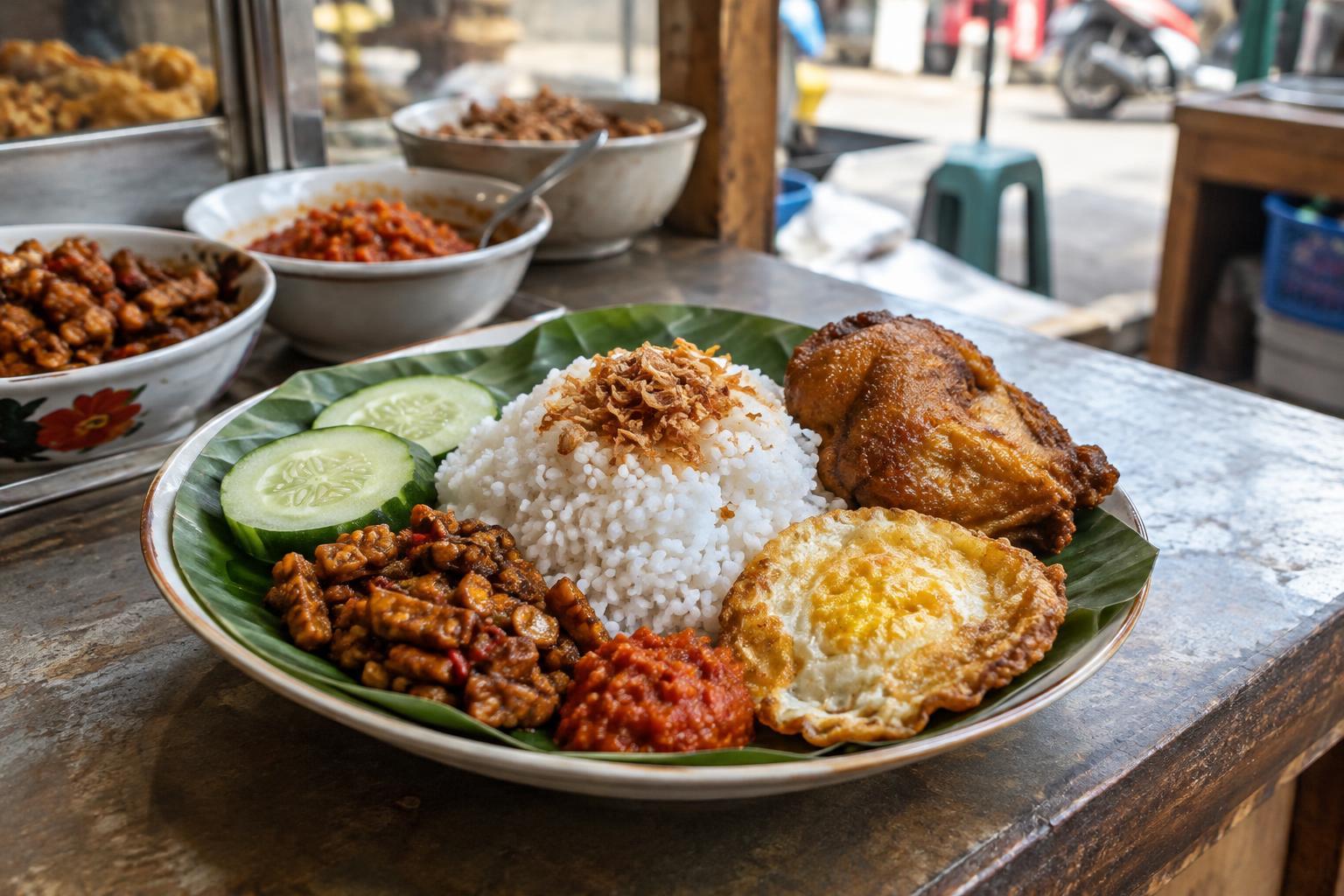
What makes nasi uduk different from plain rice
Nasi uduk is rice cooked with coconut milk and aromatic ingredients, giving it a richer taste and fragrance than plain steamed rice. It is closely associated with Betawi food culture in Jakarta, though you may find it elsewhere on Java. A serving can be a quick breakfast or a more substantial meal, depending on the sides you choose.
The rice is the starting point, not the whole dish. A simple plate might have a modest scoop of rice, a little sambal, and a few accompaniments. At another stall, you may be invited to select from trays of fried foods, eggs, and other prepared dishes. There is no single combination you must order.
The sides you might find
Common companions include fried shallots, cucumber, sambal, egg, tempe, tofu, and crunchy crackers. Some sellers offer fried chicken, fish, or small portions of other cooked dishes. Thinly sliced omelet or an egg cooked in sambal may appear in place of a plain egg. Availability varies by stall and by the time you visit, so treat the display as the best guide to what is actually being served.
The sides change the balance of the meal. Fried shallots and crackers add crunch; cucumber offers a fresh contrast; sambal supplies heat. If you want to taste the coconut rice itself, try a forkful before mixing everything together. Then add sambal gradually, especially if you do not yet know how hot that stall makes it.
A portion may also come with a small serving of noodles or another carbohydrate-rich side. You can ask for fewer extras if you would rather focus on the rice and one protein. Conversely, if you need a filling meal, choosing an egg, tempe, or chicken alongside the rice may be more satisfying than relying on the garnishes alone.
How to order at a stall
First, look at whether meals are displayed as ready-made portions or assembled from individual choices. With a ready-made portion, you can point to the one you want and ask what it includes. At a stall with trays of sides, ask for nasi uduk, then indicate your choices one at a time. Simple words such as telur for egg, tempe for tempe, and ayam for chicken can help, but pointing politely is also useful.
If a price is not posted, ask about the total before the plate is prepared, particularly when adding several sides. A basic serving and one with chicken or multiple extras may be priced differently. You can also ask for sambal to be served separately, which lets you control the heat without changing the rest of the plate.
Takeaway portions may be wrapped or packed with the components close together. If you plan to eat later, consider asking for crackers and sambal separately so the crackers stay crisp and the sauce does not spread through the rice. Food is generally most enjoyable when eaten soon after purchase, especially in warm weather.
Questions worth asking before you eat
Nasi uduk’s coconut rice may sound suitable for a plant-based meal, but the complete plate needs a closer look. Sambal, sauces, crackers, and prepared sides can contain shrimp or other animal ingredients. If that matters to you, ask about each component rather than assuming that a plate without visible meat is vegetarian. You can request a simpler combination of rice, cucumber, and sides whose ingredients the seller can explain.
People avoiding particular ingredients should also ask how the rice and sides are made at that stall; recipes are not identical everywhere. If a seller cannot confirm an ingredient or preparation method, choosing something else is a reasonable option. For everyone else, nasi uduk is an approachable way to build a meal around fragrant rice: start simply, notice the contrasts between the sides, and adjust your next plate to suit your appetite.