The movement beneath the island
Java’s volcanic landscape begins far below the surface. South of the island, the Indo-Australian tectonic plate moves beneath the Sunda Plate, which carries Java. This process is called subduction. As the descending plate sinks, it contributes to conditions that produce magma. Some of that molten rock rises through the crust and, over many eruptions, builds volcanoes.
This is why volcanoes appear across much of Java rather than in one isolated spot. They form part of a wider volcanic arc that extends beyond the island. The process unfolds over immense spans of time, but its results are easy to see: steep peaks on the horizon, broad upland areas and lowlands crossed by rivers carrying material down from the mountains.
Why the volcanoes do not all look alike
A volcano is not always a single, neat cone. Repeated eruptions can pile up layers of lava, ash and other debris to make a high, steep-sided mountain. Eruptions and collapses can also leave a wide depression called a caldera. Later activity may build smaller cones within or near it. Weathering, landslides and flowing water gradually reshape these features, so neighboring volcanic areas can have very different outlines.
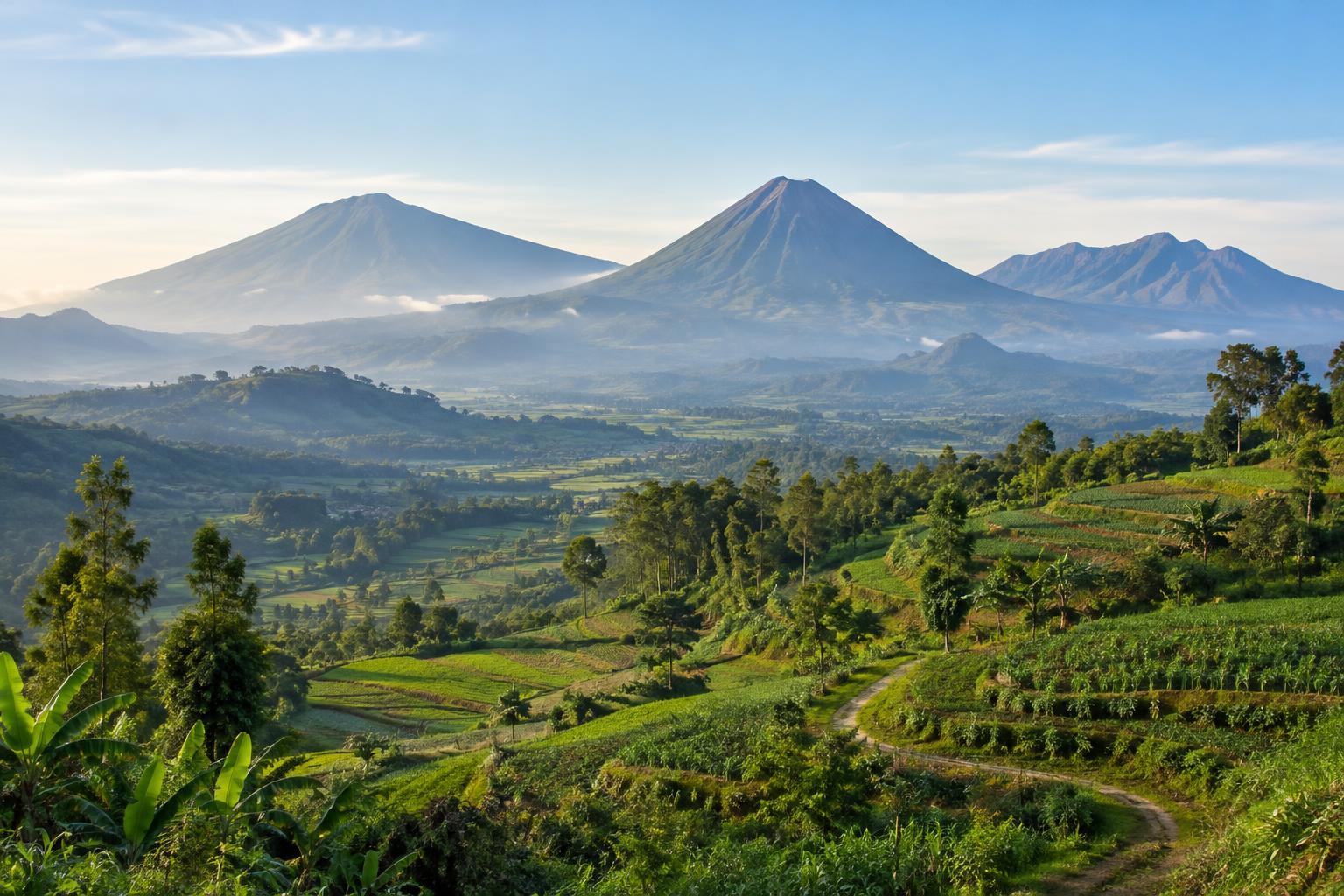
Java offers useful examples. Mount Merapi is often recognized by its prominent cone, while the Bromo area is known for a broad volcanic basin containing smaller peaks. Ijen’s volcanic highlands include a crater lake. These places are not interchangeable: their terrain, access routes and conditions differ. Seeing several of them can help a traveler recognize that “volcanic landscape” describes a range of landforms, not one standard view.
How volcanoes shape the land between peaks
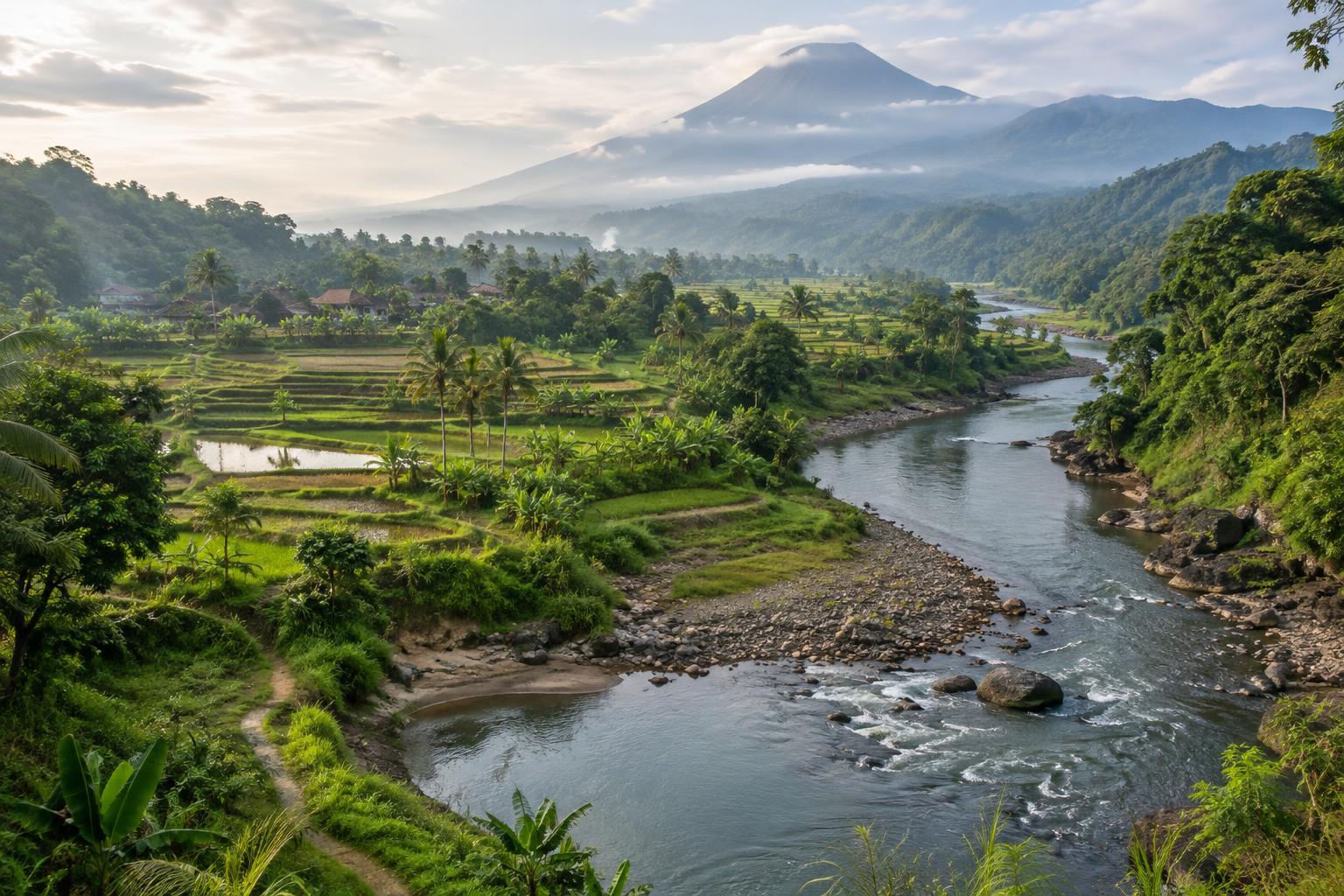
The influence of a volcano extends well beyond its summit. Ash and rock can settle on slopes and surrounding land; streams then carry loosened material into valleys. Over time, erosion cuts channels into mountain flanks and deposits sediment farther downhill. Rainfall and river flow help determine where the land becomes rugged, where valleys widen and where routes between settlements are practical.
Volcanic material can contribute to productive soils once it has weathered, although fertility depends on more than volcanic origins alone. Water, climate, slope and land management also matter. This helps explain why farms and villages may be found close to dramatic mountain scenery. The same slopes that offer opportunities for cultivation can present challenges, including erosion and changing conditions during heavy rain or volcanic unrest.
Reading a volcanic view
A distant peak is easier to understand if you look at the whole scene. Notice whether it rises as a distinct cone or sits within a wider cluster of ridges. Look for valleys radiating away from the high ground, and for flatter areas where rivers have spread sediment. A viewpoint on a clear day may reveal several parts of this story at once; cloud or mist can hide them just as quickly.
It also helps to distinguish visible features from assumptions. A bare slope is not necessarily the result of a recent eruption, and a green one is not proof that a volcano is inactive. Plant growth, farming, weather and past eruptions all affect what a place looks like. Local place information and official notices are better guides to present conditions than appearance alone.
Exploring with curiosity and care
Java’s volcanoes can be experienced in many ways, from viewing a peak from a town or valley to taking a longer walk in the highlands. You do not need to reach a crater to appreciate the landscape. A slower journey can leave room to notice changing vegetation, riverbeds, cultivated slopes and the ways roads follow the terrain.
Volcanic areas are also dynamic. Activity levels, weather, trail access and visibility can change, sometimes with little warning. Before setting out, check current guidance from the relevant authorities and follow local access restrictions. Allow for cold, wet or uneven conditions at higher elevations, and avoid treating barriers or warnings as optional. The most rewarding view is one you can enjoy without putting yourself or others at unnecessary risk.