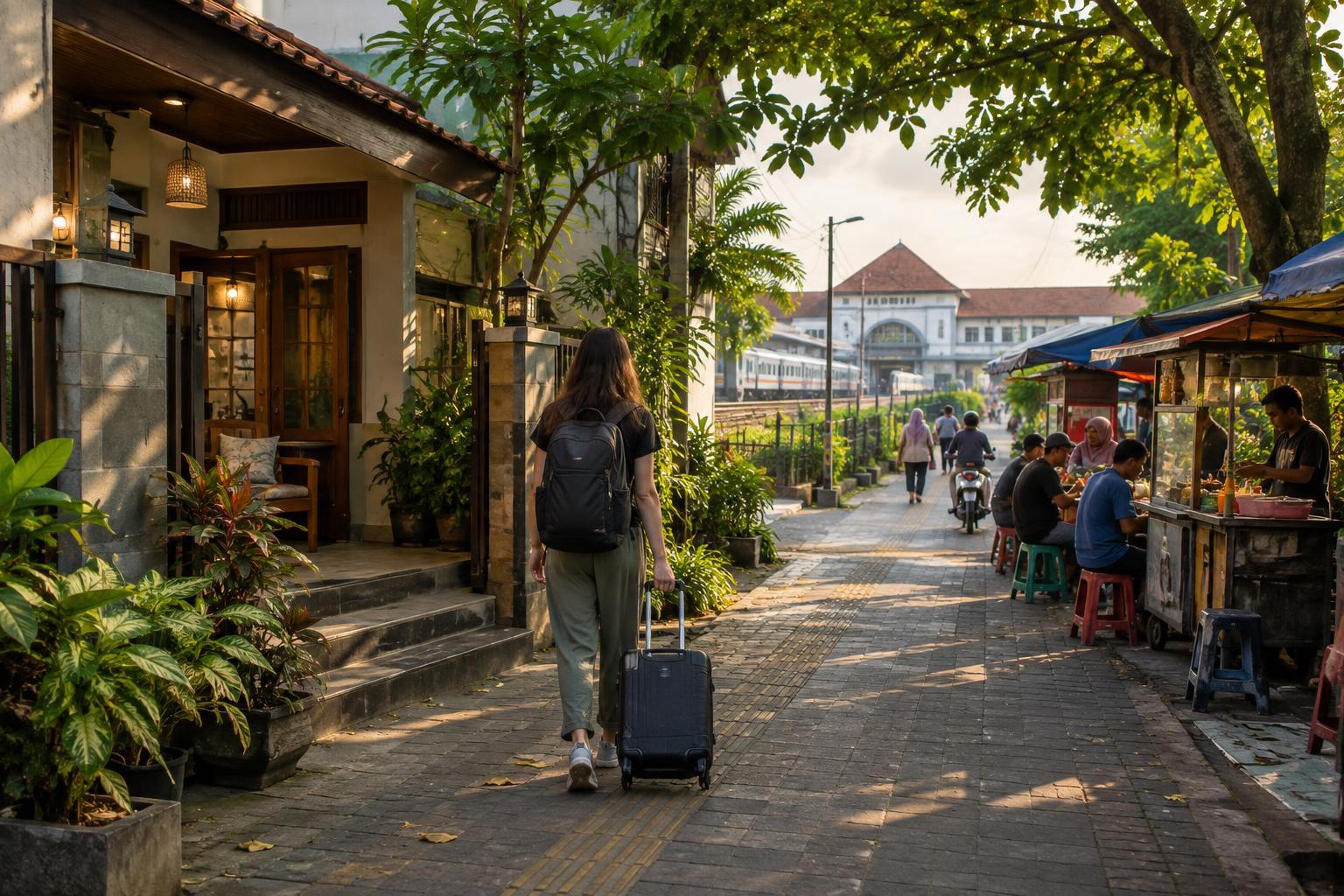
Start with the journey you will actually make
When choosing where to stay in Java, it helps to think less about a city’s geographic center and more about your daily route. A room beside a landmark may be convenient for one morning, yet awkward for every train departure, meal and evening walk that follows. Before comparing neighborhoods, list the places you expect to visit and note which days involve luggage, early starts or late returns.
Then identify your main priority. If you are crossing Java by rail and spending only a night or two in each city, a station-area base may save effort. If you have several days for a particular heritage district or landscape, staying nearer that area may give you more unhurried time there. If your plans are flexible, an area with easy meals and transport options can be the most forgiving choice. The best base is often a compromise, not the closest point on a map.
Choose a station base for short stops and onward travel
Staying near a station can make a rail-focused itinerary simpler, particularly when you have an early departure or arrive with heavy bags. You can settle in sooner, leave with less pressure and avoid crossing town just to catch a train. Station districts may also have straightforward transport connections to other parts of the city.
Check what “near the station” means in practice. A short map distance does not guarantee an easy walk: entrances may be on a different side of the tracks, and busy roads, uneven pavements or midday heat can change how a route feels with luggage. Look at the likely walking path, not just the distance, and consider whether you would be comfortable using it after dark. If not, allow for a short ride.
A station base need not determine your whole visit. In cities such as Yogyakarta or Solo, you can use it as a practical arrival point and travel out for cultural sights and meals. But if you plan several full days away from the station district, compare the cost and effort of those repeated trips with staying closer to your main activities.
Stay near sights when time on site matters most
A base near the places you came to see can make room for slower exploration. You may be able to visit early, take a break during the hottest part of the day and return to the neighborhood in the evening. This is especially useful when your interests are concentrated in a walkable historic area or when a nature outing requires a very early start.
Be precise about which sight you mean. A city may be a useful gateway to a temple, mountain or rural landscape without being immediately beside it. For example, staying in Yogyakarta and staying near Borobudur lead to different daily routines. Likewise, a base chosen for access to Mount Bromo should be judged against your intended route and departure arrangements, not the broad description “near Bromo.”
A sight-focused stay may offer fewer casual meal choices or make onward travel less convenient. Check how you will reach your accommodation, where you can eat without a long journey and how you will leave on departure day. If the attraction is only one part of a longer trip, a day visit from a better-connected base may suit you more.
Use food streets as a clue to everyday convenience
For travelers who enjoy trying local dishes without planning every meal, staying near a cluster of eateries can make a city feel easier to explore. You can step out for breakfast, compare simple dinner options and return without organizing a long ride. Nearby shops and active streets may be useful too, especially when your sightseeing plans change.
Food districts vary by street and time of day. A lively evening area might be quiet at breakfast, while a busy roadside location can bring traffic noise into your room. Look for recent descriptions of the immediate block and consider whether your lodging faces the main road or sits farther back. If quiet sleep matters more than having a stall at your doorstep, choose a nearby side street and walk to the food area.
Keep your expectations flexible. Opening hours and individual vendors can change, so avoid building a stay around one meal spot. A neighborhood with several choices, plus a reasonable route to your other stops, is usually more useful than a room selected for a single famous dish.
Make the final choice door to door
Shortlist two or three areas, then trace a typical day from each one: accommodation to your first stop, onward to a meal, and back again. Repeat the exercise for your arrival and departure days with luggage in mind. This reveals inconveniences that a central-looking map pin can hide.
Before booking, check the accommodation’s exact entrance, its stated check-in arrangements and whether the room setup suits your needs. Read descriptions carefully for noise, stairs and access to transport rather than relying only on a neighborhood label. If you expect to arrive late or set out before dawn, confirm the practical details directly with the property.
You do not need one perfect base for all of Java. A station stay may work for a quick transfer, a sight-focused stay for a slower excursion and a food-friendly neighborhood for several relaxed city days. Match each stop to what you will do there, and moving through the island becomes easier to enjoy.


