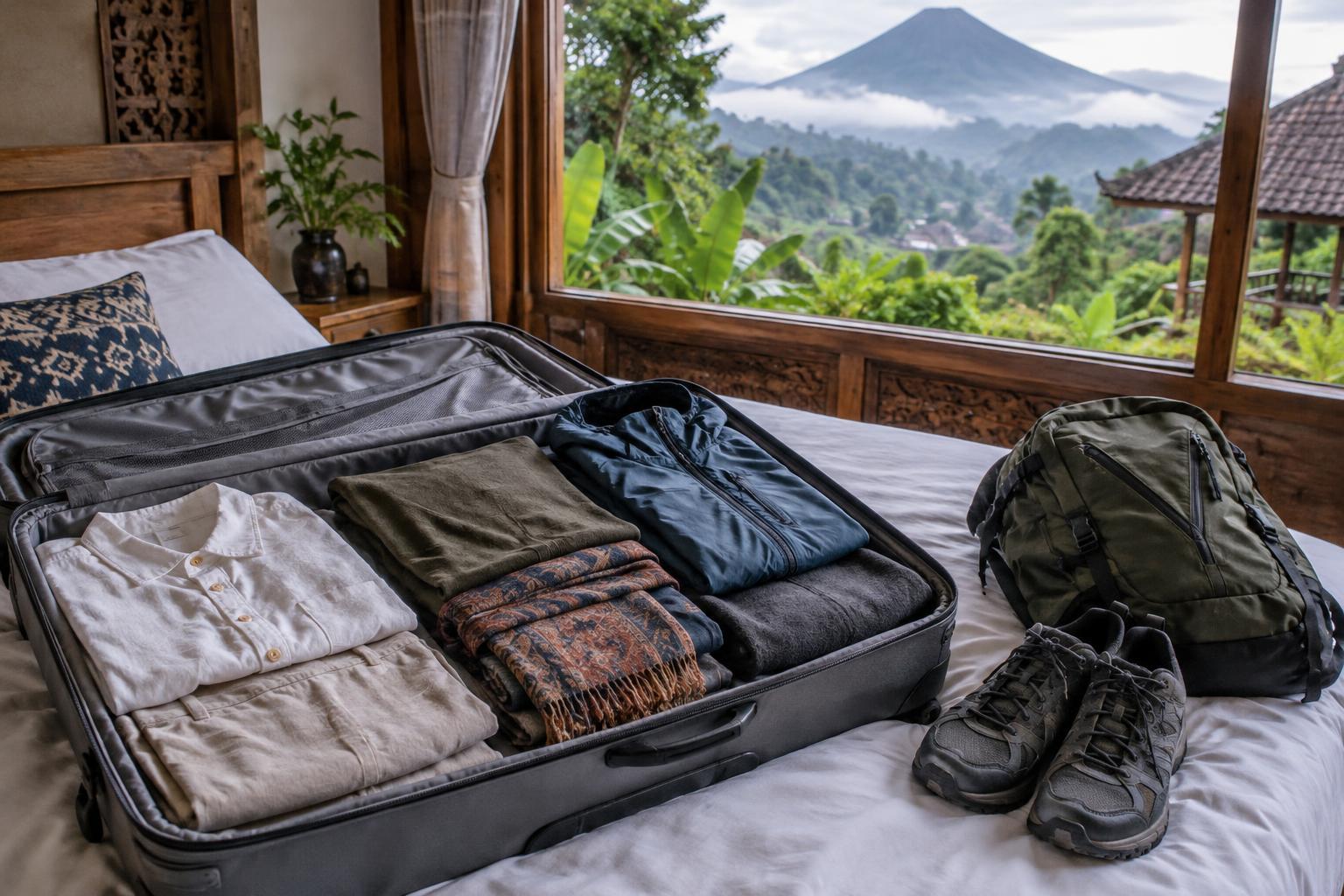
Build a small wardrobe around your route
Packing for Java is easier when you think about the places on your itinerary rather than trying to prepare for every possible condition. A day exploring a city may feel warm and humid, while an early start in the highlands can call for a jacket. Heritage visits, meals out and long stretches of walking add their own practical considerations. A compact wardrobe of layers usually works better than a suitcase full of outfits for single occasions.
Start with comfortable, breathable tops and bottoms that you can wear in different combinations. Lightweight trousers or a long skirt can serve several purposes: they offer coverage, help protect your legs from sun and insects, and may feel more appropriate at cultural sites. Choose pieces that dry reasonably quickly if you expect to do laundry during your trip. Before packing a special item, ask whether you will wear it more than once.
Dress for warm city days without sacrificing comfort
For city walks, markets and everyday travel, loose clothing often feels more comfortable than tight, heavy fabric. Cotton can feel pleasant against the skin, while some lightweight synthetic or blended fabrics may dry faster after washing. Neither is perfect for everyone, so pack materials you already know you like wearing in warm weather. A spare top can be useful if you plan to spend most of a day outdoors.
Footwear deserves as much thought as clothing. Bring a pair of shoes or sandals that you have already worn for substantial walks, rather than relying on a new pair. Sidewalks, steps and uneven surfaces can make cushioning and grip valuable. If you prefer sandals, consider whether they will also be comfortable in rain. A light hat and a small, packable rain layer are useful additions without taking up much room.
Keep a modest option ready for sacred sites
Java’s temples, mosques and other places of worship do not all follow the same visitor rules. Requirements can vary by site and by the area you enter, so check locally before your visit and follow posted guidance or instructions from staff. As a practical starting point, pack an outfit that covers your shoulders and knees. A lightweight long-sleeved shirt, loose trousers or a long skirt makes it easier to adjust without needing an entirely separate wardrobe.
A scarf or shawl is a versatile extra layer, but it is not a substitute for checking a site’s specific requirements. Some places may ask visitors to remove shoes, wear a provided covering or avoid entering certain areas. Easy-to-remove footwear and socks you are happy to walk in can make those transitions more comfortable. When in doubt, choose understated clothing and give yourself time to observe the setting before taking photographs or moving through the site.
Add warmth and weather protection for the highlands
Higher-elevation stops can feel noticeably cooler than the cities, especially before sunrise, after sunset or when it is windy. If your plans include an early viewpoint visit, a long outdoor excursion or a highland overnight stay, bring a warm mid-layer such as a fleece or lightweight sweater. A wind-resistant outer layer can make a significant difference when you are standing still rather than walking.
Rain is another reason to pack in layers. A compact rain jacket is more useful for an extended walk than an umbrella alone, while a small umbrella can be convenient on city streets. Keep a dry pair of socks available, and consider a simple bag or pouch for protecting your phone and spare clothes. You do not need heavy cold-weather gear for every highland stop; match what you bring to your route, activities and tolerance for cool mornings.
Pack for the transitions, not just the destinations
Many travel days involve several settings: transport, a warm outdoor stop, an indoor space and perhaps a cooler evening. Keep one adaptable layer near the top of your day bag instead of burying it in your luggage. A change of socks and a small bag for damp clothing can also make a long day more pleasant. If you expect to wash clothes along the way, leave enough time for items to dry before you need to repack.
A simple packing check is to lay out one warm-weather outfit, one modest outfit and one cooler-weather combination using as many shared pieces as possible. Add comfortable walking footwear, rain protection and only the extras your actual plans call for. That approach leaves room in your bag while helping you feel prepared for Java’s varied everyday experiences.


