A puppet designed for light and movement
Wayang kulit is often described as shadow puppetry, but a finished puppet is more than a silhouette. Its outline, pierced details, painted surface and movable arms all help give a character its identity. In a performance, a puppeteer moves the figure against an illuminated screen. Viewers may notice the shadow, the colored puppet itself, or both, depending on where they sit.
The making process brings several skills together. A craftsperson must keep the hide firm enough to hold fine details, cut shapes that read clearly from a distance and attach rods that allow controlled movement. Designs and working methods vary among makers and regional traditions, so there is no single template for every wayang kulit puppet.
Preparing the hide and planning the character
Many traditional puppets are made from animal hide, commonly buffalo or cow. The hide is cleaned, scraped and dried until it forms a thin, stiff sheet. Preparation matters: uneven thickness can make delicate areas harder to cut, while a warped sheet can complicate later painting and mounting. Makers may obtain hide that has already been prepared rather than carrying out every stage themselves.
Next comes the character design. A maker draws or transfers a pattern onto the hide, setting out the head, body, arms and decorative details. The profile, posture, headdress and costume are not merely ornaments; they help distinguish one figure from another. Before cutting, the maker also needs to consider where the arms will pivot and where the rods will sit, because those practical choices affect how the puppet can be handled.
Cutting outlines and pierced patterns
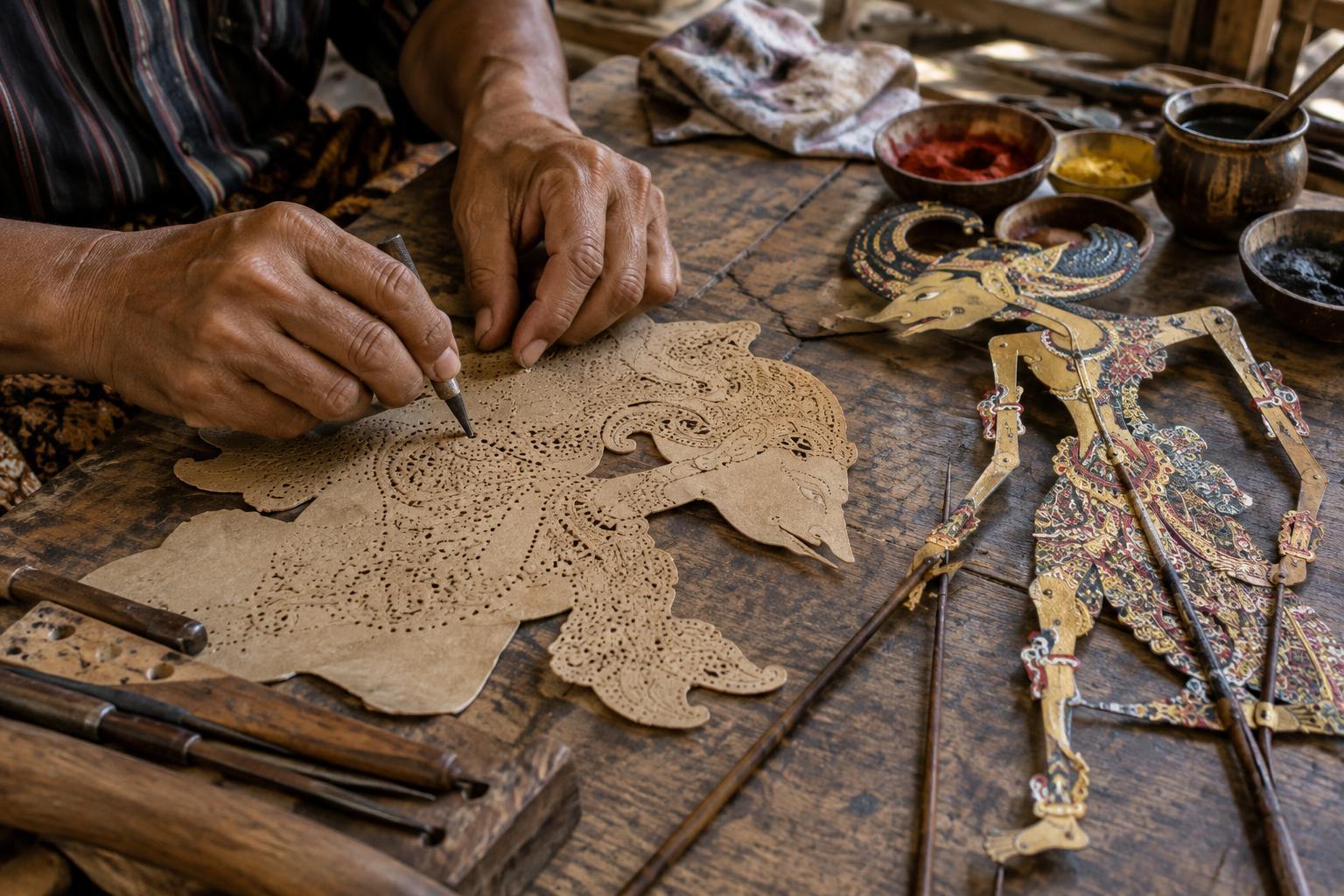
Cutting is one of the most recognizable stages of wayang kulit craft. Using small chisels or punches and a mallet, the maker works through the hide to shape its outer edge and open the tiny spaces inside the design. This detailed piercing is often called tatah. Repeated cuts can form patterns in clothing, jewelry and headpieces, while carefully placed openings keep the design legible when light passes through or around it.
The task calls for a balance between detail and strength. A narrow strip of leather may look elegant but can be vulnerable if it is cut too thin. The maker therefore has to think about the puppet as an object that will be lifted, turned and moved, not just viewed on a worktable. Separate arm pieces are cut with the same attention to both appearance and durability.
Adding color and character
After cutting, the puppet is painted. This decorative work is often known as sungging. Color helps define facial features, costume layers and intricate motifs that a shadow alone may not show. Makers can build up areas of color in stages, using fine brushes to follow the shapes established by the cuts. Some finishes include metallic-looking accents that catch the light when the puppet is seen directly.
Painting is not simply a matter of filling empty spaces. Lines and contrasts must work with the character’s outline and pierced pattern rather than obscure them. Choices of color and finish differ between workshops, and a puppet made for frequent performance may have different practical priorities from one intended mainly for display. In either case, patient surface work gives the figure much of its close-up appeal.
Mounting the rods and noticing the finished work
The final assembly turns the decorated figure into a controllable puppet. A main rod supports the body, while smaller rods operate the arms. Traditional rods may be fashioned from horn; other materials are also used. The arms are joined at pivot points so they can move without coming loose or rubbing awkwardly against the body. A well-mounted puppet should feel stable in the hand yet allow its gestures to remain clear.
If you encounter wayang kulit craft in Java, look beyond the overall image. Notice how the pierced spaces change across the costume, how thin areas of hide are protected by the design and how the arm joints work. Whether the puppet is in a workshop, a collection or a performance setting, those details reveal the many decisions behind an object made to be both seen and moved.