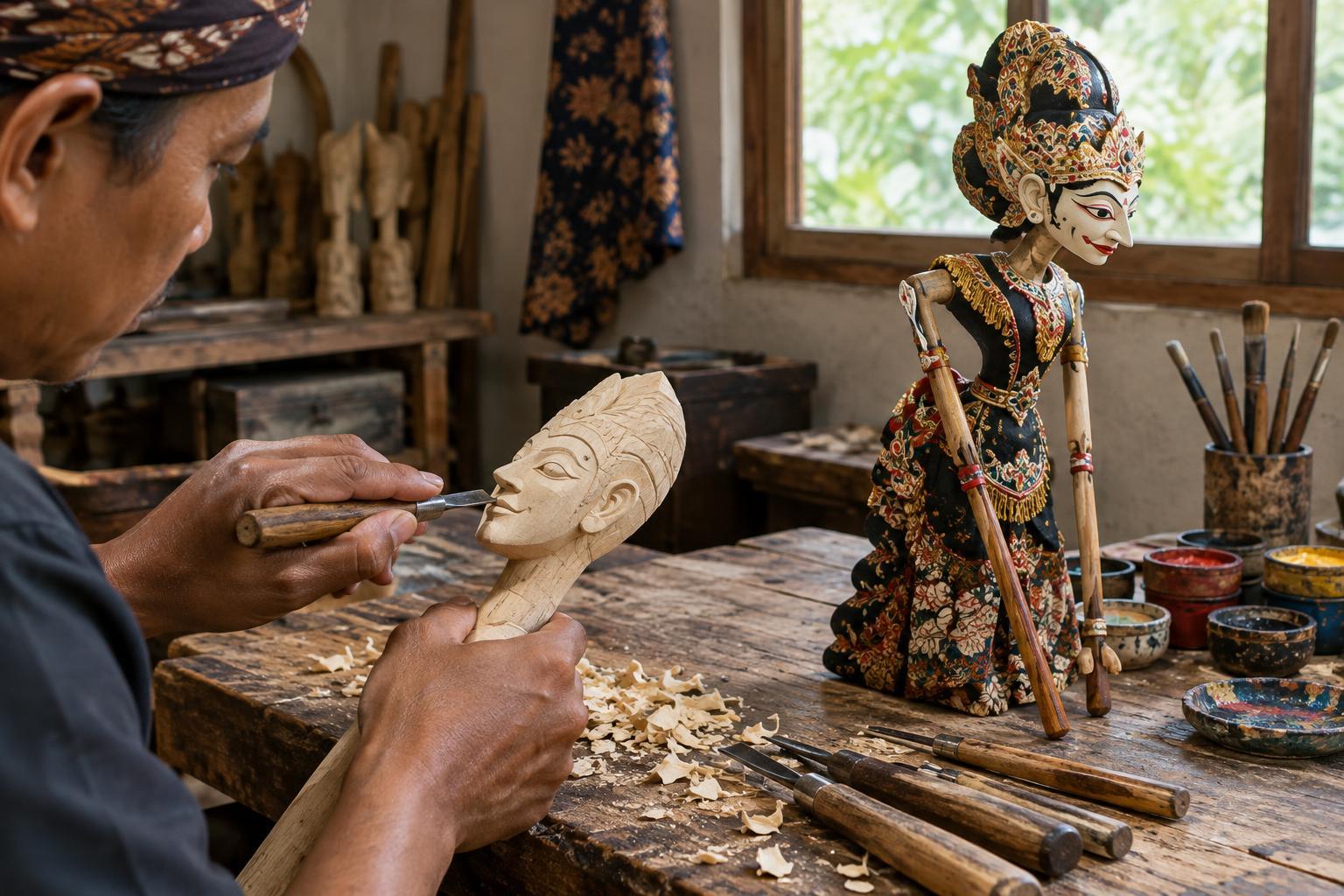
A puppet made for the stage
Wayang golek is a form of wooden rod-puppet theatre closely associated with Sundanese culture in West Java. A finished puppet may look like a decorative figure, but its construction serves a practical purpose: it must be visible to an audience, recognizable as a character and responsive in a puppeteer’s hands. The carved head, movable arms, fabric costume and control rods all contribute to the performance.
The craft does not follow one fixed recipe. Character designs, materials and methods can differ between makers. Even so, looking at how a puppet is built offers a useful way to appreciate the many decisions behind its expressive face and seemingly effortless movement.
Shaping the wooden figure
A maker begins by planning the character’s proportions and selecting wood suitable for carving. The head is especially important. Its profile, headdress and facial features help establish who the puppet is meant to represent. A light enough finished head also makes the puppet easier to handle during a performance.
The carver removes larger areas of wood to establish the basic shape, then works on smaller features such as the nose, eyes, mouth and ornamentation. The body and arms are prepared as separate parts rather than carved as one rigid figure. That separation allows the arms to be attached so they can move. Sanding and other finishing work smooth the surfaces before painting, while the carved details give the painter a clear foundation.
Painting a recognizable face
Paint turns the carved form into a more legible character. Base colors are followed by finer lines around the eyes, brows, mouth and decorative elements. The painter needs a steady hand: from a short distance, the details reward close attention, while from farther away, the overall expression and strong contrasts help the face read clearly.
Facial design is not simply a matter of making every puppet look lifelike. Stylized features can suggest a character’s temperament, role or status within a story. These visual conventions may vary, so it is worth resisting quick assumptions based on a single color or expression. Comparing several puppets side by side often reveals more than studying one in isolation.
Clothing, joints and control rods
Costume-makers add another layer of identity through cloth, headwear and accessories. Fabric has to create a convincing silhouette without preventing movement. Depending on the character and the maker’s design, a costume may involve patterned textiles, contrasting colors or small decorative pieces. These elements are part of the puppet’s visual storytelling, not merely a way to conceal its construction.
Assembly brings the carved and sewn parts together. A central rod lets the puppeteer hold and turn the figure, while smaller rods attached to the arms allow gestures. The joints need enough freedom for expressive movement but enough stability for the puppet to keep its form. It is here that craftsmanship becomes especially tangible: a puppet must work in motion, not just look balanced on a shelf.
How to look more closely
If you encounter wayang golek in a workshop, shop or performance space, look first at the relationship between the head and the hands. Notice how a slight turn changes the face’s apparent expression, and how an arm gesture gives emphasis to a scene. Up close, examine the transitions between carved wood, painted detail and fabric. They show where different skills meet in a single object.
Watching a performance adds an important perspective. The puppeteer’s voice, timing and movement give purpose to features that might otherwise seem purely ornamental. If you have a chance to speak with a maker, open questions about their materials, character designs or assembly choices can be more revealing than assuming every puppet is made alike. Whether encountered onstage or at a workbench, wayang golek is best understood as both a crafted object and a tool for telling stories.


