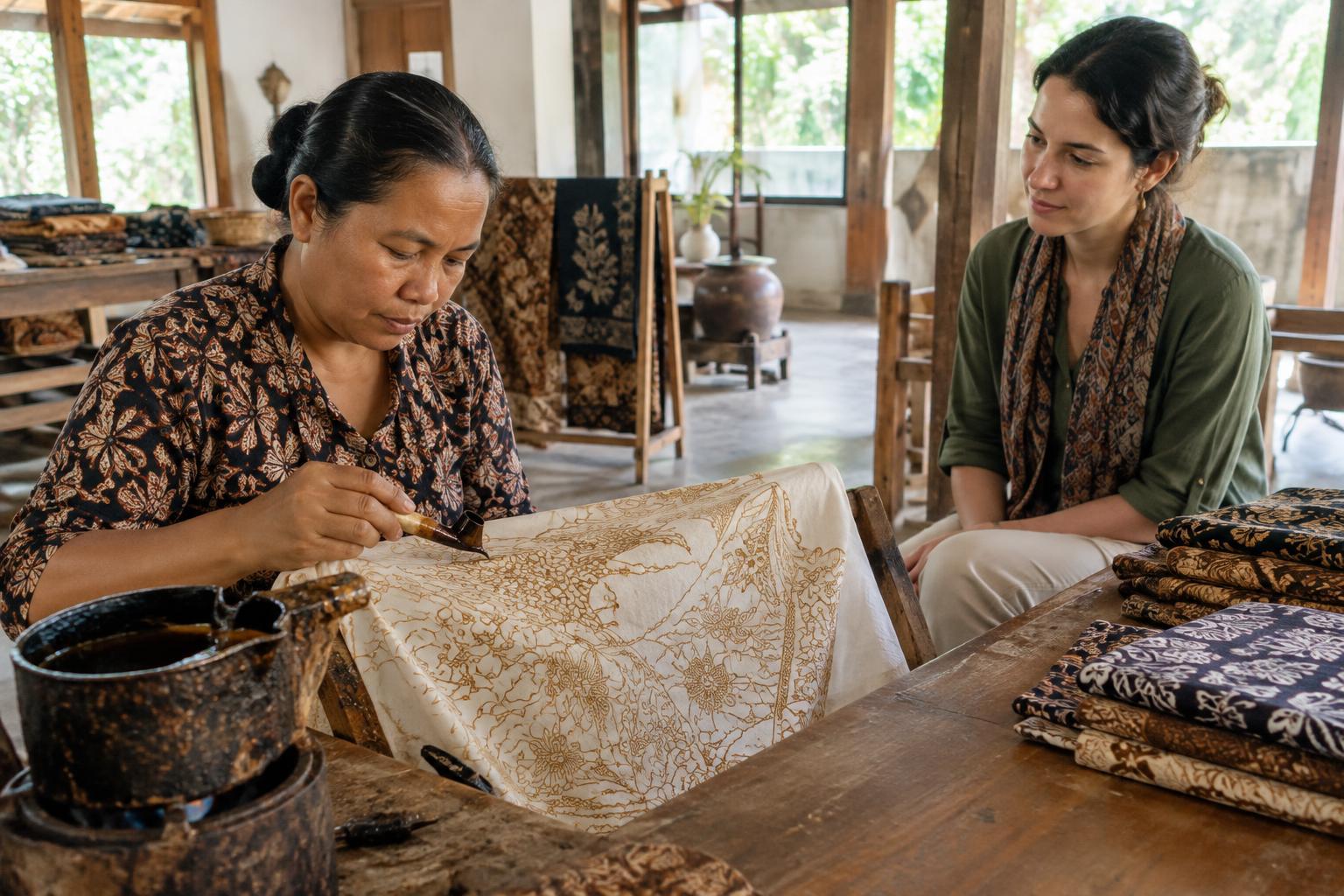
Plan for a working space, not just a visitor attraction
Craft workshops in Java vary widely. One may be set up for demonstrations and short classes; another may be a small workplace where makers are filling orders. Batik, pottery, weaving, carving and metalwork also involve different tools, materials and rhythms. Before visiting, find out whether guests are welcome, whether an appointment is needed and what the visit includes. An open shop is not necessarily an invitation to walk into the production area.
Ask about opening hours, group size, language needs, accessibility and any fee before you travel. If you hope to try a technique, check whether instruction, materials and time to finish a piece are included. Some crafts require drying, firing or other steps that cannot be completed during a brief stop. Keeping your schedule flexible makes it easier to appreciate the process rather than rush through it.
Follow the maker’s lead inside the workshop
Begin with a greeting and wait to be shown where to stand or sit. Benches, tools and works in progress may look inviting, but they can be fragile, sharp, hot or essential to someone’s workflow. Ask before touching materials or trying a tool, and keep bags away from work surfaces. If a maker pauses to concentrate, give them room; a workshop visit should not make their task harder.
Ask permission before photographing people, unfinished pieces or close details of a design. Permission to take one photo does not automatically cover video, a long recording session or posting images of everyone present. If photography is not welcome, put the camera away without pressing for an explanation. The same courtesy applies to children and to other visitors who may be sharing the space.
Ask questions that open a conversation
Useful questions focus on choices and processes: What material is being used? Which steps take the most practice? How does the maker decide on a pattern, shape or finish? What changes when a piece is made for everyday use rather than display? These questions let the person explain their own work instead of asking them to represent every maker in Java.
It is also reasonable to ask how to care for an item you might buy, whether a design has a particular meaning and which parts were made by hand. Listen to the answer before attaching labels such as “traditional” or “authentic.” Techniques and designs can change over time, and a workshop may combine handwork with tools or purchased materials. That does not, by itself, tell you whether the finished work is thoughtful or well made.
Join in carefully and value the time involved
A hands-on session can reveal why a seemingly simple line, knot or shape takes practice. Follow the instructor’s safety guidance, especially around heated wax, blades, kilns or other equipment. Start with the task offered rather than reaching for a more advanced stage. Your result may look different from a maker’s finished work, and that contrast is part of learning.
If you want a longer lesson, a private demonstration or help creating a custom piece, ask whether it is available and what it costs. Demonstrations and teaching take time away from other work. Avoid assuming that a free look around includes instruction, unlimited photographs or a chance to make something. If your plans change, let the workshop know when possible so people are not waiting for you.
Buy thoughtfully and avoid common mistakes
You do not have to buy something to show appreciation, particularly if you have paid for a visit or class. If you are shopping, ask about the price, materials, care and how to transport a delicate item. Where bargaining is welcome, keep it courteous and be prepared to accept a stated price or walk away politely. Comparing pieces is useful; dismissing someone’s work as easy or overpriced is not.
Two common mistakes are arriving with a rigid checklist and looking only for a quick photo opportunity. Leave enough time to notice the stages of production and the differences between pieces. Before sharing a maker’s name, portrait or workshop details online, check what they are comfortable having shared. A good visit ends with thanks, respect for the workspace and a clearer understanding of the work behind the object.


