Go for the forest, not a rhino encounter
Ujung Kulon National Park, at the western end of Java, is closely associated with the Javan rhino. That association can create the wrong expectation for a visitor. Rhinos are rare, elusive and subject to strict conservation protections. A trip should not be planned around seeing one, and visitors should never seek out restricted areas or follow signs of an animal off an approved route.
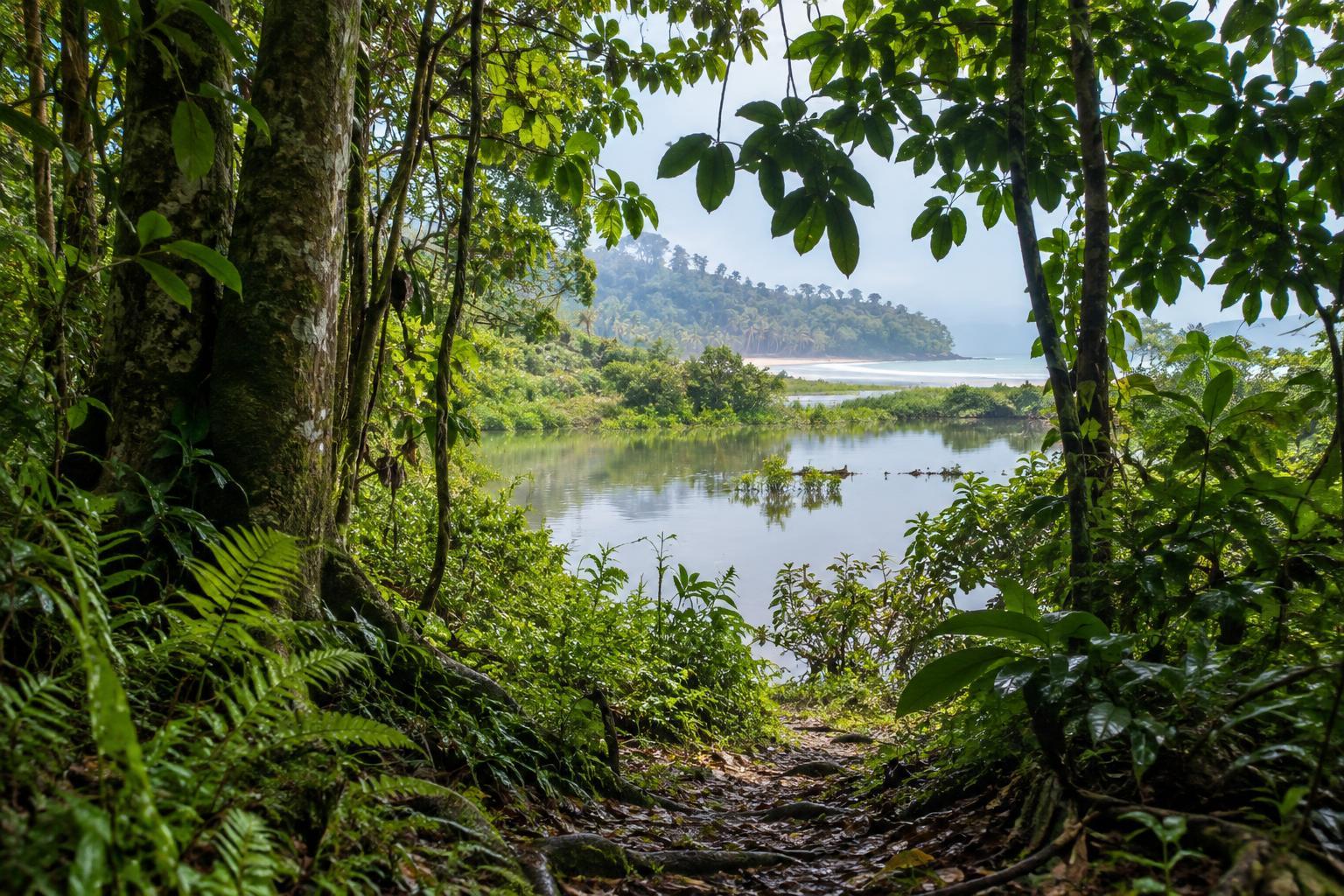
A better way to experience Ujung Kulon is to pay attention to the habitats that support its wildlife. Lowland forest meets streams, damp ground and a changing coast. Even without a large-animal sighting, the differences in light, plant growth, sounds and footing can make a guided walk feel varied. Treat wildlife encounters as possibilities rather than goals, and leave room to enjoy what is readily in front of you.
Notice how the lowland forest changes
Lowland forest is not a single, uniform wall of green. Along a permitted trail, one stretch may feel shaded and enclosed, with vines, roots and leaf litter underfoot. Another may be more open where light reaches young plants. Fallen wood, fruiting trees and small pools can each draw a different set of insects and birds. Moving slowly makes these details easier to notice than trying to cover as much distance as possible.
Listen as well as look. Calls from the canopy may reveal birds that remain hidden by leaves, while a rustle near the trail does not necessarily mean a large mammal is nearby. Binoculars are useful for observing without approaching. If you stop for a photograph, keep to the established path and avoid pushing through vegetation for a clearer view. Quiet observation protects the setting and often gives you a more satisfying sense of the forest.
Read the edges between forest, water and shore
Some of Ujung Kulon’s most interesting views come where habitats meet. Near streams or wetter ground, look for changes in the plants and soil: the air may feel cooler, and the trail may become muddy. Coastal areas bring a different mix of exposure, salt and wind. Where mangroves or other shoreline vegetation can be viewed from an approved route, their roots and dense growth show how plants occupy ground shaped by water.
These transitions are worth exploring without assuming that every habitat is accessible on every visit. Routes can be affected by conditions and park rules. Shorelines, river crossings and muddy tracks deserve particular care, especially after rain or when water levels change. Ask a local guide or the relevant park office which routes are open and suitable for your group, rather than treating a map as permission to roam.
Plan a visit with flexible expectations
Travel in Ujung Kulon may involve both land and boat arrangements, depending on the area you intend to visit. Confirm current entry requirements, permitted routes, guide arrangements and transport before setting out. Allow for changes caused by weather or sea conditions. A modest plan with time to pause is often more enjoyable than an itinerary that depends on reaching several distant places in one day.
For a forest walk, carry drinking water, sun and rain protection, and footwear that can handle uneven or wet ground. Clothing that covers exposed skin may help with insects and scratches. Keep food secured, take litter away with you, and follow instructions about where to walk and rest. Do not feed wildlife or use sound to draw animals closer. If a route is closed, choose another experience rather than trying to find a way around the restriction.
Let small observations define the day
A rewarding visit can be built from a few simple questions: How does the forest sound at different times? Where does the ground become wetter? Which plants thrive at the exposed edge of a clearing or shore? You do not need to identify every species to notice patterns. A notebook or a few photographs taken from the trail can help you remember how one habitat gave way to another.
Ujung Kulon’s most famous animal remains an important reason to value its protection, but it need not be the measure of a visitor’s experience. The more reliable pleasure is learning to see a landscape as a connected whole—forest, water, coast and the wildlife that may or may not reveal itself. Patience and respect make space for that experience without placing demands on an animal best left undisturbed.


