A rice dish with a distinct character
Tutug oncom, often called nasi tutug oncom, is a rice dish closely associated with the Sundanese food traditions of West Java, particularly the Tasikmalaya area. Its defining feature is not a sauce poured over rice but oncom worked into the rice itself. The result is fragrant and savory, with the grains carrying the flavor of the seasoning throughout the dish.
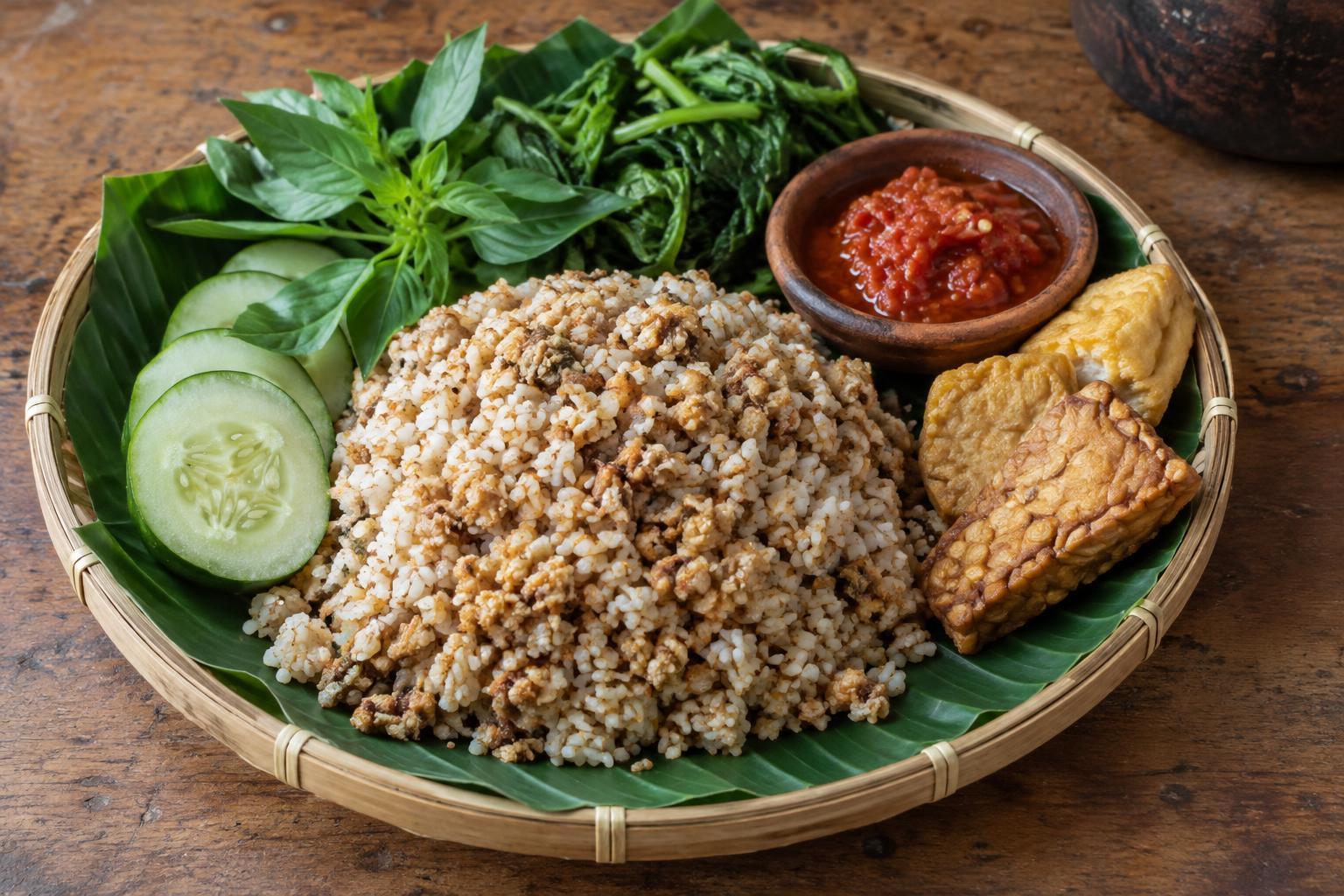
The word “tutug” refers to pounding or crushing. In the kitchen, seasoned oncom is broken up and combined with warm rice so that the two become one dish. Some versions are mixed quite thoroughly, while others leave small pieces of oncom visible. It may arrive as a simple plate of rice or as the center of a larger meal surrounded by side dishes.
What oncom adds to the rice
Oncom is a fermented food made from ingredients such as soybean by-products or peanut press cake. Different kinds of oncom can look and taste different, so tutug oncom is not identical from one kitchen to the next. Its appeal in this dish comes from its earthy, savory character, which gives otherwise plain rice more depth without requiring an elaborate preparation.
To make tutug oncom, a cook typically crumbles the oncom, heats it with aromatics and then mixes it into cooked rice. Shallots, garlic, chilies and other seasonings may be used according to the household or stall. Heating and seasoning matter: the oncom should taste integrated with the rice rather than like a cold topping added at the last moment. Chili levels vary, so a mild-looking plate is not necessarily mild, and it is worth asking if you prefer less heat.
Fermentation is part of what oncom is, not a sign that it has been neglected. Even so, it should be handled and cooked as food rather than treated as a shelf-stable garnish. For a visitor, the easiest introduction is a freshly prepared serving from a place where the dish is a regular part of the menu.
The side dishes complete the plate
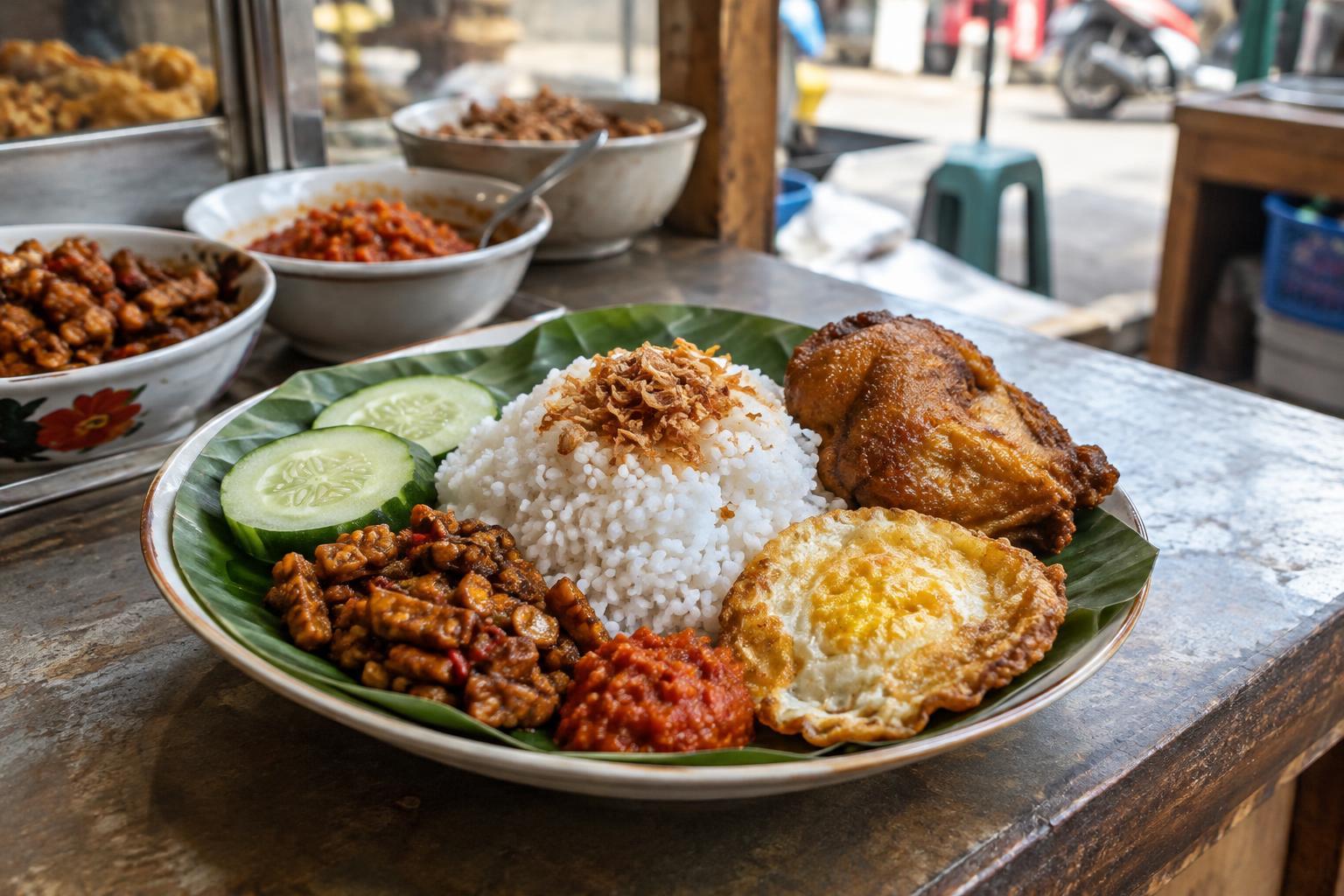
Tutug oncom is satisfying on its own, but the way it is served helps explain why it is such a memorable meal. A plate may include fried chicken, fried fish, salted fish, tofu or tempeh. These accompaniments bring crispness, richness or extra saltiness against the softer seasoned rice. There is no single required combination; choose sides that suit your appetite rather than expecting every serving to look alike.
Sambal often provides the sharp, spicy accent. Fresh vegetables, known as lalapan, offer a cooling contrast and may include cucumber, cabbage or herbs. A bite that combines rice, a little sambal and a crisp vegetable gives a fuller sense of the dish than tasting each part in isolation. If the rice already has plenty of chili, try the sambal separately before adding more.
Presentation can be modest or generous. Some servings are wrapped or lined with banana leaf, while others come on an ordinary plate. Either way, the point is the balance between the seasoned rice and what surrounds it. A smaller plate with well-prepared oncom can be just as enjoyable as one piled high with extras.
How to try it thoughtfully
When ordering, look for the name nasi tutug oncom or its common abbreviation, NTO. If the menu offers several combinations, start by deciding whether you want a substantial protein side or a simpler pairing with tofu and tempeh. Ask whether sambal comes on the side if you would like to control the heat. Since accompaniments differ by vendor, a quick question can be more useful than assuming a particular side is included.
Tutug oncom is also a good reminder that a regional dish is more than a list of ingredients. Its texture depends on how the oncom is prepared and how firmly it is mixed with the rice; its flavor changes with the seasoning and sides. Trying it in more than one setting can reveal those differences without needing to decide which version is the definitive one.
Bringing the idea home
If you have access to oncom and want to make a home version, keep the basic structure in mind: cook and crumble the oncom with aromatics, then mix it with warm rice and taste before adding extra salt or chili. Serve it promptly with a fresh vegetable and one savory side. The aim is not to bury the rice under toppings, but to let the seasoned oncom run through every spoonful.
Outside places where oncom is readily sold, the ingredient can be difficult to find. Substituting another fermented food may make an enjoyable rice dish, but it will have a different flavor and is better described as an adaptation. For the particular earthy taste and texture of tutug oncom, oncom remains the ingredient that matters most.