An everyday ingredient with many textures
Tempe is made by fermenting soybeans into a firm cake that can be sliced, crumbled or cut into small pieces. Its mild, nutty flavor makes it adaptable: the same ingredient can be crisp at the edges, tender in the middle or coated in a sticky sauce. In Java, tempe is a familiar part of home cooking and modest meals, rather than something reserved for a special occasion.
It often shares the table with rice, vegetables, sambal and other side dishes. A plain-looking piece of tempe can play different roles in that meal. Fried slices add crunch; a saucy preparation brings sweetness or spice; small cubes can make a vegetable dish feel more substantial. Paying attention to the cut and cooking method is a useful way to understand a menu, even before you know every dish by name.
Fried slices: simple, crisp and adaptable
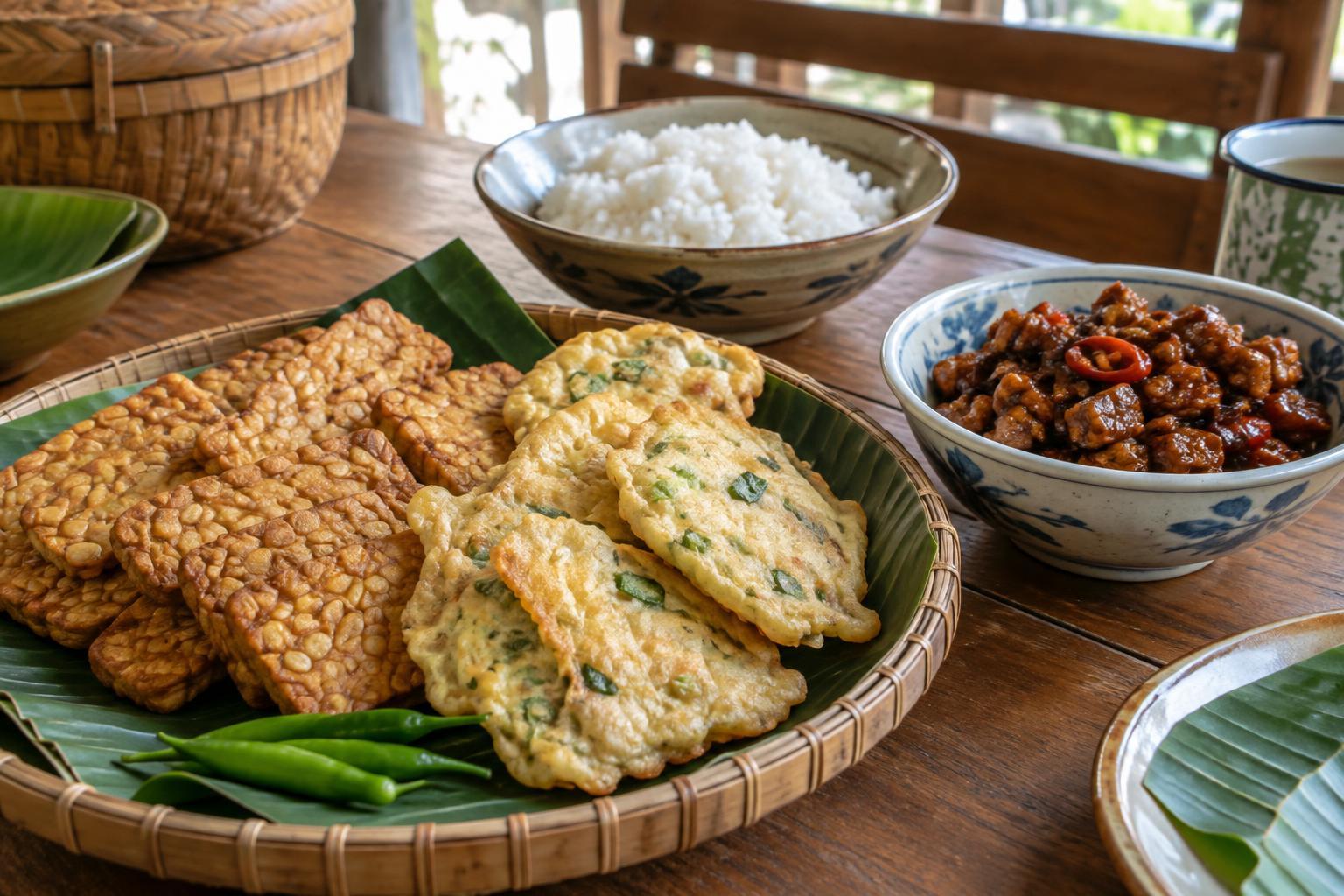
One of the most straightforward preparations is tempe goreng, or fried tempe. Cooks may season thin slices before frying them, sometimes with garlic, coriander and salt. Others dip the slices in a seasoned flour batter. The result depends on the thickness of the tempe, the coating and how long it stays in the oil: it might be dry and crisp enough to nibble on its own, or softer inside and best eaten alongside rice.
Fried tempe is often served with sambal or a fresh chili for contrast. It can also sit beside a vegetable dish or soup, where its firmer texture balances softer ingredients. If you are trying it for the first time, notice how the soybean cake holds together: unlike a smooth tofu slice, tempe has a visible, slightly uneven structure that gives each bite texture.
Mendoan: a softer kind of fried tempe
Not every fried tempe aims for a hard crunch. Tempe mendoan, particularly associated with the Banyumas area of Central Java, is commonly made from thin pieces coated in a seasoned batter and fried briefly. The coating cooks, but the finished piece remains soft and pliable compared with a thoroughly crisp fritter. It is often enjoyed warm, when the contrast between the tender tempe and its savory coating is most noticeable.
Mendoan is a reminder that familiar cooking words do not always describe one fixed texture. If you order a fried tempe dish, the name, batter and local style all offer clues to what will arrive. Try it on its own first, then with the chili or dipping condiment provided. That small change can bring out different sides of a mild ingredient.
Orek: small pieces with big flavor
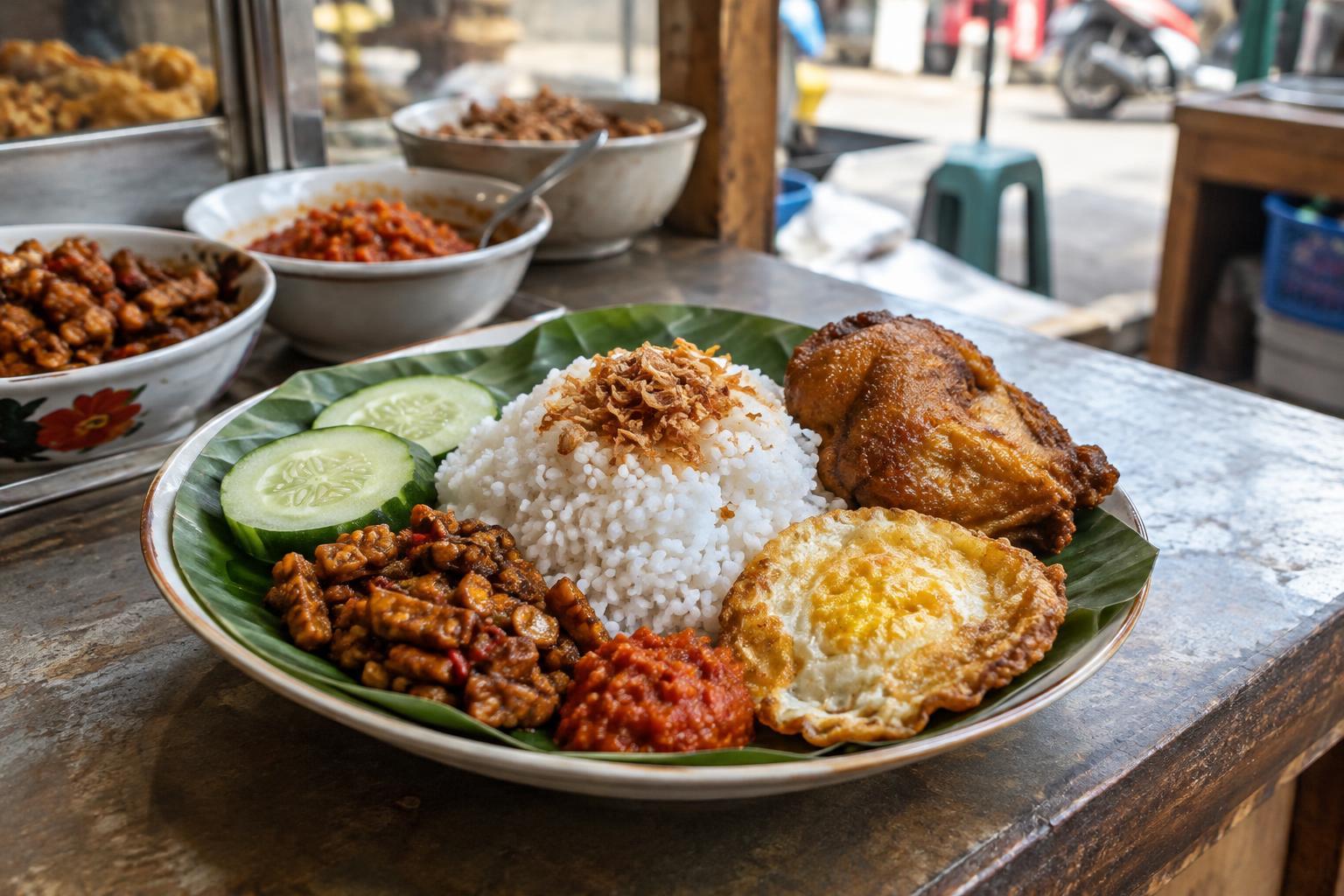
Tempe orek takes a different approach. The tempe is cut into small pieces and cooked with seasonings that often include shallots, garlic, chilies and kecap manis, the thick, sweet soy sauce widely used in Indonesian cooking. Some versions are moist and tender; others are cooked until drier, with a more concentrated coating and firmer bite. You may also encounter additions such as peanuts or other ingredients, depending on the cook.
Because orek is strongly seasoned, a little can flavor a generous portion of rice. Sweetness, saltiness and heat do not have to be equally prominent: one plate may lean gently sweet, while another has a sharper chili kick. If you are choosing dishes from a display at a small eatery, orek can be an approachable way to sample tempe alongside greens, eggs or another vegetable preparation.
How to explore tempe at the table
A good way to appreciate tempe is to try two preparations in the same meal. Pair crisp tempe goreng with a spoonful of saucy orek, or compare a warm mendoan with a drier fried slice. Rice provides a neutral base, while sambal lets you adjust the heat bite by bite. There is no single definitive version of any of these dishes; household preferences, available ingredients and individual cooks all shape the result.
Tempe itself is soybean-based, but a prepared dish is not necessarily vegetarian or suitable for every dietary need. Seasonings, sauces and shared cooking equipment can vary, so ask about ingredients if they matter to you. Whether you find tempe at a market stall, a simple rice shop or a family table, its appeal lies in that everyday flexibility: an ordinary ingredient made memorable through texture, seasoning and the foods served beside it.