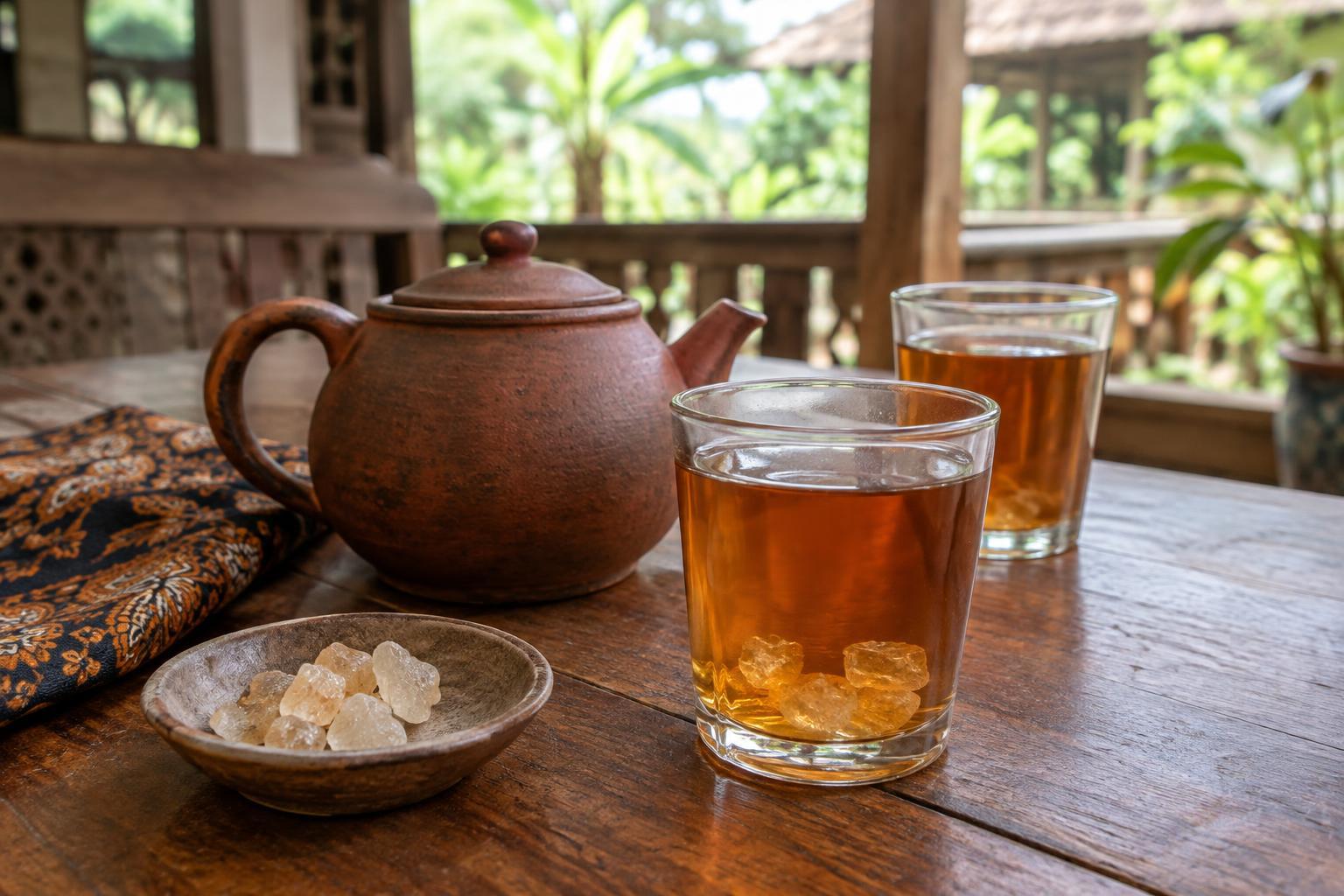
A small pot with a sense of place
Teh poci takes its name from the poci, a small clay teapot used to brew and serve tea. It is particularly associated with Tegal and its surrounding area in Central Java, though you may encounter it elsewhere. At a simple food stall or around a family table, the pot invites people to pour another modest glass rather than rush through one large drink.
There is no single recipe that defines every serving. The tea may be plain or fragrant with jasmine, and its strength depends on the leaves, the amount of water and the time spent brewing. What makes the experience recognizable is the combination of a teapot, small glasses and rock sugar, or gula batu. Those familiar parts leave room for each host or stall to serve tea in its own way.
Why the clay pot matters
A poci is practical as well as distinctive. Its small size suits a few servings, while its lid helps keep the leaves in the pot between pours. Clay gives the set an earthy appearance and makes the act of pouring feel different from using a mug or metal kettle. Pots vary in shape and finish, so do not expect every teh poci service to look alike.
Some people prefer to reserve a teapot for tea rather than wash it with strongly scented soap, which can leave an unwanted taste. That is a preference, not a rule visitors need to follow. If you prepare teh poci at home, use a clean, food-safe pot intended for hot drinks. Warm it with a little hot water before brewing if you like, then add tea and hot water and let it steep to a strength you enjoy. A clay pot is central to the traditional presentation, but you can still explore the flavor and serving style with the teapot you have.
Rock sugar and a changing glass of tea
Rock sugar is often placed in the glass before the hot tea is poured. Its large crystals dissolve more slowly than a spoonful of granulated sugar, especially when left untouched. The first sips can therefore taste quite brisk, while later sips grow sweeter as the sugar dissolves. People sometimes describe this gradual shift as part of the pleasure of teh poci.
If you want to notice that contrast, try the tea without stirring at first. Sip carefully while it is hot, then see how the flavor changes. You can also stir it or request less sugar when that is possible; enjoying the drink does not require following a test of the “right” way to sip. Tea strength and sweetness vary from place to place, and a glass with several pieces of rock sugar may be much sweeter by the end than it seemed at the beginning.
Serving tea at a shared table
Teh poci lends itself to conversation. A pot can sit among snacks or a meal, with people pouring small servings as they talk. In some settings, the tea arrives already brewed with rock sugar in the glasses; in others, guests have more choice about how much sugar to add. Watch how it is served and follow the rhythm of the table rather than assuming there is a fixed ceremony.
At a food stall, it helps to ask what is included when ordering, particularly if you prefer unsweetened tea. If someone pours for you, a simple thank-you is enough. Let the tea cool before drinking: a small glass can still hold very hot liquid. When sharing a pot, check whether others would like another pour before emptying it into your own glass. These are ordinary courtesies, not special rules reserved for visitors.
How to appreciate teh poci while traveling
For a visitor, teh poci is an accessible way to pay attention to everyday food culture in Central Java. Notice the size of the pot, the aroma as tea is poured and the difference between an early and a late sip. If you are curious about the leaves or the sugar, ask a brief question when the server is not busy. The answer may tell you more about that particular stall than a general description can.
You do not need to seek out an elaborate tasting to enjoy it. Order a pot when you have time to sit, pair it with a snack if one is available, and allow the tea to change in the glass. Whether you prefer it strong, lightly sweet or fully stirred, teh poci offers a simple reminder that how a drink is served can be as memorable as the drink itself.


