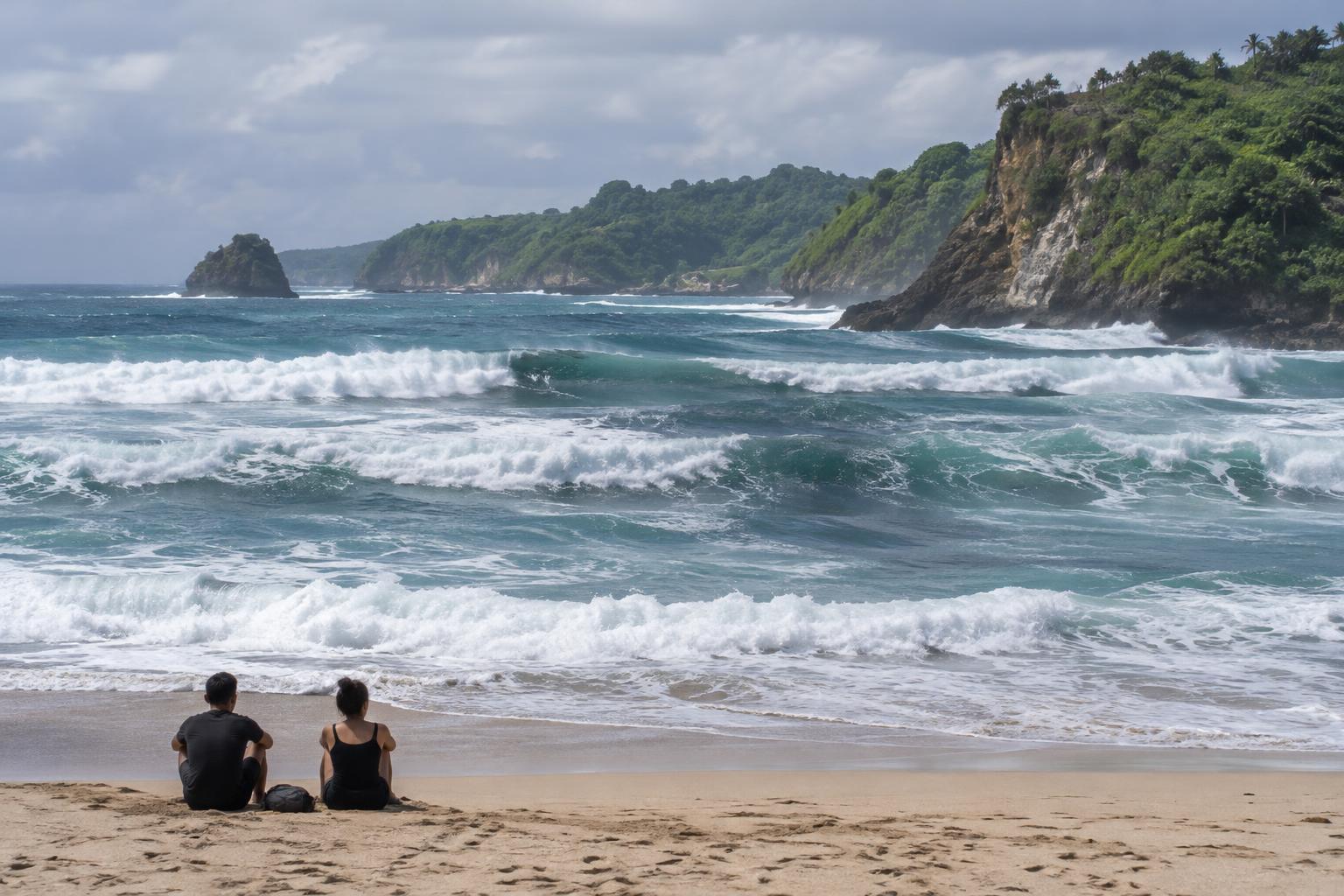
A scenic beach is not always a swimming beach
Java’s south coast offers long sandy shores, rocky headlands and striking views of the Indian Ocean. It is tempting to treat a quiet stretch of sand as an invitation to swim. Yet conditions can differ sharply between neighboring beaches, and a calm-looking gap between breaking waves may conceal moving water. Some beaches are better enjoyed from dry sand, even on a sunny day.
Before planning a swim, find out whether the specific beach has a designated swimming area and whether a trained lifeguard is on duty. Read signs at the entrance and along the shore, including signs that prohibit swimming. If local staff advise against entering the water, follow that advice rather than relying on how the sea looks from a distance. Where there is no supervised swimming area, the cautious choice is to stay out.
Watch the waves from shore first
Give yourself time to observe the water before approaching it. Waves can arrive in sets: a lull may be followed by larger breakers. A steep beach can also produce powerful shorebreak, where waves collapse close to the sand. Even shallow water may be difficult to stand in when breaking waves knock people off balance and wash sand away from their feet.
Look for waves breaking across the area where you would enter, water washing strongly up and down the slope, or people struggling to keep their footing. Rocks, river mouths and headlands add hazards that may not be obvious at first glance. Conditions can change with tides and weather, so an earlier safe-looking moment does not establish that the water remains safe. Keep children close to an adult well back from the wash of the waves; do not assume that ankle-deep water is harmless.
Recognize possible currents without trusting appearances
A rip current is a flow of water moving away from shore. Possible clues include a darker-looking channel, a patch of choppy water, foam or floating material moving seaward, or a break in the line of breaking waves. These signs are not always visible, and a smooth patch of water is not proof that swimming there is safe. Currents can also occur near structures, rocks and river outlets.
If you feel water carrying you away from shore, try to remain calm and avoid exhausting yourself by fighting directly against the flow. Float or tread water, signal for help and, if you can do so safely, swim parallel to the shore until you are out of the current before heading back toward land. If you cannot make progress, keep floating and calling or waving for help. These steps are not a substitute for supervised swimming: the safest response is to avoid entering uncertain water in the first place.
Use signs and local guidance to make a decision
Warning signs may identify strong currents, dangerous waves, deep water or areas closed to swimming. Read them before setting down your belongings; a warning posted away from the waterline may apply to the whole beach. If you do not understand a sign, ask beach staff or a knowledgeable local person rather than guessing. A red flag or a direct instruction to stay out of the water should end the swimming plan.
Choose a supervised area only when swimming is permitted, and stay within its marked boundaries. Do not swim alone, after dark or while affected by alcohol. Check that everyone in your group understands where they may enter and when they must leave. If the surf grows stronger, visibility worsens or staff change their guidance, get out promptly. There is no need to justify leaving the water early.
Help from shore, not by creating another emergency
If someone appears to be in trouble, alert a lifeguard or beach staff immediately and call the local emergency service if needed. Point to the person and keep watching their position so responders can locate them. If a suitable flotation device or rescue aid is available, follow trained staff’s instructions for using it. An untrained person entering rough surf may also need rescuing.
A south-coast visit does not depend on getting into the sea. Walking at a safe distance from the water, watching the changing light and enjoying food near the beach can be rewarding alternatives. Treat the decision not to swim as part of thoughtful travel, not as a missed opportunity.


