What makes rujak cingur distinctive
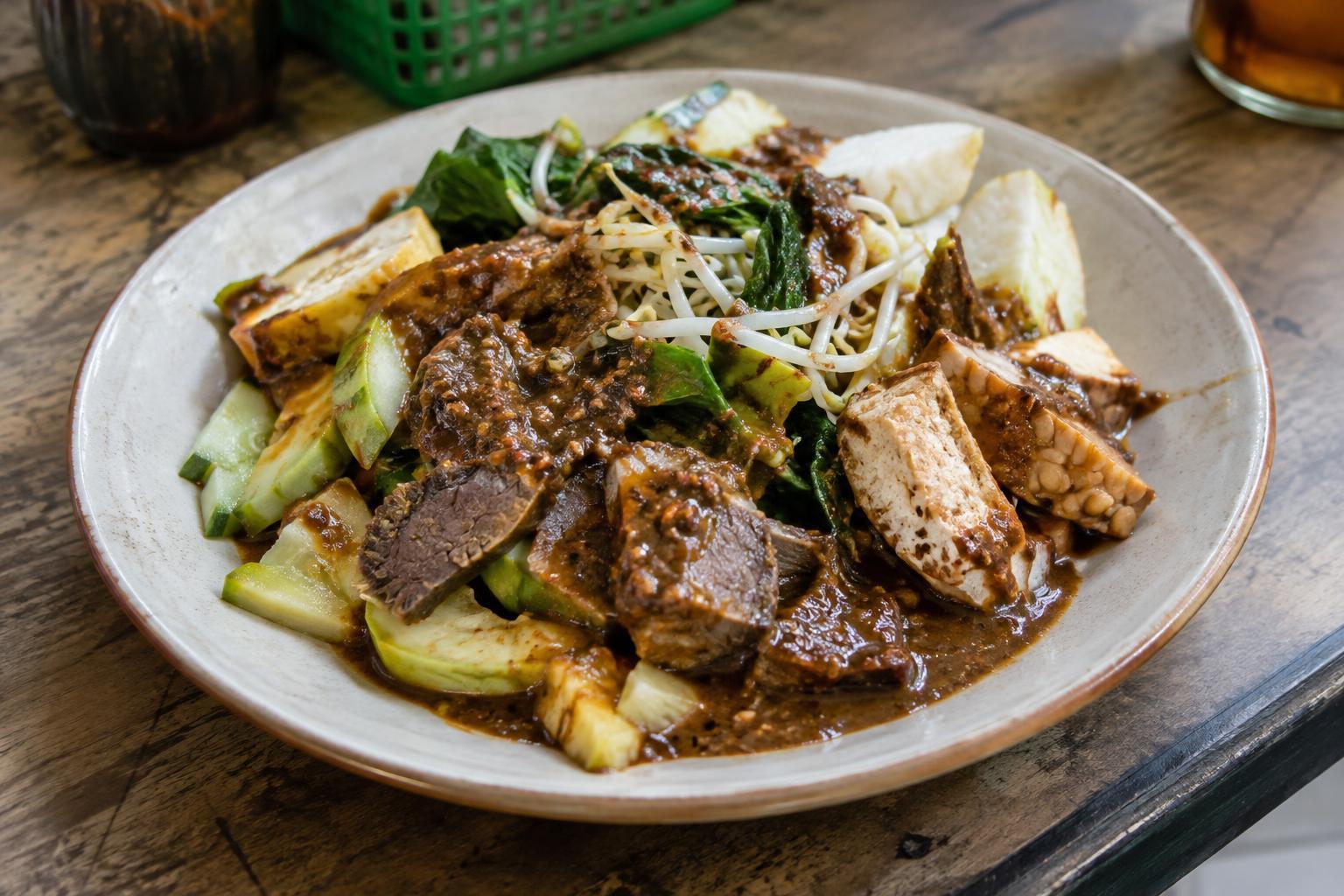
Rujak cingur is a Surabaya specialty that may surprise anyone expecting rujak to be only a bowl of sliced fruit. It combines fresh ingredients, cooked vegetables and savory additions in a thick dressing. The name points to its most distinctive ingredient: cingur, or cooked beef muzzle. A serving can be sweet, tangy, salty, nutty and spicy at once, with crisp pieces beside softer, chewier ones.
There is no single plate arrangement to expect everywhere. Ingredients and proportions vary by vendor, and the dressing is often mixed with the other components before serving. If you prefer to know exactly what is in your food, take a moment to look at the ingredients on display or ask what goes into that vendor’s version. It is easier to adjust an order before the sauce is mixed through.
The cingur, and what may come with it
Cingur is usually boiled until it can be sliced or cut into bite-size pieces. Its texture is the main point to know before ordering: it is tender in places but distinctly chewy, rather than crisp or similar to a lean cut of beef. It also absorbs some of the dressing’s strong flavor. If you are curious but unsure about the texture, ask for a small amount where that is possible.
A plate commonly includes tofu and tempeh, which add substance and absorb the sauce. Some versions include lontong, compressed rice cake cut into pieces. Cooked vegetables may include bean sprouts, water spinach or long beans, while cucumber contributes a fresh crunch. These components make the dish feel more like a mixed meal than a fruit snack. Do not assume that leaving out the cingur makes the whole dish vegetarian: the dressing may still contain shrimp-derived petis.
Fruit brings contrast, not just sweetness
Fruit gives rujak cingur much of its refreshing contrast. Pineapple, young mango and bengkuang, a crisp root also known as jicama, are among the ingredients you may encounter. They bring different kinds of crunch, sweetness and tartness to the savory mixture. The fruit selection can change, so a description or photograph of one serving is best treated as a guide rather than a fixed recipe.
The balance matters more than any one fruit. Tart pieces can cut through a rich sauce; watery, crisp pieces make a spicy mouthful feel lighter. If you have a strong preference, ask which fruits are being used before ordering. You may also be able to request that an ingredient be left out, though that depends on how the stall prepares and portions its servings.
Why the dressing tastes so bold
The dressing typically gets its body from ground peanuts and its deep savory character from petis udang, a concentrated shrimp-based paste. Chili, sweetener and sour elements may be worked into the mixture. Petis is important to recognize: its dark color and strong flavor are part of the dish’s identity, and it is not simply a fruit-salad sauce. Vendors make the dressing to their own taste, so sweetness, saltiness and heat can differ noticeably.
Peanuts and shrimp are key concerns for anyone avoiding those ingredients. Tofu and tempeh also mean soy is often present. If an allergy or dietary restriction matters to you, ask about the full dressing as well as the visible toppings, and bear in mind that ingredients may be handled on shared equipment. Requesting no cingur or no chili does not necessarily remove other ingredients from a sauce that has already been prepared.
How to order a plate you will enjoy
Start by deciding whether you want cingur. If you do, expect its chew to be part of the experience rather than an incidental garnish. If you do not, ask whether the vendor can prepare a portion without it, then check the dressing separately if you avoid animal products. For heat, a simple request for less chili is worth making before the ingredients are mixed. You can also ask whether the sauce can be served on the side, although that will not be possible at every stall.
Rujak cingur is most enjoyable when you know to expect contrasts: fruit against vegetables, soft tofu against crisp cucumber, and a thick, savory dressing tying them together. There is no need to identify every ingredient on the first bite. Ask a few practical questions, choose the components that suit you and taste how the combination works as a whole.