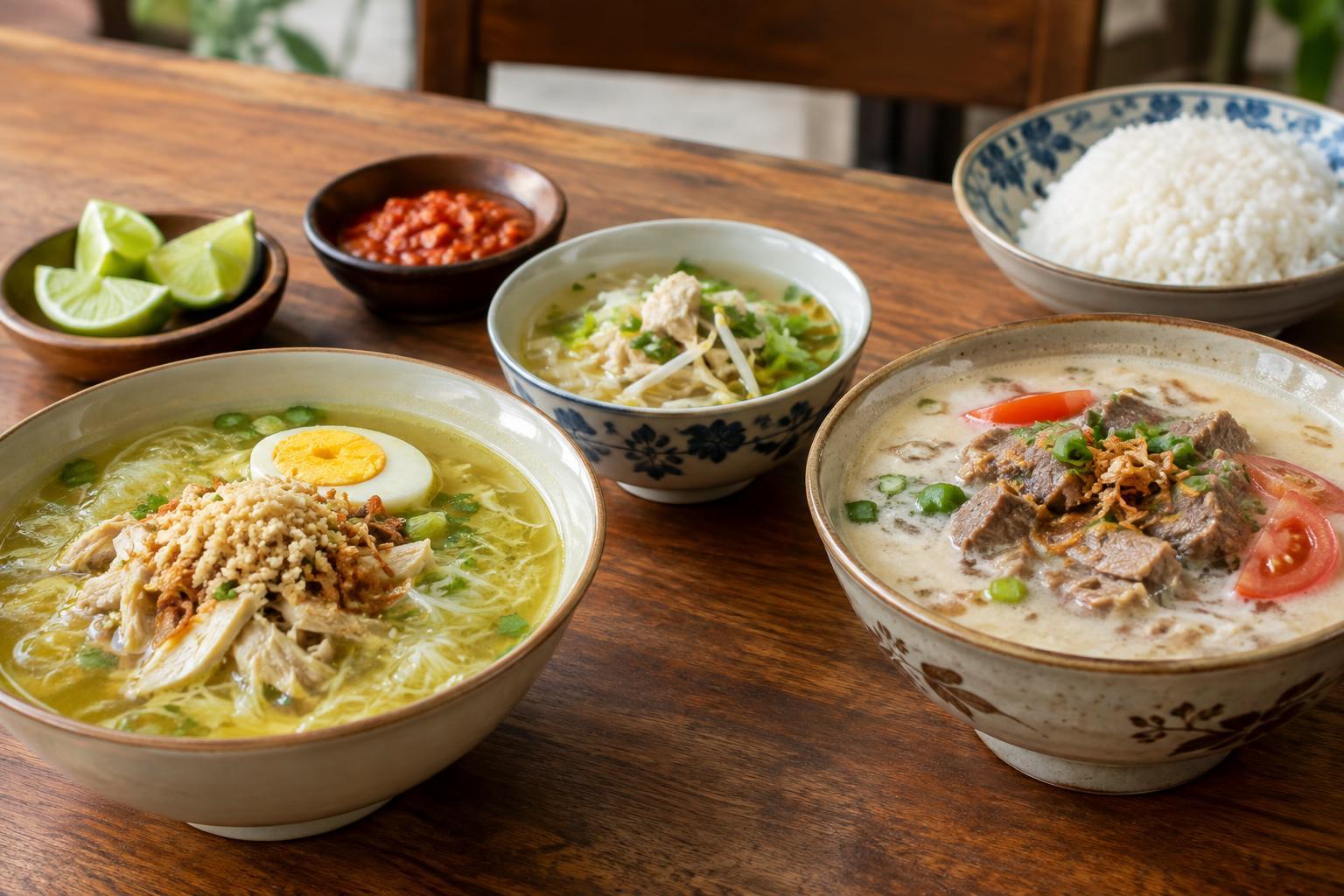
One name, many kinds of soup
Soto is a broad family of Indonesian soups rather than a single fixed recipe. A bowl might contain chicken, beef or offal, with noodles, rice or other accompaniments served alongside or added at the table. Broth, spice paste, garnishes and serving customs all vary. Even two cooks in the same town may make noticeably different versions.
Three useful styles to compare are soto Lamongan from East Java, soto Kudus from Central Java, and soto Betawi associated with Jakarta. Betawi food belongs to the culture of Jakarta and its surrounding area; it should not be treated as simply another Javanese regional cuisine. Together, these soups show how much a familiar dish can change while remaining recognizably soto.
Lamongan: golden broth and a savory dusting
Soto Lamongan is commonly made with chicken in a fragrant, yellowish broth. Turmeric helps give it color, while aromatics such as lemongrass and lime leaves may add brightness. Shredded chicken, cabbage, glass noodles or other noodles, and egg are common additions, though the combination depends on the vendor.
Its most recognizable finishing touch is koya: a fine, savory powder often made from crushed shrimp crackers and fried garlic. Stirred into the soup, koya gives the broth extra body and a deeper toasted flavor. Some bowls arrive with a generous spoonful already on top; elsewhere, diners add it themselves. A squeeze of lime and a little sambal can make the flavors sharper and hotter.
If you avoid shellfish, ask about the koya before ordering rather than assuming it is only garlic. The same caution applies to any prepared condiment whose ingredients are not obvious.
Kudus: a smaller bowl with its own traditions
Soto Kudus is often served in a relatively small bowl, making it easy to pair with rice or side dishes. Chicken is a familiar filling, and some vendors prepare versions with buffalo meat. The broth is generally lighter in appearance than soto Betawi, with a warm spice aroma rather than a creamy texture. Bean sprouts, celery or fried shallots may provide freshness and crunch.
Buffalo has a particular association with food traditions in Kudus. One commonly told explanation links the use of buffalo instead of beef to longstanding respect for Hindu neighbors and their customs. Treat that as cultural context, not a guarantee about every menu: recipes and ingredients vary by stall.
Small portions do not necessarily mean a sparse meal. Shops may offer skewers, fried snacks, eggs or other accompaniments to eat between spoonfuls. When ordering, check whether rice comes in the bowl, on a separate plate or only if requested.
Betawi: richness at the center of the bowl
Soto Betawi is strongly associated with Jakarta’s Betawi food culture. Many versions use beef, offal or a mixture of the two. Its defining impression is often a rich, pale broth made with coconut milk, dairy milk or both, although individual recipes differ. Potatoes and tomatoes may appear in the bowl, while fried shallots, crackers, lime and sambal offer contrast at the table.
That richness makes soto Betawi distinct from the usually lighter broths of the Lamongan and Kudus styles. The exact meat matters, too: one serving may contain familiar beef pieces, while another includes tripe or other offal. If you have a preference, ask what is in the pot and whether a beef-only portion is available. Not every vendor can change a batch that has already been prepared.
How to taste the differences
Start with a spoonful of broth before adding lime, sambal or extra crackers. Then adjust a little at a time. This makes it easier to notice Lamongan’s koya-enriched savoriness, the lighter feel often found in Kudus, and Betawi’s creamy depth. Pay attention to the toppings as well as the liquid: a crisp garnish or a spoonful of rice can change how the same broth tastes.
Menus and signs are useful guides, but a regional name does not promise an identical recipe everywhere. If you are unsure what comes with a bowl, ask about the protein, broth and accompaniments before ordering. Comparing soto is less about finding one definitive version than about enjoying how cooks turn local habits and personal choices into a satisfying meal.


