Plan for an easy arrival, not a perfect itinerary
Solo travel gives you room to linger at a market, change your route, or spend an extra morning in a place you enjoy. It also means you make each transport decision yourself. A useful approach is to plan the first step into each destination: know where you expect to arrive, how you might reach your accommodation, and what you will do if you arrive late.
When possible, choose a first arrival during daylight, especially in a town you do not know. Save your accommodation address and a map of the surrounding area for offline use. Keep enough battery and mobile data for the final leg, but do not depend on your phone alone: a written address can help if the signal drops. If a connection looks tight, leave room in your schedule rather than assuming every transfer will run exactly as planned.
Choose transport by route and arrival point
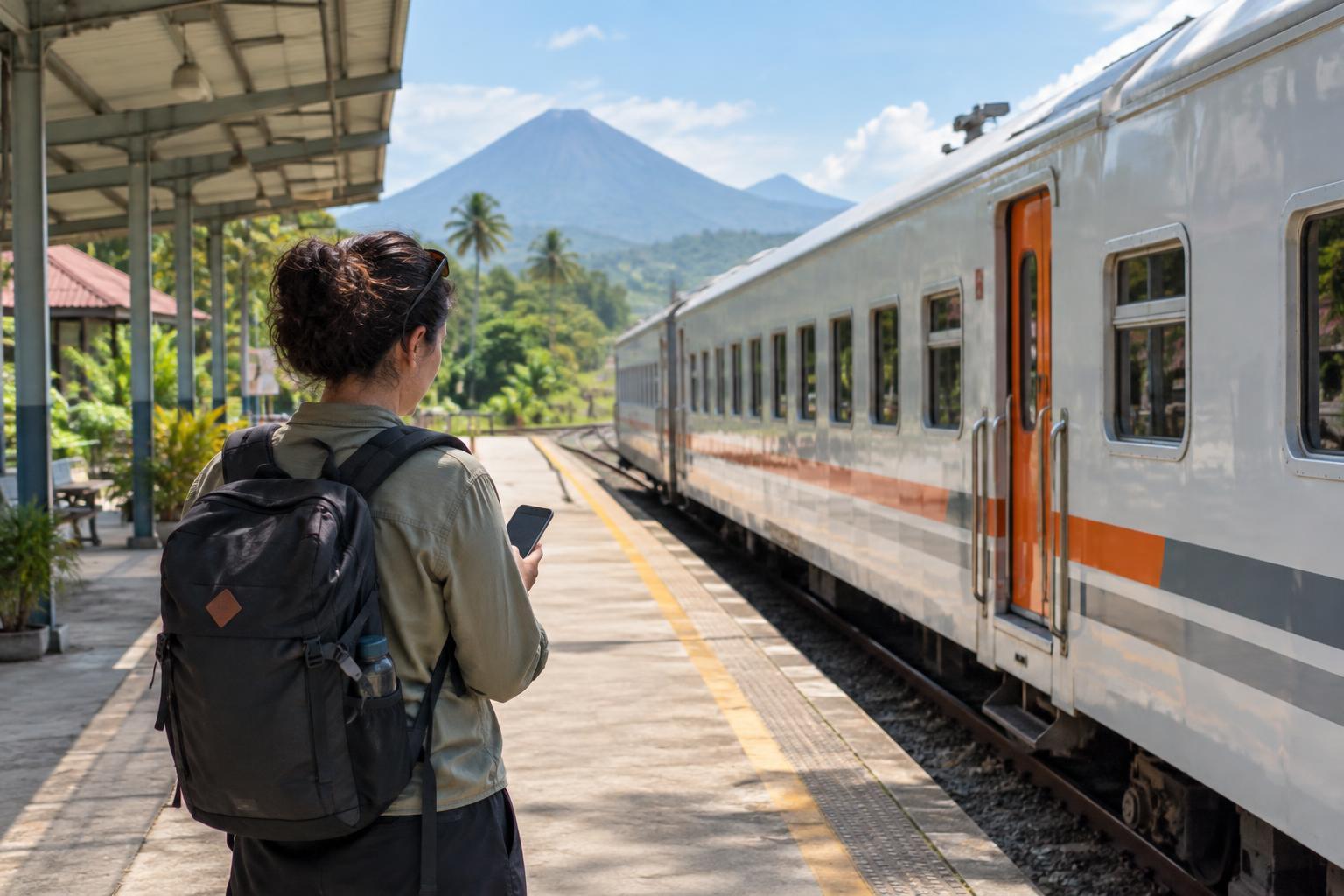
Trains can be a comfortable choice between cities on Java’s rail network. Before booking, check the station name carefully; a city may have more than one station, and the closest one to your accommodation may not serve your train. Check where you need to board, keep your ticket details accessible, and allow time to find the correct platform. For a long travel day, a direct journey may be easier to manage than several short connections.
Buses and shared vehicles can reach places that trains do not, but departure points, stops, and travel times may be less straightforward for a first-time visitor. Ask where the vehicle leaves and where it will drop you off before committing. For the last stretch, a licensed taxi or a ride booked through a service available locally may offer a clearer pickup point and fare estimate. Confirm the vehicle and destination before getting in, and use an official queue or booking channel where one is provided.
A rented motorbike offers flexibility but adds responsibility. Traffic patterns, rain, uneven roads, and unfamiliar junctions can make even a short ride demanding. Only consider riding if you are experienced, properly equipped, and permitted to do so. Hiring a driver or using other local transport can be a better choice for a day that involves winding roads or a late return.
Build small safety habits into ordinary days
Keep your passport, payment cards, and phone secure, and avoid carrying everything in one place. A copy of key documents can be useful for reference, while the originals should be stored thoughtfully. In crowded stations and markets, close your bag and keep it where you can feel it. These habits are about reducing inconvenience, not treating everyday interactions with suspicion.
When someone offers a ride or a tour, take a moment to clarify the destination, total price, and what is included before agreeing. It is fine to step aside, compare options, or say no without a long explanation. At an accommodation, check how you will enter if you return after dark and whether staff can suggest a practical pickup point. Share your broad route and occasional check-ins with someone you trust, particularly before a long journey or a hike.
Treat outdoor plans as a separate transport decision
A sunrise viewpoint, waterfall, or trailhead may be harder to reach than a city attraction. The trip there is only half the plan: work out how you will get back, whether a driver can wait, and what happens if weather or daylight changes your schedule. Ask about trail conditions and access locally before setting out, and avoid assuming that a route shown on a map is suitable to walk alone.
Bring water, suitable footwear, and a layer for changing conditions. For an early start or a remote trail, consider going with a reputable local guide or other travelers if that makes the route easier to navigate. If the plan no longer feels manageable, turning back or choosing a closer outing is a sensible travel decision, not a failed day.
Leave room to change course
Even a well-planned journey can involve a missed connection, a confusing pickup point, or a sudden downpour. When something changes, pause somewhere comfortable and deal with one decision at a time: confirm your location, identify a workable next stop, then arrange transport. A small reserve of time and money can make these moments less stressful.
Solo travel does not require doing everything alone. Accommodation staff, station personnel, and other travelers may help you understand your options, while you remain free to decide what suits you. Choose routes and activities that let you enjoy Java’s food, landscapes, and daily life without rushing past the practical details that make the journey comfortable.


