Decide whether self-driving suits your route
A car can be useful if your plans link smaller towns, countryside stops and places that are awkward to reach by public transport. It also gives you room to pause for a meal or change your itinerary when the weather shifts. That flexibility comes with responsibility: the driver must navigate unfamiliar roads, find parking and stay alert in busy traffic.
Consider the whole route rather than just the distance between destinations. Driving through a city may feel very different from travelling between villages or climbing toward a mountain area. If most of your time will be spent in a dense urban centre, hiring a vehicle for every day may add more effort than freedom. A mixed plan—using other transport for city days and a car for a focused excursion—may be more comfortable.
Check licenses, vehicle terms and insurance before booking
Do not assume that a license valid at home is sufficient for driving in Indonesia. Requirements can depend on your license, nationality, vehicle type and the rules in force when you travel. Check the current requirements with an official Indonesian source and confirm what the rental company will accept before paying. If an International Driving Permit is required for your circumstances, arrange it before departure and carry it with your original license; it is not a substitute for that license.
Read the rental agreement with the same care as the route map. Check who is permitted to drive, whether the vehicle may be taken to every area on your itinerary, what documents you must carry and how to contact the company if the car breaks down. Ask what the insurance covers, what it excludes and what you would be responsible for after damage or theft. Before leaving the pickup point, inspect the vehicle with the provider and record any existing marks, the fuel level and the agreed return conditions.
If you are considering a scooter or motorcycle instead, treat it as a separate decision. Make sure your license and rental terms permit that vehicle type, and do not rely on experience in a car as preparation for riding in mixed traffic.
Expect varied roads and allow generous travel time
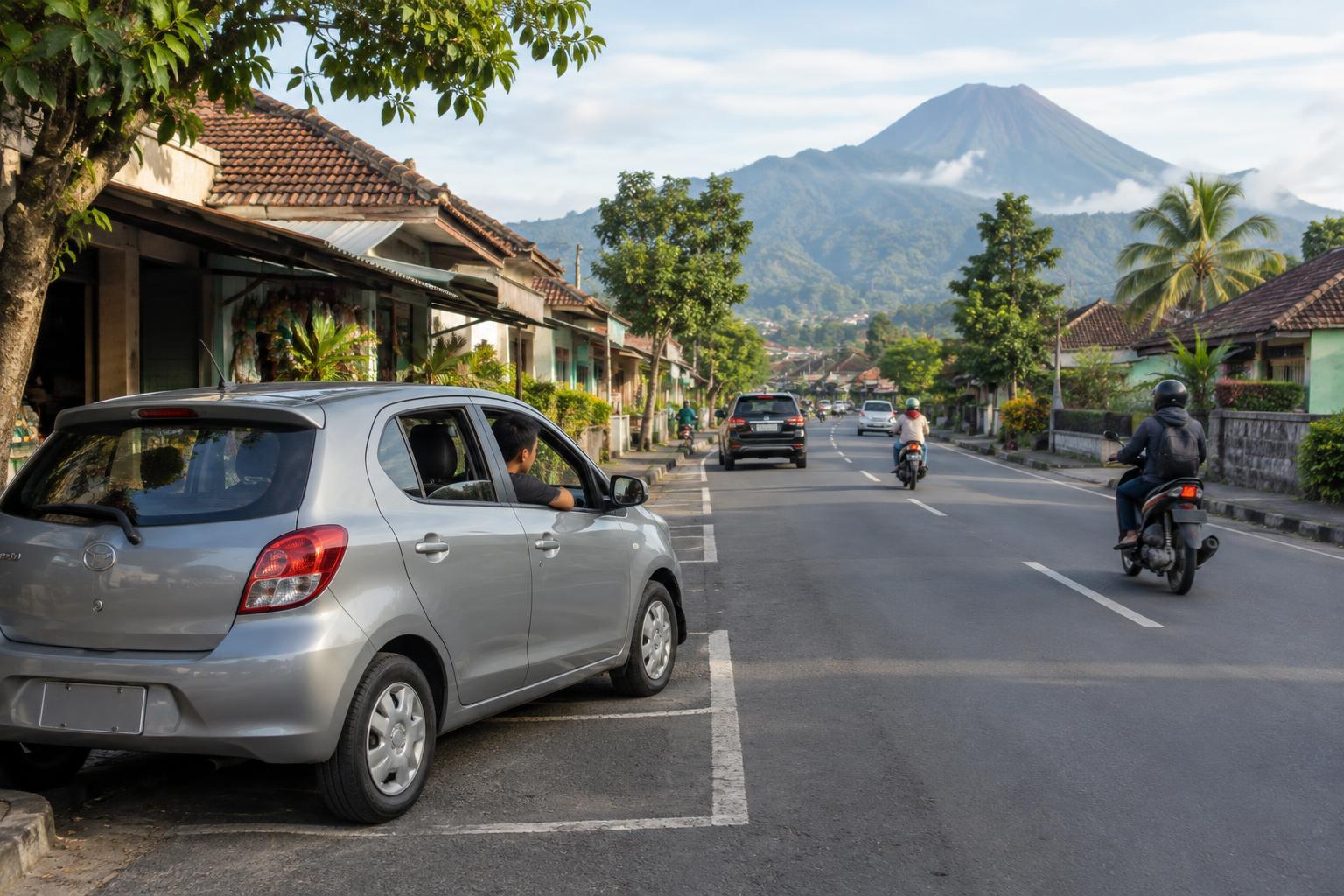
Traffic in Indonesia drives on the left. On Java, a journey can pass through broad main roads, narrow town streets and village lanes shared with motorcycles, pedestrians and other road users. Road surfaces and visibility can change along the way. Rain may reduce grip and obscure potholes or painted markings, while steep or winding stretches call for slower, more deliberate driving.
Plan days around manageable driving blocks rather than trying to fit every possible stop into one route. Map estimates are a starting point, not a promise: congestion, roadworks, weather and breaks can all affect the journey. Download maps for areas where your connection may be unreliable, but continue to follow road signs and assess the conditions in front of you. If you are tired or visibility is poor, it is reasonable to stop or adjust the plan rather than press on.
Drive predictably in busy places
In towns, leave extra room around motorcycles and avoid sudden turns or lane changes. Watch for people crossing near markets, schools and roadside stalls, even where there is no marked crossing. A passenger who handles directions can help the driver concentrate on traffic, particularly when approaching an unfamiliar junction.
Choose a vehicle you feel comfortable positioning on narrow streets, not simply the largest one available. Before committing to a small lane, look for signs, barriers and space to turn around. If a destination sits within a crowded neighbourhood, parking nearby and walking the final stretch may be less stressful than trying to reach its exact entrance by car.
Make parking part of the plan
Parking arrangements vary by location. A hotel may have its own spaces, while a food stop, market or attraction may use a designated lot or a managed roadside area. Ask your accommodation about parking when you book, especially if you expect to arrive late or have a larger vehicle. At other stops, read posted signs and use an established parking area rather than assuming an open stretch of roadside is available.
Some parking areas have an attendant and a fee. Check the displayed rate if there is one, confirm the amount when it is unclear and keep any ticket or receipt you receive. Before walking away, make sure the car is locked, valuables are out of sight and the vehicle is not blocking access. Note where you parked; a saved map pin can be helpful around large or unfamiliar sites.
A successful self-drive trip is not measured by how much ground you cover. With the right documents, a realistic route and time to park without rushing, driving can become one practical part of exploring Java rather than the focus of the day.