Two traditions, two ways of building flavor
Across Java, sate can mean far more than meat on a stick. A vendor’s choice of meat, seasoning, charcoal, sauce and side dishes can give a familiar-looking plate a distinct character. Sate Madura and sate maranggi offer a useful comparison: both are grilled skewers, but one is especially known for its generous sauce, while the other often lets a seasoned marinade lead.
Sate Madura takes its name from Madura, the island off East Java, and is widely found elsewhere in Java. Sate maranggi is strongly associated with parts of West Java, including Purwakarta and Cianjur. Neither name guarantees a single fixed recipe. Stalls and households have their own preferences, so treat the descriptions below as a guide to common styles rather than rules every cook must follow.
Sate Madura: grilled meat and a rich finishing sauce
Chicken is a familiar choice for sate Madura, though goat and other variations are also sold. The meat is cut into small pieces, threaded onto skewers and grilled over hot coals. During cooking, it may be brushed with a mixture that includes sweet soy sauce, helping the surface brown and giving the skewers a gently sweet, smoky edge.
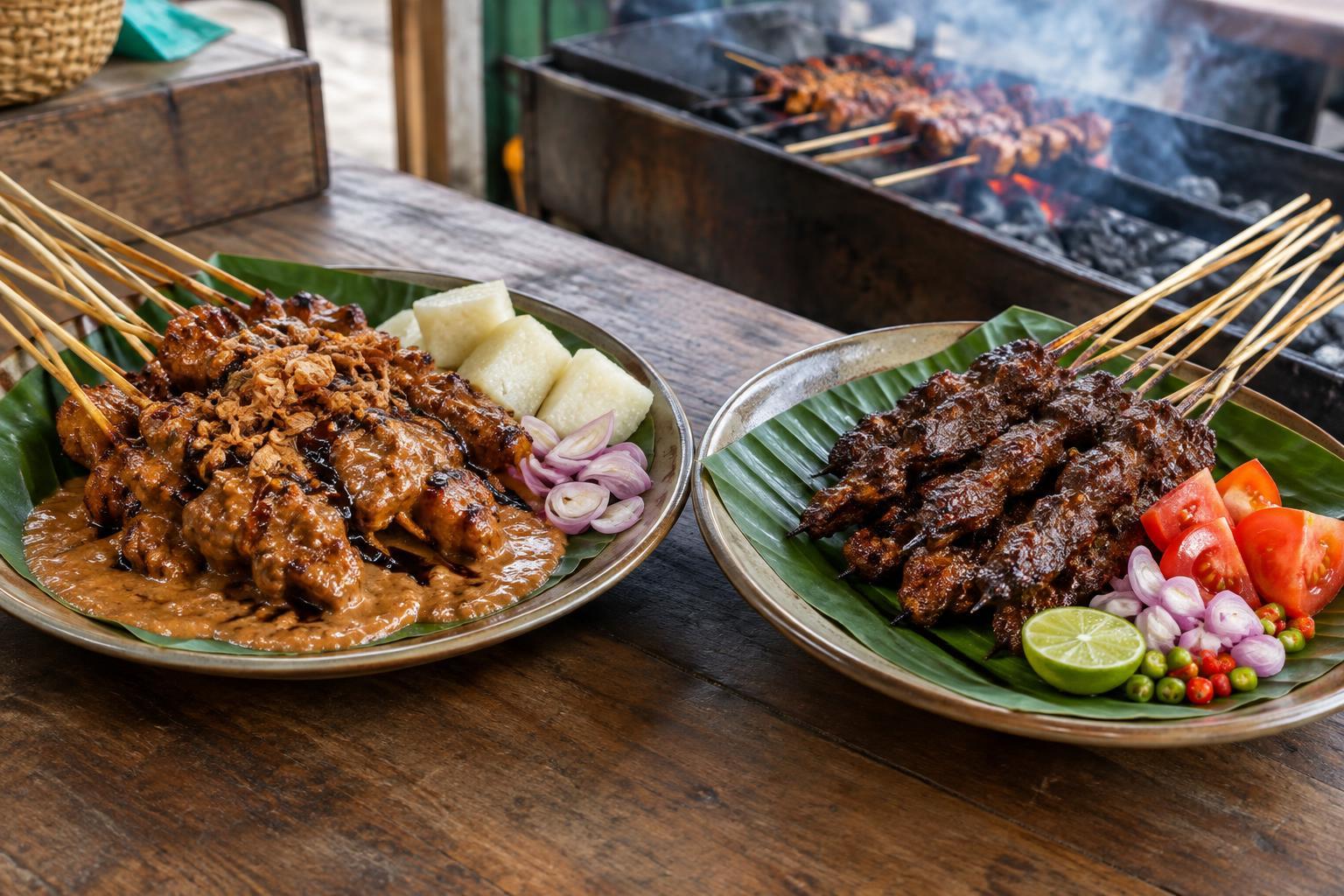
The sauce is often the defining feature. A peanut-based sauce brings roasted, savory depth and a texture that clings to the meat. Sweet soy sauce may be mixed in or poured over the finished plate; sliced shallots and chili can add sharpness and heat. Some sellers serve the sauce thick and smooth, while others leave more texture from the peanuts. If you prefer to control the sweetness or spice, ask whether the additions can be served separately.
Sate Madura is commonly eaten with lontong, compact rice cakes that soak up the sauce. Plain rice is another possible accompaniment. On a plate or in a takeaway wrapper, the combination is satisfying because each part does a different job: the grill supplies smoke, the sauce adds richness, and the rice provides a mild balance.
Sate maranggi: seasoning before the grill
Sate maranggi is commonly made with beef, although the meat used can vary by place and vendor. Rather than relying chiefly on a heavy sauce at the end, cooks typically season the meat before grilling. Marinades vary, but they may combine sweet soy sauce with aromatics and spices such as garlic and coriander. Some versions add a sour element, such as tamarind, to balance the sweetness.
That advance seasoning changes how the skewer tastes. Flavor is carried by the meat itself, while the heat of the coals caramelizes its surface. The result may taste sweet, savory and lightly tangy, with a noticeable grilled aroma. A good marinade supports the flavor of the meat rather than hiding it, though the balance differs from stall to stall.
Sate maranggi is often accompanied by a fresh, lively condiment instead of a thick peanut sauce. A mixture of chopped tomato, shallot and chili can provide moisture and contrast; other accompaniments depend on local practice. It may be served with rice or lontong, among other starches. When ordering, look at what comes with the skewers rather than assuming every maranggi plate will be assembled the same way.
How to compare them at the table
Start with one skewer before adding extra condiment. With sate Madura, notice the relationship between the grilled meat and the peanut sauce: is the sauce nutty, sweet or spicy, and does a bite of lontong change the balance? With sate maranggi, taste the meat on its own first. Then try it with the fresh accompaniment to see how acidity and chili affect the seasoned, smoky flavors.
The contrast is useful, but it is not a competition or a strict divide. Some sate Madura is more deeply seasoned before cooking; some maranggi arrives with a sweeter or more substantial condiment than you might expect. Meat choice, cut size and time over the coals also matter. If you are curious about a particular stall’s version, a simple question about the meat or sauce will tell you more than the name alone.
Ordering thoughtfully
If you have dietary restrictions, check the meat and accompaniments before ordering. Peanut sauce is especially important to ask about if you need to avoid peanuts; shared grills and preparation areas may also matter to people with allergies. Spice levels can be difficult to judge by appearance, so requesting chili on the side is a practical option when available.
Both dishes are well suited to an unhurried meal. Watch how the skewers are grilled, make room for the rice or lontong, and taste the condiments in small amounts. Their differences show how much range can exist within a simple format: sate Madura often builds a plate around sauce, while sate maranggi commonly puts the marinade—and the grilled meat—at its center.