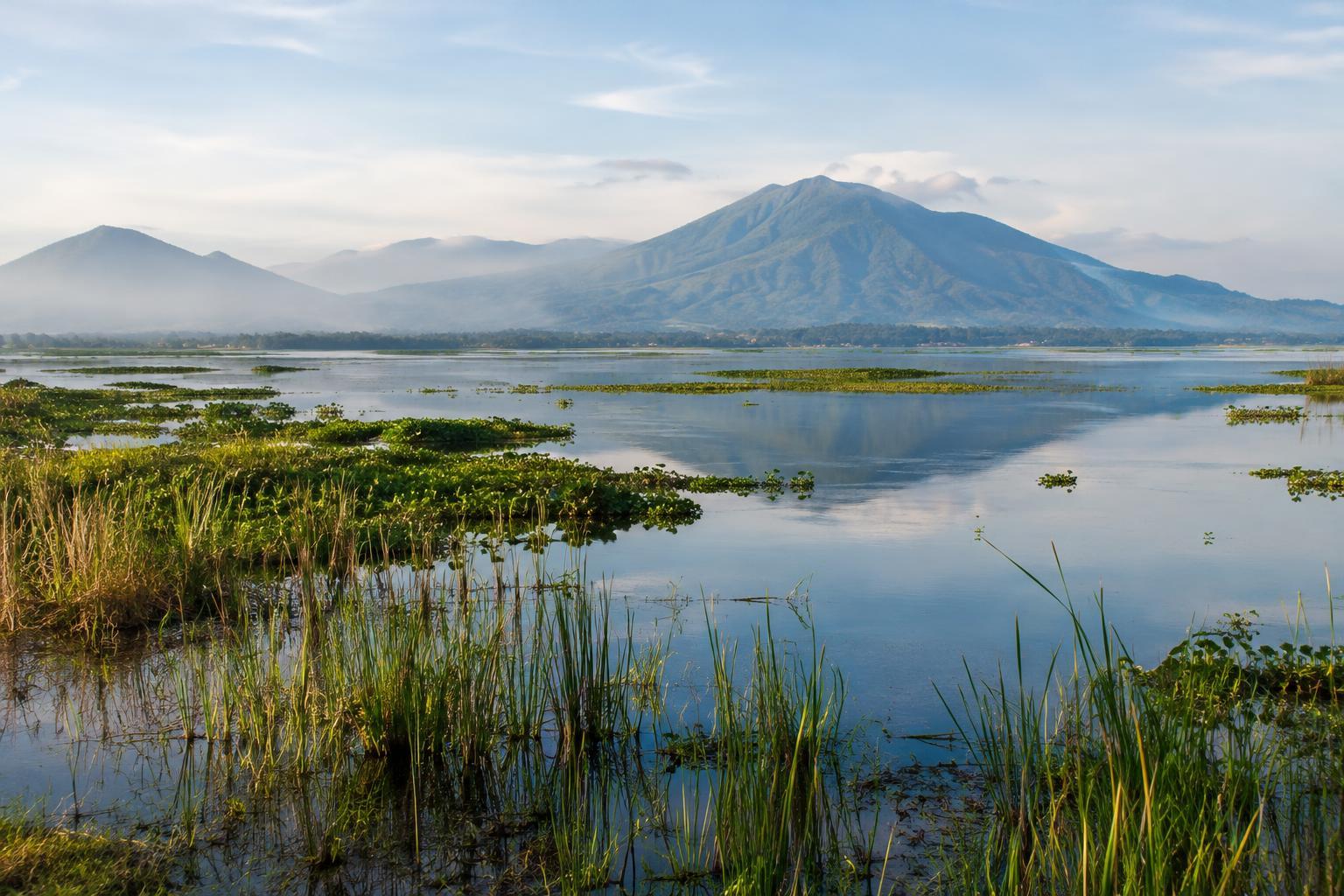
A lake with many edges
Rawa Pening lies in Central Java near Ambarawa, surrounded by a landscape of hills, settlements and cultivated land. From a distant viewpoint, it may appear to be one broad sheet of water. Closer to shore, the scene becomes more varied: open water gives way to floating vegetation, shallow margins and patches of land that may look different as water levels change.
That variety is central to understanding the lake. A wetland is not simply a place that is always underwater. It includes the meeting points between water and land, where plants can take root or float, sediment can collect, and animals can find shelter or food. At Rawa Pening, the most interesting view may be a narrow strip of vegetation at the edge rather than the widest panorama.
Reading the wetland habitats
Open water and plant-covered water offer different conditions. Floating leaves and stems can provide cover for small aquatic animals, while dense growth can also limit light reaching the water below. Water hyacinth is a conspicuous part of Rawa Pening’s landscape. Although its flowers and leaves may catch the eye, extensive mats can obstruct movement on the water and crowd other plants. It is worth observing without treating every green patch as a sign of a healthy habitat.
The shoreline is another useful place to look. Where the bank slopes gently, shallow water may support reeds, grasses or other moisture-loving plants. These areas can offer feeding and resting places for birds, insects and other wildlife. What a visitor sees depends on the location, time of day, weather and degree of disturbance, so patient observation is more rewarding than arriving with a checklist of species to find.
Look beyond the water, too. Fields, paths and settlements close to the lake are part of its wider setting. Rain and runoff can carry soil and other material toward the wetland, while changes at the water’s edge can affect how people use nearby land. The lake and its surroundings are connected, even when a viewpoint frames them as separate scenes.
A landscape people use
Rawa Pening is not an untouched wilderness. People live and work around it, and boats, fishing activity, farming and travel routes may all be visible during a visit. These activities are part of the landscape rather than distractions from it. Watching from an appropriate public place can reveal how daily routines depend on access to the water and its shores.
That human presence also calls for care in how visitors explore. A path beside the lake may serve residents going about their day, and an apparent opening onto the shore may cross private or working land. If you hope to take a boat ride or enter a managed viewpoint, confirm access and conditions locally rather than assuming that a route shown on a map is open. Ask before photographing people at work, and give boats and fishing equipment plenty of space.
How to observe without disturbing
A slow visit is well suited to Rawa Pening. Start from an established viewpoint or accessible public path and spend a few minutes noticing where open water meets vegetation. Scan at several distances: nearby plants may show insects or movement in the shallows, while farther out you may spot birds or boats crossing the lake. Binoculars can help, but attentive looking works without special equipment.
Conditions can shift quickly around an open lake. Bright sun may make the water hard to scan, and rain can leave paths muddy or change visibility. Comfortable walking shoes, water and protection from sun or rain make an unhurried visit easier. Keep to established access points, take litter away, and avoid pulling up plants or approaching wildlife for a closer photograph.
Making sense of a changing lake
No single visit can capture every side of Rawa Pening. The balance of visible water and vegetation may change, and different shores can offer very different impressions. Rather than searching for one definitive view, compare what you can see: Where is the water open? Where do plants gather? How close are fields or buildings to the wetland edge?
Those simple questions turn a scenic stop into a closer encounter with a living landscape. Rawa Pening is valuable to experience not because it fits a neat picture of nature, but because its water, plants, wildlife and everyday human activity can all be seen in relation to one another.


