Start with the route you will actually take
Accessibility is not a single feature of a destination. A hotel may have a step-free room but a raised entrance; a heritage site may have a level courtyard but stairs leading to its best-known viewpoint. Before choosing a stop, picture the full journey: where you arrive, how you reach the entrance, which parts you want to visit, and how you will leave. Check each link rather than relying on a general description such as “accessible.”
Make a short list of what matters to you or your travel companion. This might include avoiding steps, limiting walking distance, finding places to sit, having room to turn a wheelchair, or avoiding crowded and noisy spaces. Separate essentials from preferences. That distinction makes it easier to decide whether a place is workable when information is incomplete.
Ask about steps and paths in concrete terms
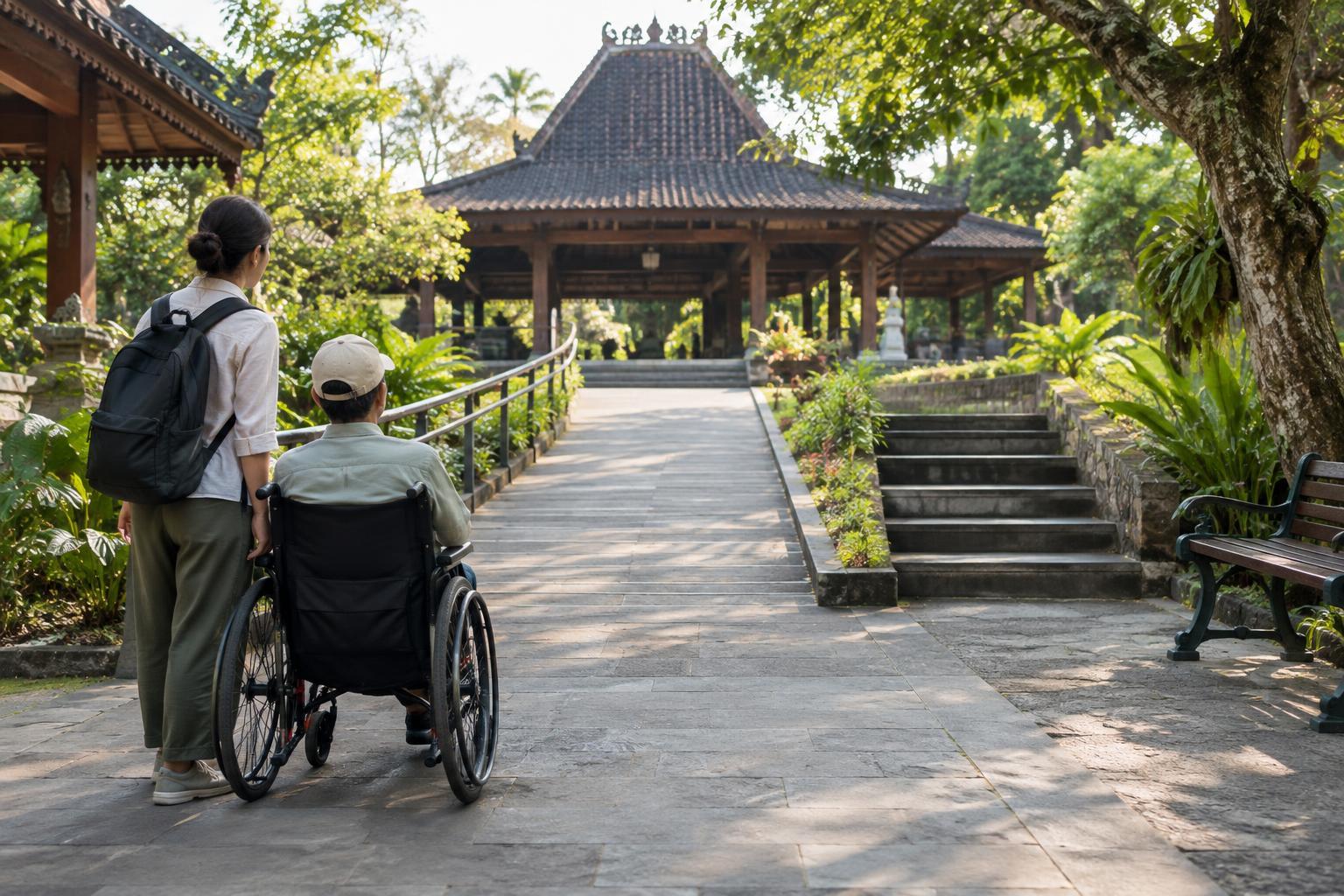
Java’s experiences range from urban museums and markets to temple grounds, village lanes and mountain viewpoints. Conditions can change within one site. When contacting a venue or accommodation, ask whether there are steps between the drop-off point and the area you want to visit. If there is a ramp, ask where it leads and whether someone using your mobility aid can use it independently. Recent photos of the entrance and route may be more useful than a simple yes-or-no answer.
For outdoor plans, ask about the surface as well as the distance. A path described as short may still be uneven, steep or slippery after rain. Check whether there are handrails, resting places and an easier return route. If a particular section cannot be confirmed, consider a nearby alternative that offers a satisfying visit without depending on that section. Leave extra time so a change of route does not turn the day into a rush.
Match vehicles to passengers and equipment
The journey between stops deserves as much attention as the stops themselves. A vehicle that has enough seats may still be difficult to board, and luggage space does not necessarily mean space for a wheelchair or other mobility equipment. If you plan to arrange a car or van, ask about the height of the step into it, door opening, seating position, available space for equipment and where you can be dropped off. Do not assume that a lift or ramp is available unless it has been confirmed.
For train or other shared transport, check the boarding process and the route through the station or terminal as well as the journey itself. Ask where assistance, if needed, can be requested and what arrangements must be made in advance. Keep the first and last stretches of each trip in mind: getting from a platform or parking area to your actual destination can be the hardest part.
Check toilets, rooms and places to rest
A room labelled accessible may not meet everyone’s needs. Ask for details that relate to yours: the route from reception, doorway width, bed height, bathroom layout, shower access and whether there are steps or raised thresholds. If you need space beside the toilet or a particular type of shower, describe it plainly. Photos can help you assess a layout, though they may not show every obstacle.
Use the same approach for daytime stops. Ask whether a usable toilet is available near the area you intend to visit, not merely somewhere on the property. Consider shade, seating and opportunities to take a break, especially on days with several stops. For travellers who find busy environments tiring, a quieter visiting period or a shorter itinerary may make the experience more comfortable.
Confirm the plan and keep a fallback
Send questions before committing to a tightly scheduled day. A clear message might state what you need and ask for the entrance route, any steps, toilet facilities and the closest practical drop-off point. If an answer is vague, follow up about the specific part of the route that remains uncertain. Keep useful replies and photos together so you can refer to them while travelling, and reconfirm important arrangements before departure.
Build an alternative into each day: a shorter route, a different stop or time to rest. Conditions and individual needs vary, so even careful checking cannot remove every surprise. A flexible plan lets you enjoy Java’s food, heritage, landscapes and everyday life without treating an inaccessible path as a failure of the whole trip.