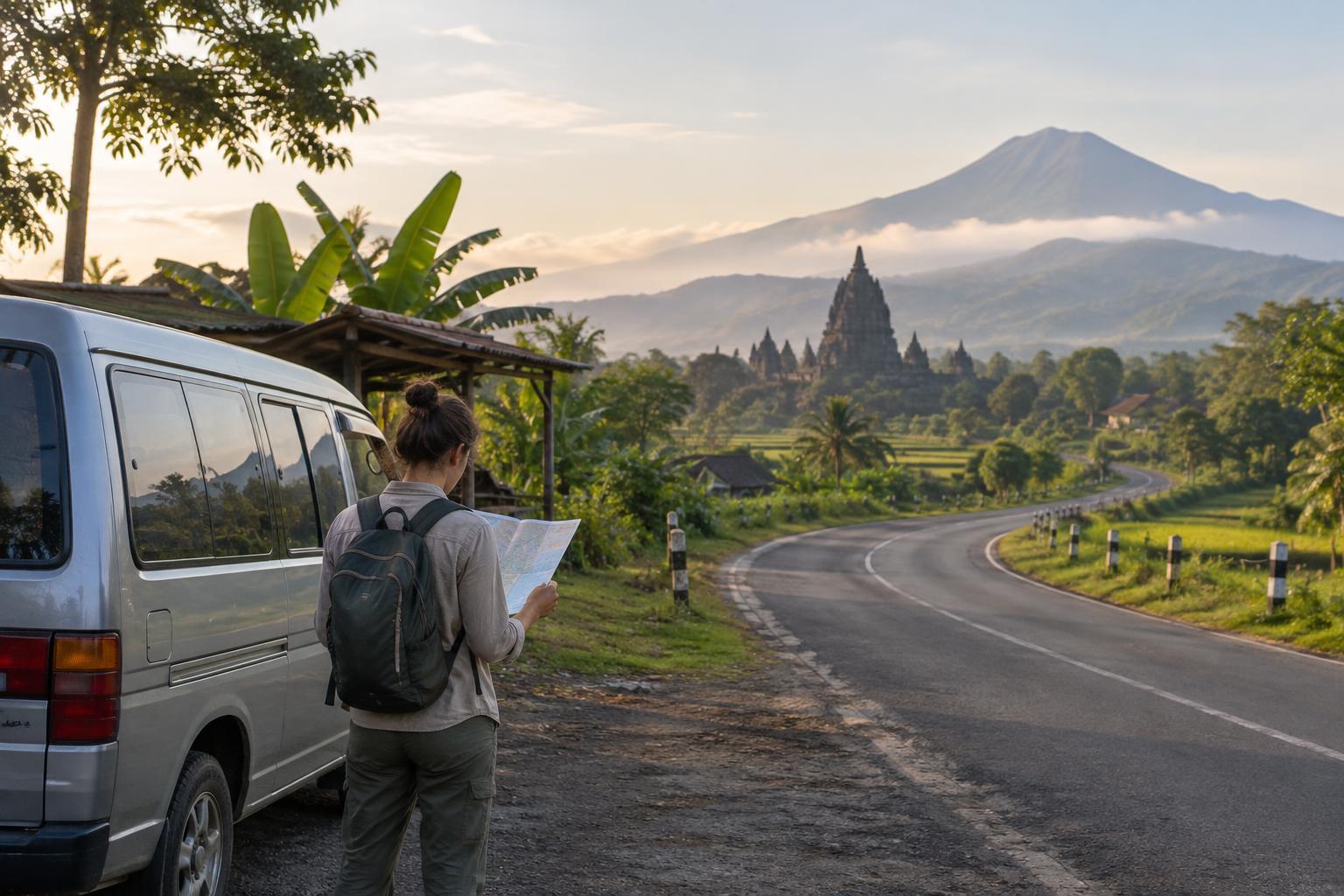
Choose one main destination
Java can make a short distance look deceptively simple on a map. A route may pass through busy town centers, narrow village roads or steep terrain, and the time needed to cover it can change during the day. For a relaxed trip, choose one main destination and treat nearby stops as optional. A temple visit, a craft village, a food-focused outing or a walk in the hills can each fill a day without a long list of additions.
Start by deciding what you most want to experience and how much time it deserves. A place you hope to explore slowly should not be squeezed between two distant stops. If you are traveling with children, older companions or anyone who prefers an easier pace, allow more time for breaks. The best route is not always the one with the most places on it.
Estimate the whole journey, not just the drive
Look up the outward route, then estimate the return separately. Traffic patterns may differ, and a journey that feels easy in the morning can take longer later on. When comparing routes, note whether they use toll roads, local streets or mountain roads. If you are using public transport, include the time needed to reach a station or stop, wait for a service and complete the final stretch to your destination.
Add time for small transitions that maps do not show clearly: finding an entrance, parking, buying tickets, walking from a drop-off point or stopping for a meal. These minutes accumulate. Build a buffer into both directions rather than planning to arrive at the exact moment an activity begins or a return service departs. If the schedule only works when every connection is perfect, consider a closer destination.
A simple written outline can help: departure, expected arrival, time on site, latest comfortable departure and expected arrival back. Use it as a guide, not a timetable you must obey. The important point is to know when you need to start heading home.
Check the hours that matter
Before setting out, check the opening hours of your main destination through a source maintained by the venue, when one is available. Look for separate ticket-office, entry and closing times; last entry may be earlier than closing. Access to a cultural site, workshop or trail may also depend on local activities, weather or site conditions. If the visit is central to your day, confirm the details shortly before departure rather than relying on an old saved listing.
Consider what else you need at the destination. A food stop may serve only certain meals, and transport connections or ticket counters may finish operating before you expect. Religious and community spaces deserve particular care: visitor access can change around worship or local events. Plan to follow posted guidance, dress appropriately where requested and leave space for the site's everyday use.
Arrange the return before you leave
Getting out to a destination is often easier than getting back. If you are taking a train or bus, identify a return service you can comfortably reach and note an earlier option where possible. Check how you will travel from the attraction back to the departure point; the final local connection may be less frequent than the main route. Keep the details accessible without depending entirely on a mobile signal.
If you plan to use a hired car, driver or ride-hailing service, clarify whether the trip includes waiting time and the return journey. Do not assume that a vehicle available in a city will be easy to find at a remote trailhead or village. For a private vehicle, leave enough daylight for unfamiliar roads when that would make the drive more comfortable. Decide in advance what you will do if you need to leave early or your preferred return option falls through.
Keep a useful backup plan
A flexible day trip has a few clear priorities. Put your essential visit first, then add a nearby meal or short stop only if time and energy allow. Carry water, weather-appropriate clothing, a charged phone and a payment option suitable for smaller places. Save the name and location of your return point, especially if your outward and inward stops are different.
If delays eat into the day, shorten the optional part rather than rushing the main experience or risking the journey home. A nearby alternative can rescue a trip when a site is closed, but it need not be elaborate: a local market, a meal or a shorter walk may be enough. Returning with time to spare is part of a successful day trip, not a sign that you planned too little.


