Three dishes, one useful starting point
At first glance, pecel, gado-gado and karedok can look similar: vegetables coated or served with a thick, savory dressing often made with peanuts. Yet treating them as interchangeable misses much of the pleasure of eating them. The vegetables may be cooked or raw, the sauce may be mixed through or poured over, and the extras can turn a light plate into a filling meal.
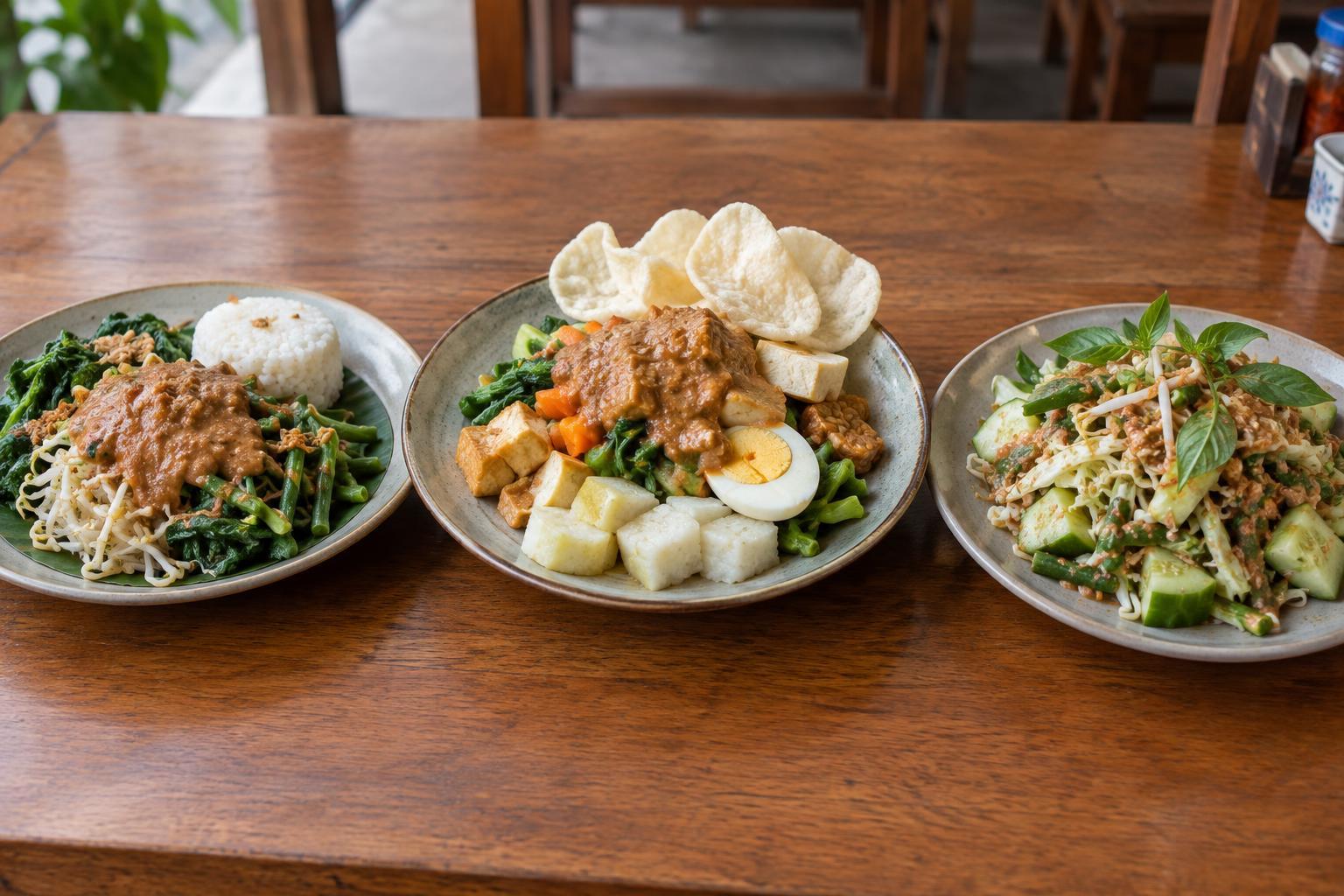
Recipes vary between regions, households and vendors, so there is no single plate that defines each name. A useful way to choose is by texture. Pecel commonly centers on blanched greens and other cooked vegetables. Gado-gado often combines cooked vegetables with substantial additions such as tofu, tempeh or egg. Karedok, associated with Sundanese food from West Java, is distinguished by its raw vegetables.
Pecel: cooked vegetables with a bold dressing
Pecel is strongly associated with Java and is a welcome introduction to the range of vegetables eaten in everyday meals. A serving might contain blanched leafy greens, bean sprouts and long beans, though the selection depends on what is available. Brief cooking softens the vegetables while leaving some bite. A peanut-based sauce brings sweetness, salt, heat and richness; its balance changes from one kitchen to another.
Pecel can be eaten on its own, but it is often served with rice or compressed rice cake. A crisp peanut cracker called peyek may add a salty crunch. When ordering, look at the whole plate rather than assuming the vegetables are the entire meal: rice, crackers and other sides may be included or offered separately. If you prefer mild food, ask about the sauce before it is added, since its chili level may already be set.
Gado-gado: a flexible, substantial mix
Gado-gado is found well beyond any one part of Java. It commonly brings together cooked vegetables and a peanut dressing with ingredients such as tofu, tempeh, potato, egg or rice cake. Some versions include raw cucumber or other fresh elements alongside the cooked vegetables. The combination makes it especially useful when you want vegetables to form the center of a satisfying meal.
There is no need to expect every ingredient on every plate. One vendor may use a smooth, pourable sauce; another may serve a thicker dressing with a more noticeable peanut texture. Crisp crackers are a common accompaniment, but their type and seasoning can differ. If an ingredient matters to you, ask what is in that particular serving rather than relying on the dish name alone.
Karedok: fresh crunch from West Java
Karedok offers the clearest contrast to the other two dishes because its vegetables are typically raw. Cucumber, cabbage, long beans and bean sprouts are among the ingredients you might encounter. They are cut into bite-size pieces and tossed with a peanut-based dressing, creating a crisp, fresh plate rather than one built around warm, softened greens.
Its dressing may include aromatics such as kencur, a fragrant rhizome, along with chili and other seasonings. These can give karedok a character quite different from a simple sweet peanut sauce. Because the vegetables are uncooked, choose a place whose handling of fresh produce you feel comfortable with. If raw vegetables do not appeal to you, pecel or a mostly cooked gado-gado may be a better first choice.
How to order with curiosity and care
A simple comparison can guide your order: choose pecel for blanched vegetables and a direct, sauce-forward plate; gado-gado for a varied mix that may include tofu, tempeh or egg; and karedok for raw crunch. All three leave room for local interpretation. Trying them at different places can be more revealing than searching for one supposedly definitive version.
Peanuts are central to many versions, so none of these dishes should be assumed safe for someone with a peanut allergy. If you avoid animal products, ask about egg, crackers and ingredients in the dressing, which may vary. You can also ask whether rice or rice cake comes with the serving and whether chili can be adjusted. A few questions at the counter help you understand the plate in front of you while leaving space to enjoy its particular style.