A landscape between river, sea and wind
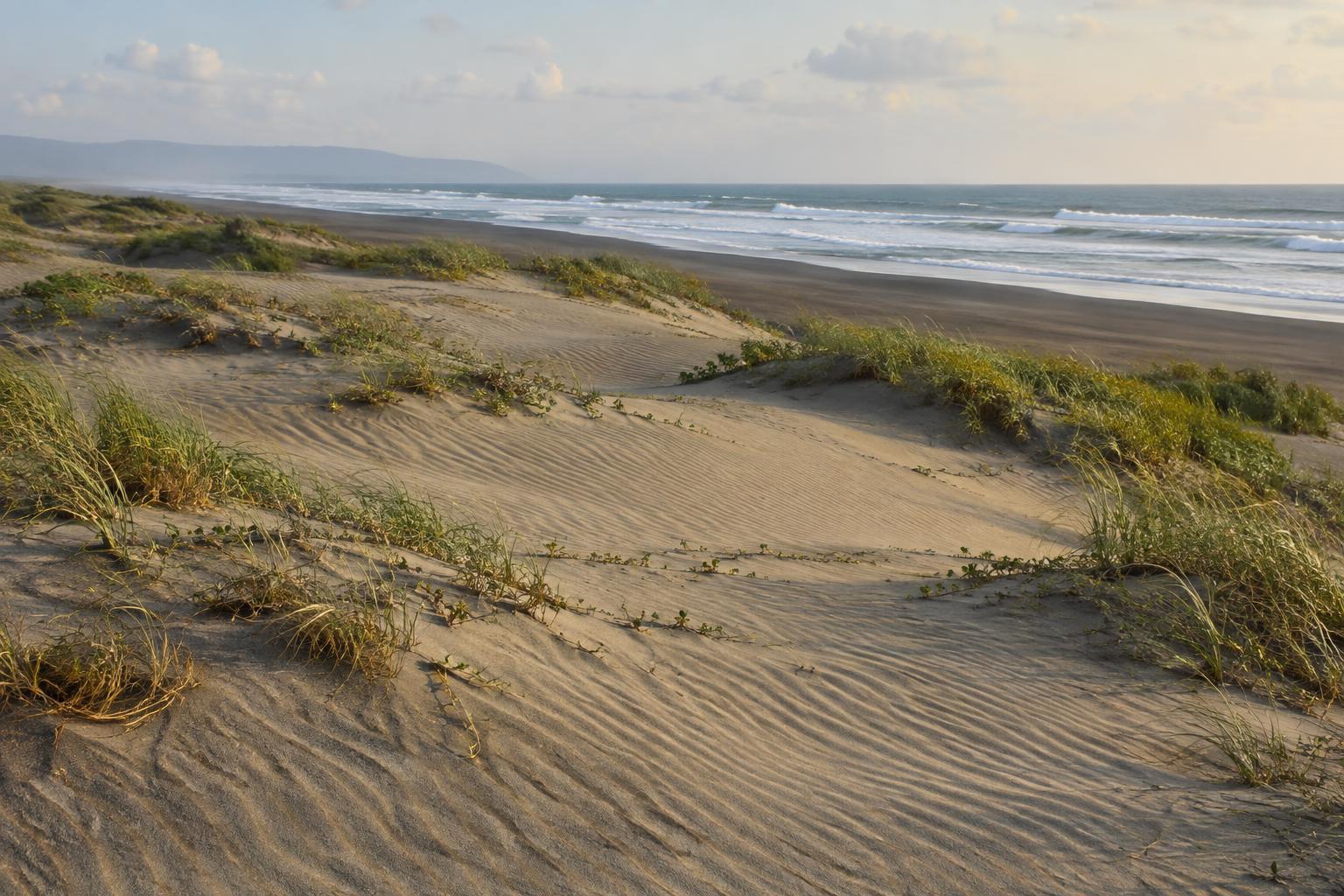
Near Parangkusumo and Parangtritis, south of Yogyakarta, sand rises into low ridges and open slopes that can look strikingly different from the nearby beach. The dunes are not simply piles of sand left behind by a single storm. They belong to a coastal system in which sediment arrives, moves along the shore, dries and is carried inland by wind.
Rivers draining Java’s volcanic landscapes contribute sediment to the coast. Waves and coastal currents redistribute some of that material, while onshore winds lift dry grains from exposed areas. Where the wind slows, sand settles and gradually builds a dune. The shape and position of a dune can change as sand is removed from one place and deposited in another. This movement is part of what makes the landscape interesting—and vulnerable to disturbance.
Reading the shapes under your feet
A visit is more rewarding when you pause to notice small details rather than treating the dunes only as a photo backdrop. Look for ripples on an undisturbed surface: they show how wind has sorted and shifted grains. A slope facing the wind may appear broad and gentle, while sand deposited on the sheltered side can be steeper. The pattern will not always be clear, especially where footsteps, rain or plants have changed the surface.
Vegetation also tells part of the story. Roots can hold sand in place, allowing a patch to become more stable. Open sand, by contrast, may keep moving when wind conditions allow. Neither is just empty ground. Plants, exposed sand and the spaces between them all contribute to the character of the coastal landscape. Avoid pulling plants or clearing a patch to make a photograph.
Planning a comfortable visit
An early or late visit can make walking more pleasant than crossing exposed sand in the strongest heat. Bring drinking water, sun protection and footwear you can walk in comfortably; sand may feel hot, and loose slopes can be tiring. Wind can blow grains into your eyes or camera, so keep a little distance from others when gusts pick up and protect equipment when you are not using it.
Conditions can differ from one visit to the next. Rain may firm the sand, while dry, windy weather can make it shift underfoot. Choose a route that matches your energy and visibility, and leave time to return without rushing. If you hope to try an activity such as sandboarding, check locally where it is permitted and follow the guidance provided for that activity. Do not assume every slope is available for recreation.
Explore without leaving a larger mark
Use established access routes where they are apparent, and follow any signs or on-site instructions. Repeated shortcuts can wear new tracks into fragile areas, while vehicles and concentrated activity can reshape the surface. Give other visitors room, especially on slopes where someone may be walking or sliding downhill. Take litter away with you, including small packaging that wind can scatter quickly.
The dunes sit within a lived-in coastal area, not an isolated outdoor playground. Keep clear of work spaces, crops, equipment and private property, and ask before photographing people at close range. If an area is closed or being restored, enjoy the view from outside it rather than stepping past a boundary for a better angle. A careful visit leaves both the sand and the surrounding community with less to contend with.
Keep the sea and the dunes in perspective
The nearby shoreline adds to the appeal of the trip, but it calls for separate caution. Java’s south-coast surf can be powerful, and a calm-looking stretch of water is not a reliable invitation to swim. Observe beach warnings and keep a safe distance from breaking waves. You can appreciate the contrast between sea, beach and dunes without entering the water.
Parangkusumo is best experienced as a changing landscape rather than a fixed landmark to conquer. A slow walk, a look at wind-made patterns and a willingness to stay within appropriate access areas offer plenty to remember. The same forces that created the dunes continue to shape them; giving those processes space is part of visiting well.


