Start with the bowl in front of you
Bakso is a familiar comfort food across Java: meatballs served in a savory broth, often with noodles, greens and fried garnishes. You might find it at a roadside cart, a market stall or a small restaurant. The basic idea is easy to recognize, but each seller has a particular combination of meatballs, noodles and extras. A sign that simply says “bakso” does not tell you exactly what will arrive.
If there is a menu, look for a standard bowl before considering larger or specialty versions. At a cart, you can also watch what the seller prepares for other customers. A regular serving is a good starting point when you are unfamiliar with the choices. Prices and included ingredients vary, so check the menu or ask before requesting extras.
Choose your meatballs and noodles
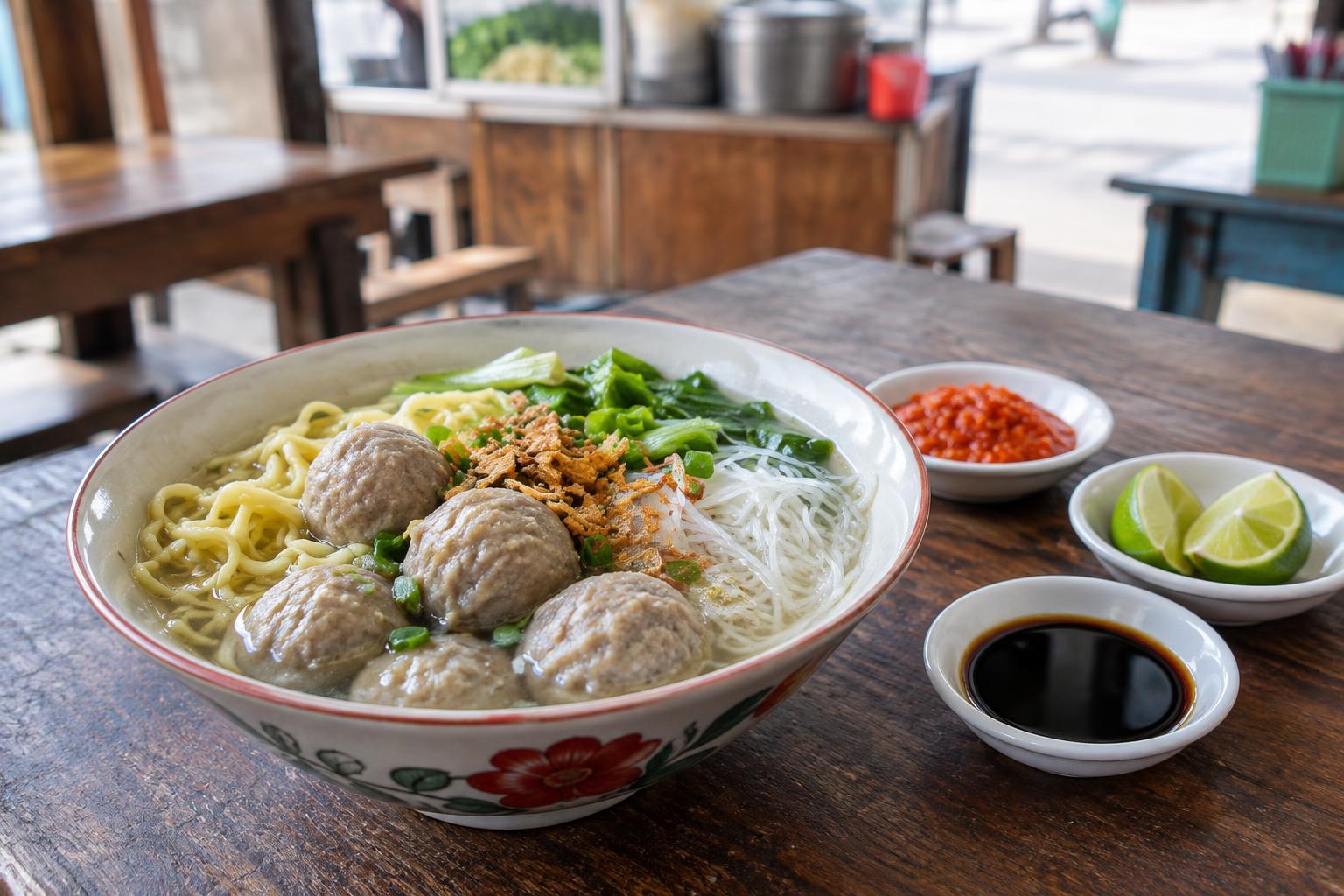
The meatballs are the center of the dish. Many sellers offer small, smooth bakso, while some also serve larger meatballs or bakso urat, which has a firmer texture associated with bits of tendon or coarsely ground meat. You may see bakso telur, a large meatball with an egg inside. Names and recipes differ by stall, so pointing to a displayed option is often clearer than relying on a name alone.
Noodle choices can include yellow wheat noodles, called mie, thin rice vermicelli, often called bihun, or translucent noodles known as soun. A bowl may contain one type, a mixture, or no noodles at all. If you have a preference, ask for “pakai mie” (with yellow noodles) or “pakai bihun” (with rice vermicelli). “Tanpa mie” means without noodles, though it is worth checking what the seller would include instead.
The broth is usually served hot, making it easier to taste before adding anything. It may seem mild at first, especially if the stall provides condiments for you to adjust at the table.
Know the common extras
Depending on the seller, a bakso bowl may include tofu, leafy greens, bean sprouts, fried shallots or a piece of fried wonton-style pastry called pangsit goreng. Some places offer extra meatballs, a whole egg, or cuts of meat such as tetelan. These additions can change both the size and price of the meal. Rather than expecting every bowl to include the same items, treat the seller’s menu or display as the best guide.
You can keep an order straightforward: “Bakso biasa, satu” asks for one regular bakso. To request an addition, “tambah tahu” means add tofu. If you do not want something, “tanpa” means without, as in “tanpa sambal” for no chili paste. These short phrases are useful, but pointing and confirming the order is perfectly reasonable, especially where the choices are listed only on a cart.
If you are avoiding an ingredient, ask about the whole bowl, not only the topping. Broth, meatballs, sauces and fried items may contain ingredients that are not obvious by sight. Recipes vary, and a seller may not be able to meet every dietary requirement.
Season it a little at a time
Condiments often sit beside the bowl or on a shared table. Sambal adds heat; sweet soy sauce, or kecap manis, brings sweetness; and bottled chili sauce may offer another kind of kick. Lime is sometimes available for a sharper finish. Not every stall provides every condiment, and the broth may already be well seasoned.
Taste a spoonful first, then add small amounts and try it again. This lets you keep the broth’s original flavor while finding the balance you like. If you prefer a gentle bowl, ask for chili on the side when ordering rather than assuming it can be removed after serving. A large meatball may also have a spicy filling, so ask before choosing one if you are sensitive to heat.
Order with curiosity, not a fixed formula
Bakso is an approachable meal precisely because it allows for small choices. You can order a plain bowl, mix noodles, add tofu or explore a specialty meatball without needing to know every variation in advance. If the menu is unclear, start by asking “Apa saja isinya?”—what is in it?—and confirm the price of any add-ons you select.
Give yourself a moment to observe how the stall works. Some sellers take orders at the table; others expect you to order at the cart and pay after eating. Following the local routine, asking brief questions and making your preferences clear usually makes for a smoother meal. The best introduction to bakso is not a definitive recipe, but a bowl you understand well enough to enjoy.