One name, two ways to enjoy rice
Ask for nasi liwet in Solo and West Java, and you may receive two meals that look and taste quite different. Both begin with rice cooked for flavor rather than treated as a plain side dish. Beyond that shared idea, the seasonings, accompaniments and style of eating can change considerably.
In Solo, a city in Central Java, nasi liwet usually centers on tender rice cooked with coconut milk. It is served as a composed portion with savory toppings, often including chicken and egg. In West Java, nasi liwet commonly refers to rice cooked with aromatics and enjoyed alongside a spread of dishes. These are useful distinctions, not rigid rules: home cooks and food sellers have their own versions.
Solo: coconut-rich rice with layered accompaniments
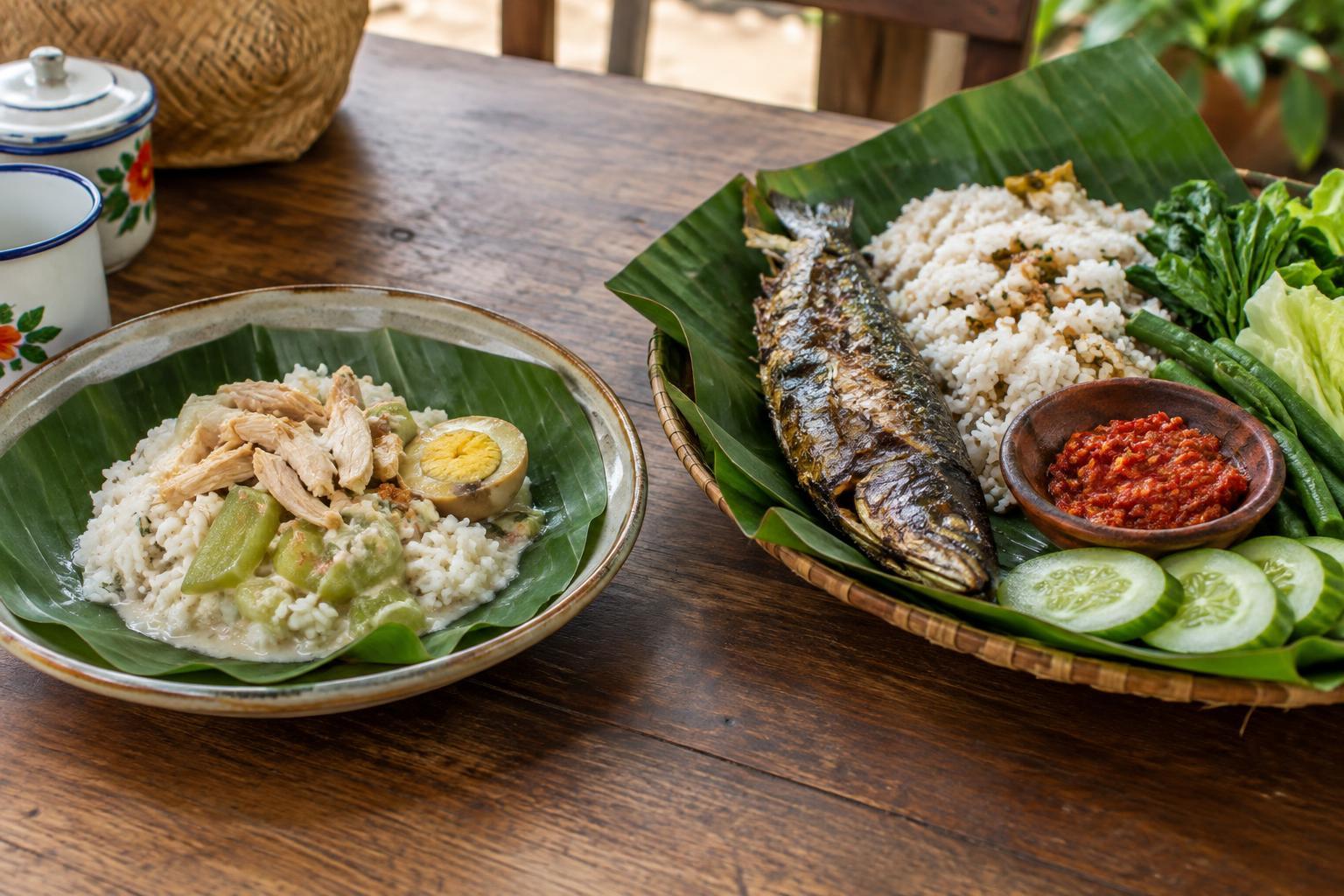
Solo-style nasi liwet is known for its soft, richly flavored rice. Coconut milk gives the grains a gentle richness without making them a dessert-like dish. A typical serving may include shredded or sliced chicken, an egg, and labu siam, a mild squash often prepared as a savory vegetable dish. You may also encounter areh, a thick coconut-milk preparation that adds another creamy layer.
The appeal lies in the way these parts meet on the plate. The rice absorbs a little sauce; the chicken contributes a deeper savory note; the vegetable offers a lighter contrast. Some sellers serve it on or in a folded banana leaf, which makes the portion easy to hold and gives the meal a distinctive presentation. If you are ordering for the first time, look at what is included before adding extras: a standard portion may already contain several accompaniments.
West Java: aromatic rice made for a shared spread
In West Java, nasi liwet often takes a different direction. The rice is commonly cooked with aromatics such as shallots, garlic, lemongrass and Indonesian bay leaf. Salted fish may be cooked with the rice or served beside it, lending a pronounced savory taste. Recipes vary, but the rice is generally not defined by the coconut-rich character associated with Solo’s version.
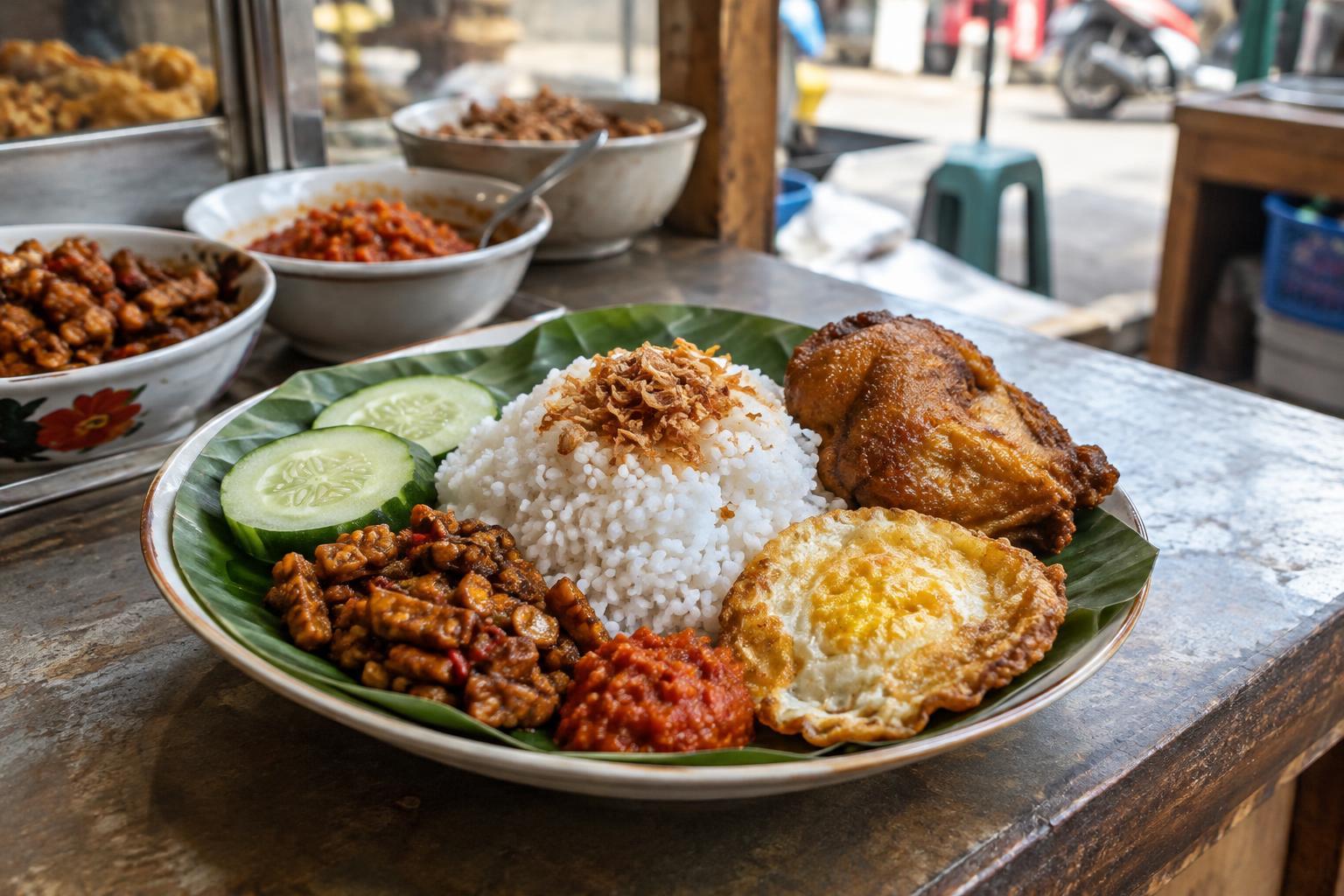
The meal around the rice is just as important. A West Javanese serving might come with fried fish or chicken, tofu, tempeh, sambal and lalapan, the fresh vegetables eaten alongside many Sundanese meals. For a group, the food may be arranged over banana leaves so everyone can take rice and choose from the shared dishes. You can also find individual portions, so there is no need to assemble a group to try it.
Expect contrasts: fragrant warm rice, crisp or salty accompaniments, cooling raw vegetables and sambal that can be quite hot. If you prefer less heat, taste the sambal separately before mixing it into your rice. When sharing a spread, take a modest first portion; you can always return for more.
How to choose and order with confidence
Location is a helpful clue, but the menu and the food in front of you tell you more. A Solo-style offering will usually emphasize the coconut-milk rice and its set of toppings. A West Javanese offering may invite you to choose side dishes or order a package for several people. If the description is brief, ask what comes with the rice and whether the sambal is served separately.
Neither tradition is a substitute for the other. Choose Solo’s version when you want a compact meal with soft textures and mellow, savory richness. Choose a West Javanese spread when you want to combine fragrant rice with fish, fried side dishes, vegetables and sambal to your taste. Trying both is an enjoyable way to notice how a familiar staple can anchor two distinct eating experiences. Rather than looking for a single definitive nasi liwet, pay attention to the cook’s version and the way the meal is meant to be eaten.