A hike shaped by contrast
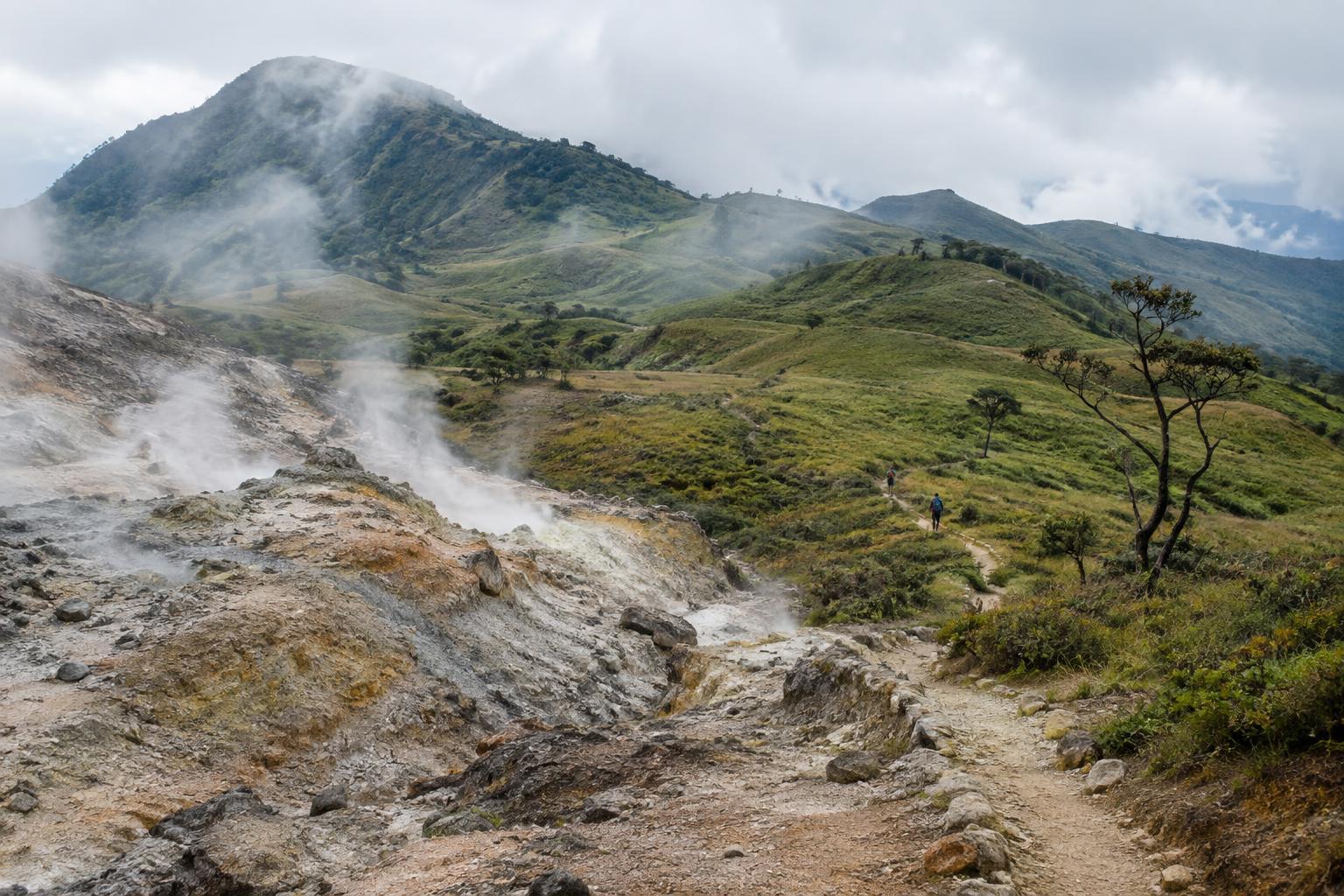
Mount Papandayan, in West Java, offers a hike defined less by a single viewpoint than by the transition between landscapes. Around its volcanic areas, bare ground, rock and steaming vents draw attention to what is happening beneath the mountain. Farther along, more open, grassy terrain can give the walk a quieter feel. Experiencing both makes it easier to appreciate Papandayan as a changing landscape rather than simply a destination to reach.
That contrast also changes how you move. Uneven volcanic ground asks for deliberate footing, while open stretches may invite a faster pace. Neither is a reason to rush. Pausing to look back can reveal how quickly the scenery has shifted, especially when cloud or mist changes what is visible.
Reading the crater landscape
Papandayan’s crater areas make the mountain’s volcanic character immediately apparent. Discolored earth, scattered stones and steam can create an impression of ruggedness even on a well-used route. The setting rewards observation from the trail: notice differences in ground color, the way water has cut across a slope, and how sparse vegetation contrasts with greener areas beyond it. There is no need to approach a vent to understand why this terrain is distinctive.
Treat active geothermal features with particular care. Stay on permitted paths and behind any barriers, and follow instructions posted at the site. Ground near vents may be unstable or hot, and volcanic gases can be hazardous, particularly where they collect or drift with the wind. Conditions and access can change, so check locally for the current route and any restrictions before setting out. If an area is closed, choose another part of the mountain rather than trying to pass through.
What the meadows add to the walk
After the stark textures of the crater landscape, Papandayan’s higher open areas offer a different experience of space. Grass and low mountain vegetation soften the view, while broader sightlines can make ridges, slopes and passing clouds more noticeable. The appeal is not dependent on finding a particular flower or a perfectly clear panorama. Even in subdued weather, the shift from rocky ground to meadow helps tell the story of the hike.
Open areas are also places to tread lightly. Keep to established routes where possible, rather than spreading out to find a photograph or a private resting spot. Mountain plants can be slow to recover from repeated trampling, and a shortcut that looks harmless to one person can become an obvious worn track when others follow it. Carry away food wrappers and other waste, including small scraps that are easy to overlook.
Planning for changing conditions
A comfortable Papandayan hike starts with a plan suited to your time, energy and the conditions on the day. Before leaving, confirm access arrangements, trail information and weather expectations with an appropriate local source. Ask which routes are open and how long your intended walk is likely to take at an unhurried pace. Leave enough daylight for the return; the varied terrain is more enjoyable when you are not racing it.
Wear footwear with reliable grip, and bring water, food and layers for cooler or wetter conditions. Sun, wind, rain and mist can alter the feel of an exposed walk, so a light rain layer can be useful even when the start seems pleasant. Keep your route flexible: if visibility deteriorates, footing becomes difficult or someone in your group is struggling, turning back is a sensible way to preserve the experience.
Let the landscape set the pace
Papandayan is best approached as a series of places to notice rather than a checklist of sights. Give the volcanic sections your full attention without leaving the designated route, then allow time in the open areas to see how the mountain changes around you. A modest walk with room for pauses may reveal more than a hurried attempt to cover every available trail.
This slower approach benefits the landscape as well as the visitor. Respect closures, share narrow paths considerately and leave natural features where they are. The memorable part of a Papandayan hike is the relationship between its craters and meadows—and the chance to experience that contrast without adding unnecessary pressure to either.