A forest shaped by the tides
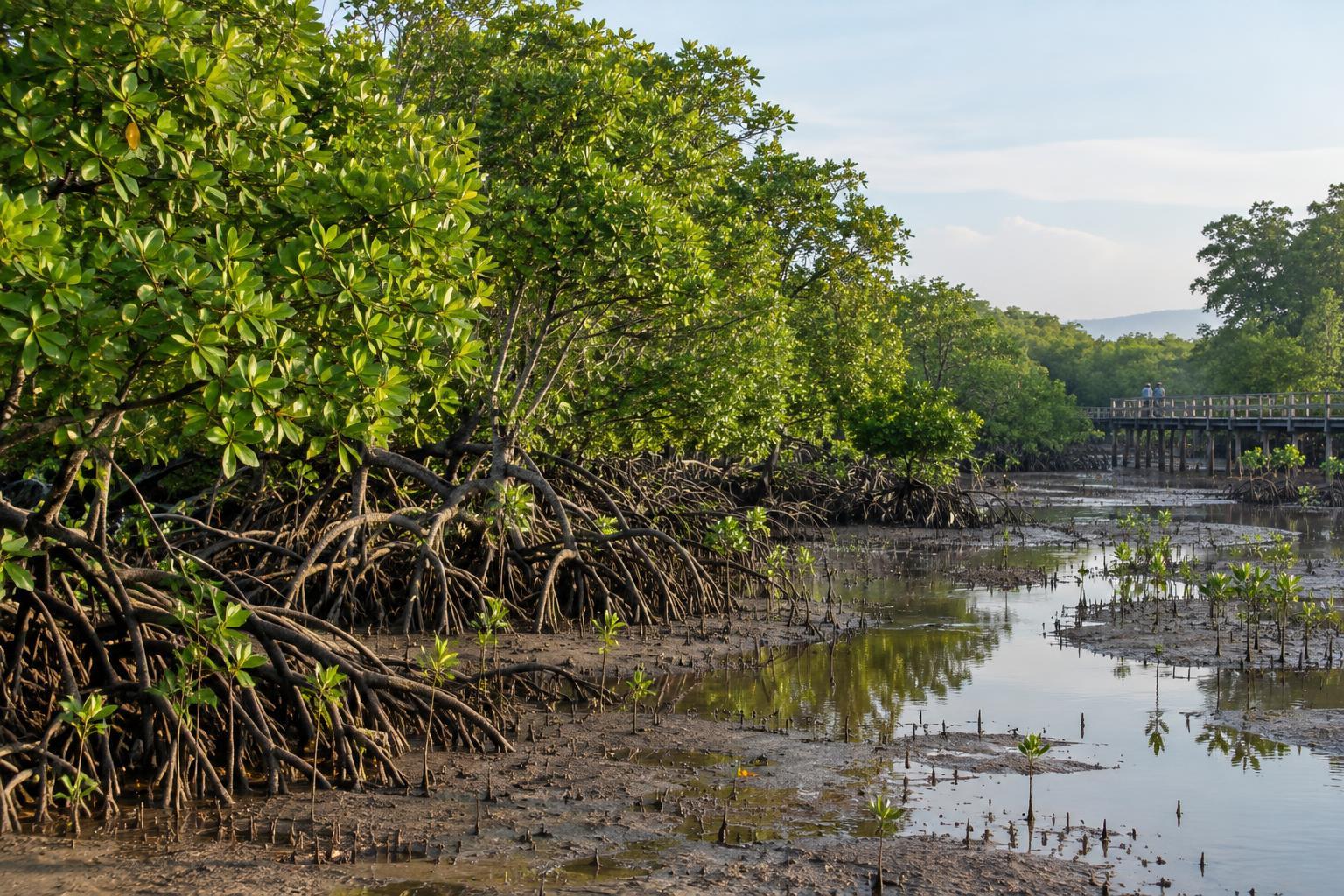
Mangroves grow where land meets tidal water. Along parts of Java’s coast, their roots stand in mud or shallow water that changes with the tide. A visit may feel very different from a walk in an inland forest: the ground can be soft, the water cloudy and the air full of small movements from crabs, fish and birds. Those details are part of the habitat, not signs that something is wrong with it.
Not every stretch of Java’s shoreline has mangroves. Exposure to waves, the shape of the coast and local land use all affect where they can grow. Sites that welcome visitors may have a boardwalk, a viewing area or a boat route; others may be working shorelines or sensitive areas with no suitable public access. Treat signs and local access rules as more useful than an inviting-looking path through the mud.
What mangroves do for coastal life
Mangrove roots slow moving water and can trap sediment around a shoreline. Their branches and fallen leaves contribute to a habitat used by many small creatures, while sheltered water among the roots can offer young fish and other aquatic animals places to feed or hide. The mix of species varies from site to site, so it is worth looking closely rather than arriving with a checklist of animals you expect to see.
Mangroves can also help reduce the force of waves in some conditions and store carbon in their wood and wet soils. They are not a guaranteed barrier against storms or a substitute for careful coastal planning. Their value lies in the combination of functions they perform over time, especially when the forest, its tidal channels and the surrounding shoreline remain connected. A narrow stand beside a path may look modest, yet its exposed roots and new seedlings still need protection.
Plan a visit around the place, not just the view
Before setting out, check whether a site is open to visitors and what kind of route it offers. Tide levels can change what is visible and whether a waterside path is comfortable to use. Rain may make surfaces slippery, and exposed boardwalks can be hot. Bring drinking water, sun protection and footwear with good grip; keep any bag light enough to carry without brushing against branches. If you plan a boat trip, choose an operator that uses established routes and follows site rules.
Allow time to pause. From a boardwalk, you may spot crabs moving across the mud or notice how different roots hold a tree upright. A quiet visit often reveals more than a hurried one. If the site has community-run facilities or guides, follow their directions and pay any stated entry or guiding fees. Ask before photographing people, homes, fishing gear or work areas: a mangrove visit may take you alongside someone else’s everyday workplace.
Keep roots, mud and wildlife undisturbed
Stay on marked paths, platforms or approved boat routes. Mangrove mud can hide seedlings and roots that are easy to crush, even when an open patch looks harmless. Do not climb trees, pull at aerial roots, cut branches or take shells, plants or animals home. If there is no designated place to step off a path, assume the habitat is best viewed from where you are.
On the water, avoid touching roots with paddles or allowing a boat to run into shallow edges. Keep voices and music low, give birds room to feed or rest, and never offer food to wildlife. Take all litter out with you, including small wrappers and fishing line you brought in. Planting a seedling may sound helpful, but the right species and location depend on tidal conditions and local plans; do not plant on your own initiative.
Leave with a clearer picture of the coast
A thoughtful mangrove visit does not require getting deep into the forest. Watching a tide move through the roots from a stable path can show how closely the trees are tied to water, mud and the life around them. If access is closed or conditions look unsafe, choose another viewpoint or return another time rather than finding an unofficial way in.
Mangroves are one part of a lived-in coastline, alongside fishing, settlements and other habitats. Visiting gently means making room for all of that: follow access rules, support services you choose to use, and leave the shoreline as you found it. The best souvenir is a better understanding of why a muddy, tangled place deserves care.