A cloth defined by its lines
Lurik is a woven cloth known for its stripes. Its name is often associated with the idea of lines, but the fabric offers more variety than a simple description suggests: stripes can be narrow or broad, closely spaced or separated by fields of solid color. Some designs feel quiet and restrained; others create a lively rhythm of contrasting bands.
In parts of Central Java, lurik has long been used for practical clothing and household textiles. It is worth seeing it as a fabric people use, not only as a souvenir or a display of heritage. A folded length of cloth, a work shirt and a tailored jacket can all show the same striped design in different ways. Local customs and personal preferences vary, so no single outfit represents every wearer.
How the stripes take shape
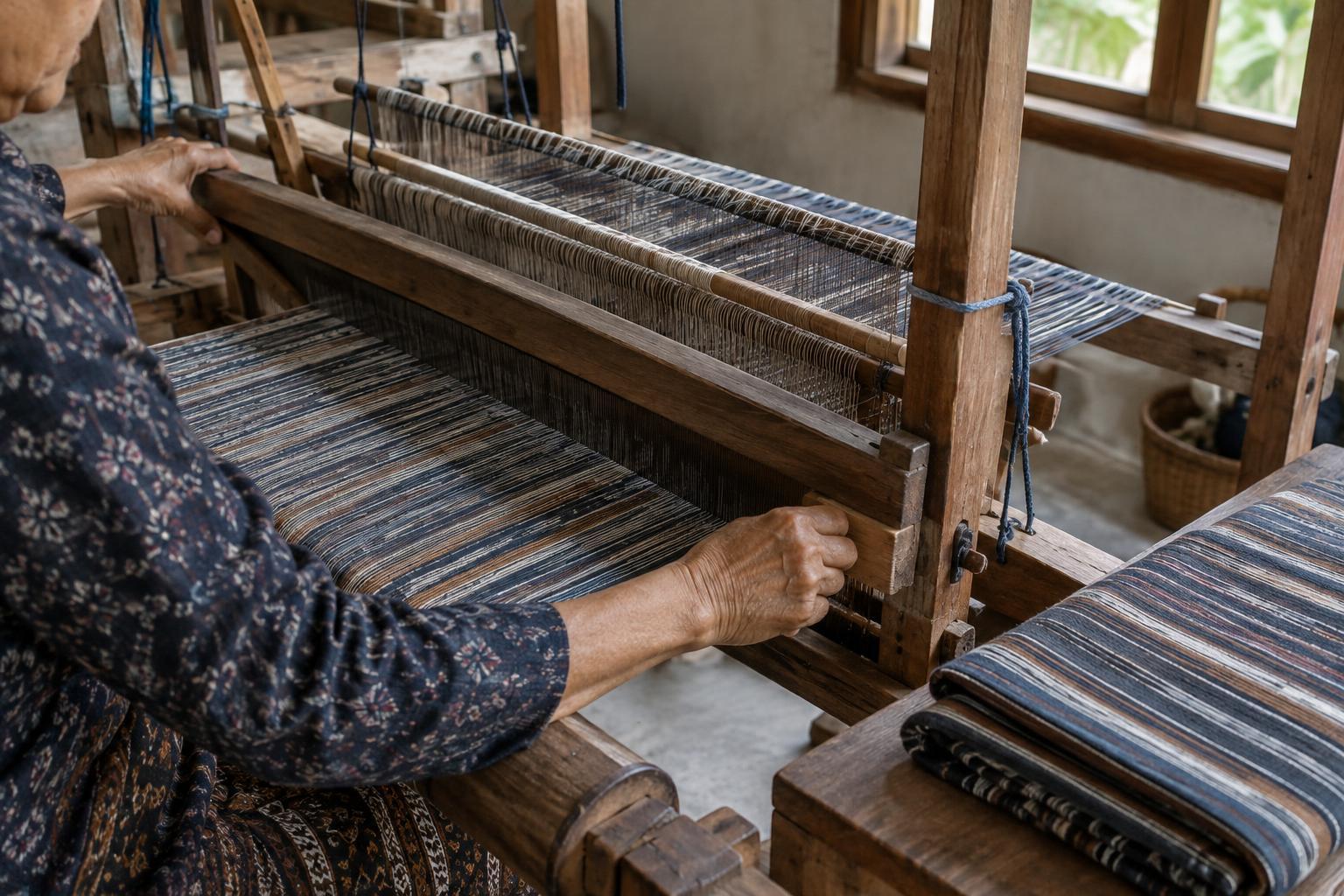
Much of a striped lurik’s appearance is decided before weaving begins. The maker selects yarn colors and arranges the lengthwise threads, called the warp, in a planned sequence. Changing the number and order of threads changes the width and spacing of the stripes. The crosswise thread, or weft, passes through the warp and affects how the finished colors appear.
Preparing the warp requires care: the threads need to be measured, kept in order and placed under workable tension. On a handloom, the weaver raises groups of warp threads and sends the weft across, building the fabric row by row. The cloth is then removed from the loom and finished for use. Yarn, dye, loom and finishing choices all influence its texture and weight.
Not every striped fabric is made in the same way. Some lurik is handwoven, while other cloth is produced with more mechanized equipment. If the method matters to you, ask how a particular piece was made rather than assuming that its stripes reveal the answer. Looking closely at the cloth can be rewarding, but appearance alone may not tell its full production story.
From everyday wraps to contemporary clothes
Lurik can be worn as a length of wrapped cloth or made into garments such as shirts, blouses and outer layers. Its straight lines also lend themselves to bags, table textiles and other useful objects. In a tailored piece, the direction of the stripes becomes part of the design: a maker may align them across a seam or turn a panel to create contrast.
Ways of wearing lurik depend on the setting. Someone might choose a simple shirt for ordinary use, while a more carefully coordinated outfit may suit a gathering or cultural occasion. Pattern meanings and preferred colors can differ between communities and contexts. If a seller describes a design as carrying a particular meaning, it is useful to hear that as information about the piece and its setting, not as a rule for all lurik.
For a visitor, paying attention to use can be as interesting as studying pattern. Notice whether a fabric feels light enough to fold and wrap, firm enough for a bag, or comfortable as a shirt. Those practical qualities help explain why a woven tradition continues to find new forms.
What to notice when choosing a piece
Start with the cloth itself. Hold it up to see how the stripes run, then feel its weight and surface. Check that a garment fits comfortably and that seams sit where they should. If you plan to wear the fabric often, ask how the seller recommends washing it, especially when colors contrast strongly. Following the care guidance for that particular item is safer than assuming every piece will behave alike.
Questions can open a useful conversation without turning a purchase into an interrogation. You might ask what fiber was used, whether the cloth was woven by hand or machine, and whether the seller knows where the weaving was done. An honest answer may be detailed, limited or simply uncertain. Let what you learn guide your choice, and avoid treating a higher price or a slight irregularity as proof of a particular method.
Lurik is easiest to appreciate when its visual appeal and everyday purpose stay together. Its stripes begin with decisions about threads, become cloth through weaving, and take on new character when wrapped, cut or sewn. Whether you take home a garment or just spend time examining the fabric, that path from planned lines to something useful is the heart of the craft.