Why explore silverwork in Kotagede?
Kotagede, a historic neighborhood of Yogyakarta, is closely associated with silver craft. A walk through its lanes can bring you past shops displaying jewelry, small decorative pieces and household objects. Looking beyond the finished display makes the visit more rewarding: two pieces of similar size may involve very different techniques, amounts of handwork and approaches to design.
You do not need to know much about metalwork before entering a shop. Start by noticing how an object is made. Is its pattern built from fine strands, raised from a sheet of metal, engraved into the surface or assembled from several parts? Asking which steps were done by hand can open a useful conversation without assuming that every item on sale was made in the same place or manner.
Filigree: drawing with fine wire
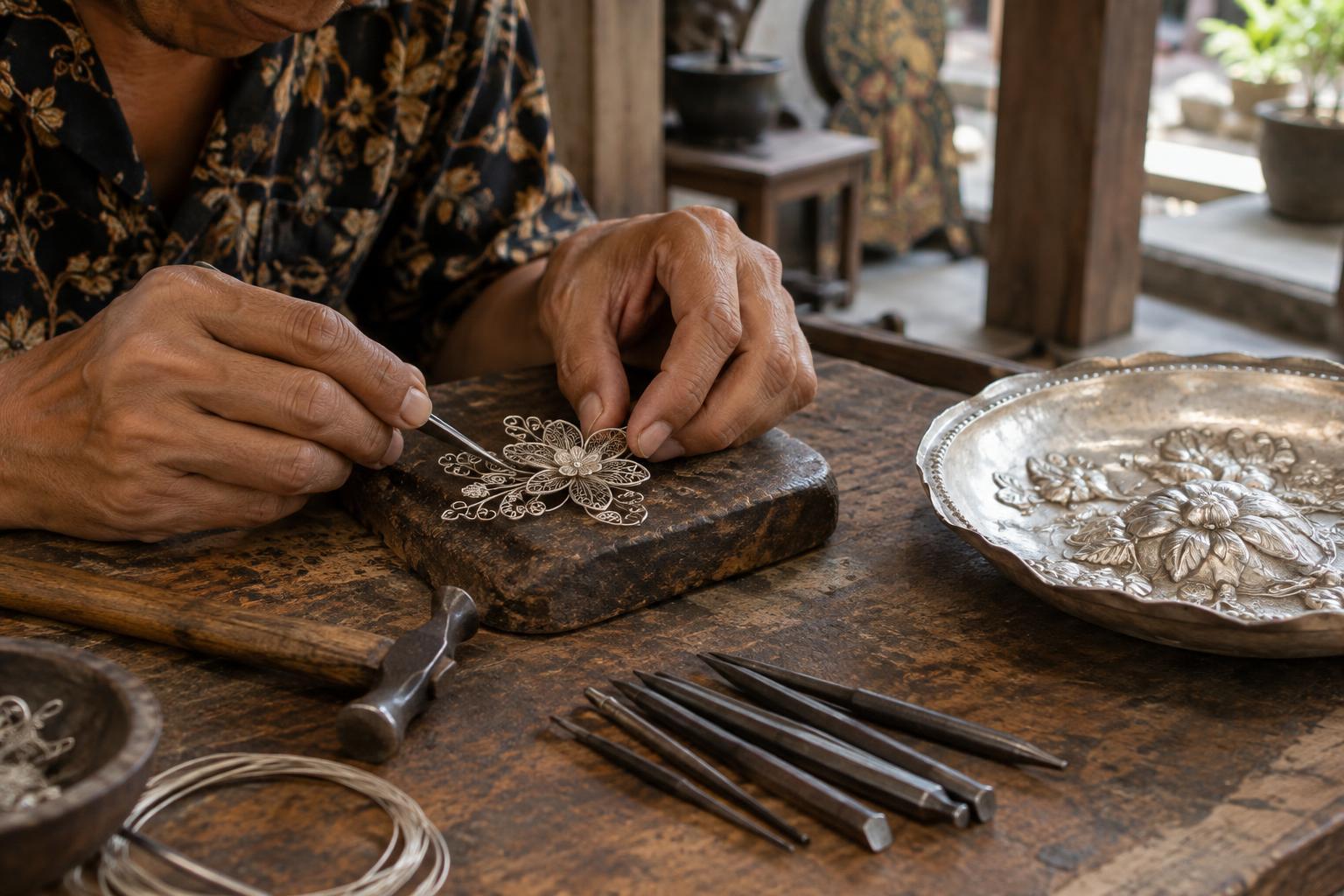
Filigree uses thin metal wire shaped into curls, loops and other patterns. The shaped elements are arranged and joined to create an open design or to decorate a solid backing. The appeal often lies in the spaces between the wires as much as in the silver itself: light passing through an earring or pendant makes a dense pattern look airy.
When examining filigree, look at the joins and the overall symmetry. Fine work can be delicate, but it should not feel as though an element will come away with ordinary handling. If you plan to wear the piece often, consider whether its edges might catch on clothing and whether its clasp or attachment feels secure. A highly intricate design may be better suited to occasional wear than to a crowded travel day.
Repoussé: shaping relief from metal
Repoussé creates a raised design by working a sheet of metal from the back. The maker gradually pushes areas outward to form relief, sometimes refining details from the front with a related technique called chasing. The resulting design can have a softer, sculpted depth than a pattern simply cut or stamped into the surface.
On a repoussé piece, view the design from several angles. Changing light can reveal the height of a motif and the texture of the surrounding metal. Slight variations need not be flaws; they may be part of the character of hand shaping. More important for a functional object is whether its form suits its use: a box should close comfortably, for example, while a pendant should sit as you expect when worn.
Questions that make buying easier
Decide first what you want the object to do. A small, wearable piece has different requirements from a decorative bowl or framed ornament. Think about weight, ease of packing, cleaning and how often you will use it. If you are comparing prices, compare similar materials and construction rather than size alone; intricate assembly and finishing can affect the amount of work involved.
Ask what the item is made from and whether any parts are plated, filled or made from another metal. If a seller describes a piece as sterling silver, ask what that description applies to, particularly if the object includes a chain, clasp, stones or other components. A mark may be helpful, but it is not a complete explanation of an object’s materials or origin. For a significant purchase, request a receipt that records the seller’s description and any care information offered.
It is also reasonable to ask whether a piece was made locally and whether you can see any stages of production. A workshop visit can help you understand the process, but a shop display alone does not establish who made an individual item. If a demonstration is available, follow the maker’s guidance about where to stand and when photographs are welcome. Taking time to ask before photographing people or work in progress is a simple way to be a considerate visitor.
Choosing a piece you can enjoy for years
Handle an item, when invited, and check the details that matter to you: comfortable edges, sturdy connections, a clasp you can operate and a finish you genuinely like. Silver can tarnish over time, so ask how the seller recommends cleaning the particular piece. Open filigree, textured relief and objects with stones may need more careful handling than a plain, smooth surface.
The most satisfying purchase is not necessarily the most elaborate one. A modest piece can carry a clear example of a technique and remind you of a conversation about how it was made. Leave room in your visit to compare styles, ask questions and choose without rushing. Kotagede’s silverwork becomes easier to appreciate when you see each object as a combination of material, skill and intended use—not just as a souvenir.