A cup brewed without a filter
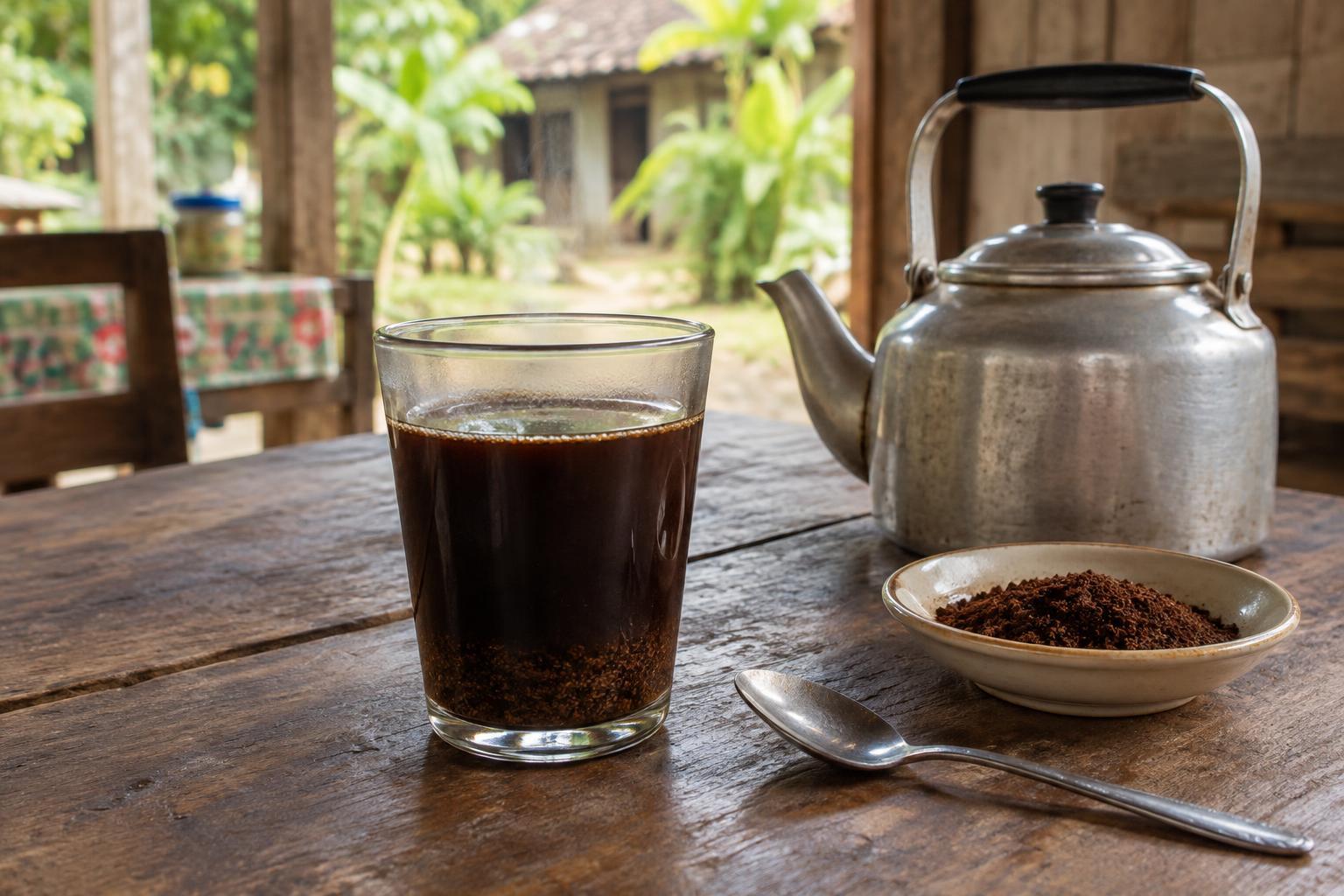
Kopi tubruk is coffee brewed by putting ground coffee directly into a cup and pouring hot water over it. There is no paper filter to remove the grounds before serving. Instead, the drink rests for a few minutes while much of the coffee sinks to the bottom. It is a straightforward method that needs little equipment, but the pause before drinking is part of making a satisfying cup.
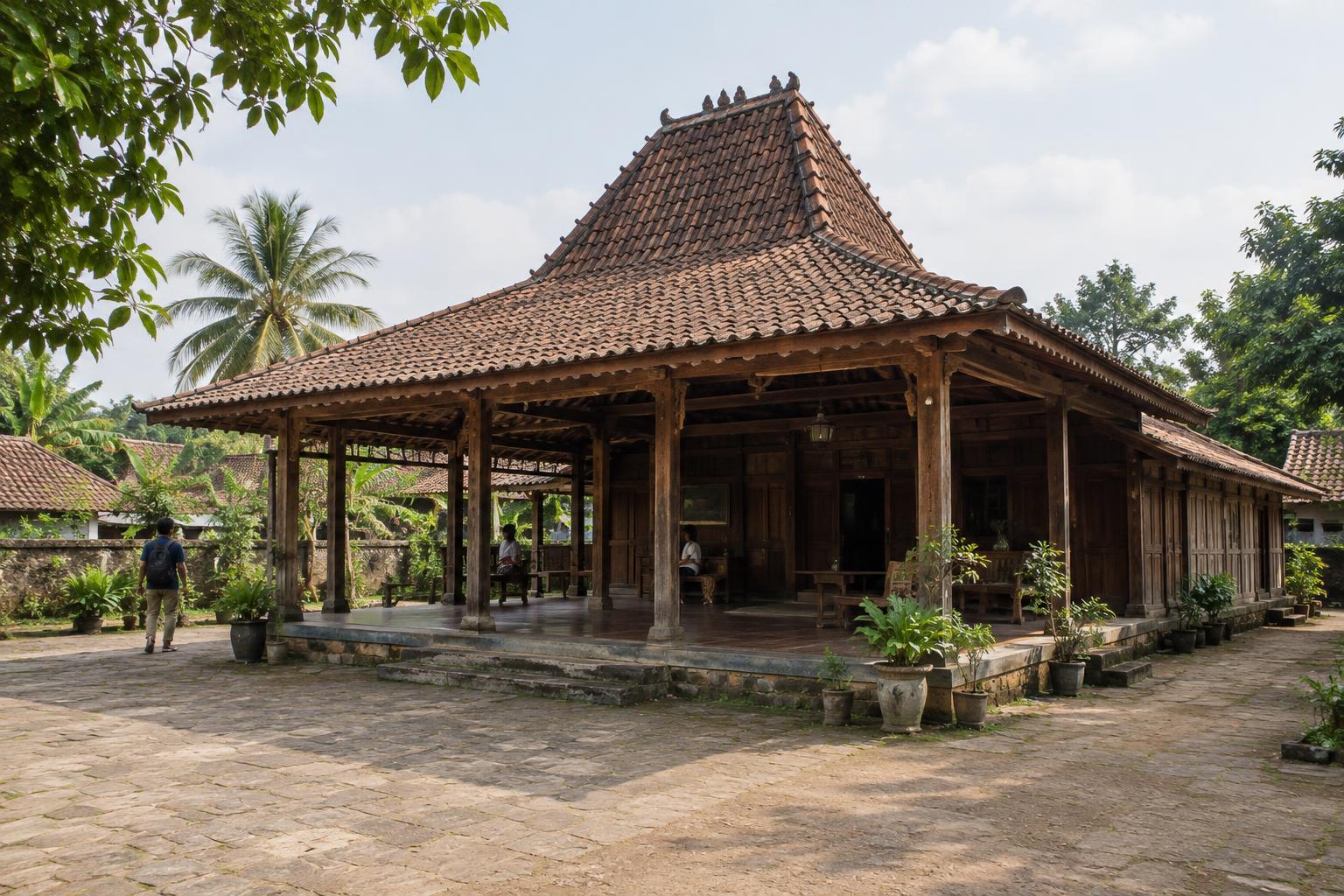
In Java, you may encounter kopi tubruk at a modest food stall, a roadside stop, or someone’s home. A cup might arrive already sweetened, or sugar might be offered separately. Preparation varies from place to place, so it is worth asking if you have a preference. What stays recognizable is the combination of coffee, hot water, and grounds left in the cup.
How to make it
To try it yourself, put ground coffee in a sturdy cup. Start with roughly one or two teaspoons for a small serving, then adjust to taste. A fairly fine grind is often used, though it need not be measured precisely. Add sugar now if you want the sweetness mixed throughout the drink. Pour in hot water that has just come off the boil, leaving enough room to stir without spilling.
Stir briefly to wet the grounds, then leave the cup undisturbed for several minutes. Some particles may float at first; most will gradually settle. If the surface still looks crowded with grounds, give it a little longer rather than repeatedly stirring. There is no single required ratio or waiting time: cup size, grind, and personal preference all affect the result.
Drinking around the grounds
Take the first sip carefully, both because the coffee may be hot and because loose grounds can remain near the surface. Once the drink has settled, sip from the top without swirling the cup. As you reach the bottom, you will see a layer of wet coffee sediment. Leaving that final mouthful behind is normal; trying to finish every drop usually means drinking the grounds too.
Kopi tubruk can taste different as you work through the cup. The time the water spends in contact with the coffee continues to increase, and a disturbed cup may bring more sediment into a sip. If you prefer a cleaner texture, let it rest longer and move it gently. If you enjoy a stronger cup, you can adjust the amount of coffee next time rather than relying on stirring up the bottom layer.
Ordering and serving in Java
When ordering, “kopi tubruk” makes the brewing style clear, but it does not necessarily specify sweetness. If you want to avoid a misunderstanding, ask whether sugar is included or request it separately. At a small stall, the coffee may be served in a glass; elsewhere, it may come in a mug or cup. Give it a moment to settle even if it arrives ready to drink.
There is no need for a special ritual. Kopi tubruk suits an unhurried break alongside a meal or a conversation. If you are offered a cup in someone’s home, following your host’s lead on when to drink is an easy courtesy. Be mindful that individual vendors and households have their own habits: one cup may be lightly sweet, another intensely sweet, and another unsweetened.
What makes the method worth trying
Part of kopi tubruk’s appeal is that its preparation is visible. You can see the grounds before the water goes in, watch them settle, and decide when the cup is ready for you. It is also easy to repeat at home without buying a brewer. Good results depend less on specialized gear than on using coffee you like, adding water carefully, and allowing enough time for the drink to clear.
For a visitor exploring Java’s everyday food and drink, kopi tubruk offers a small lesson in slowing down. Ask for the sweetness you prefer, wait before sipping, and leave the sediment at the bottom. Those simple habits make an unfiltered cup approachable, whether you drink it at a neighborhood stall or prepare it in your own kitchen.