A lake shaped by an active volcano
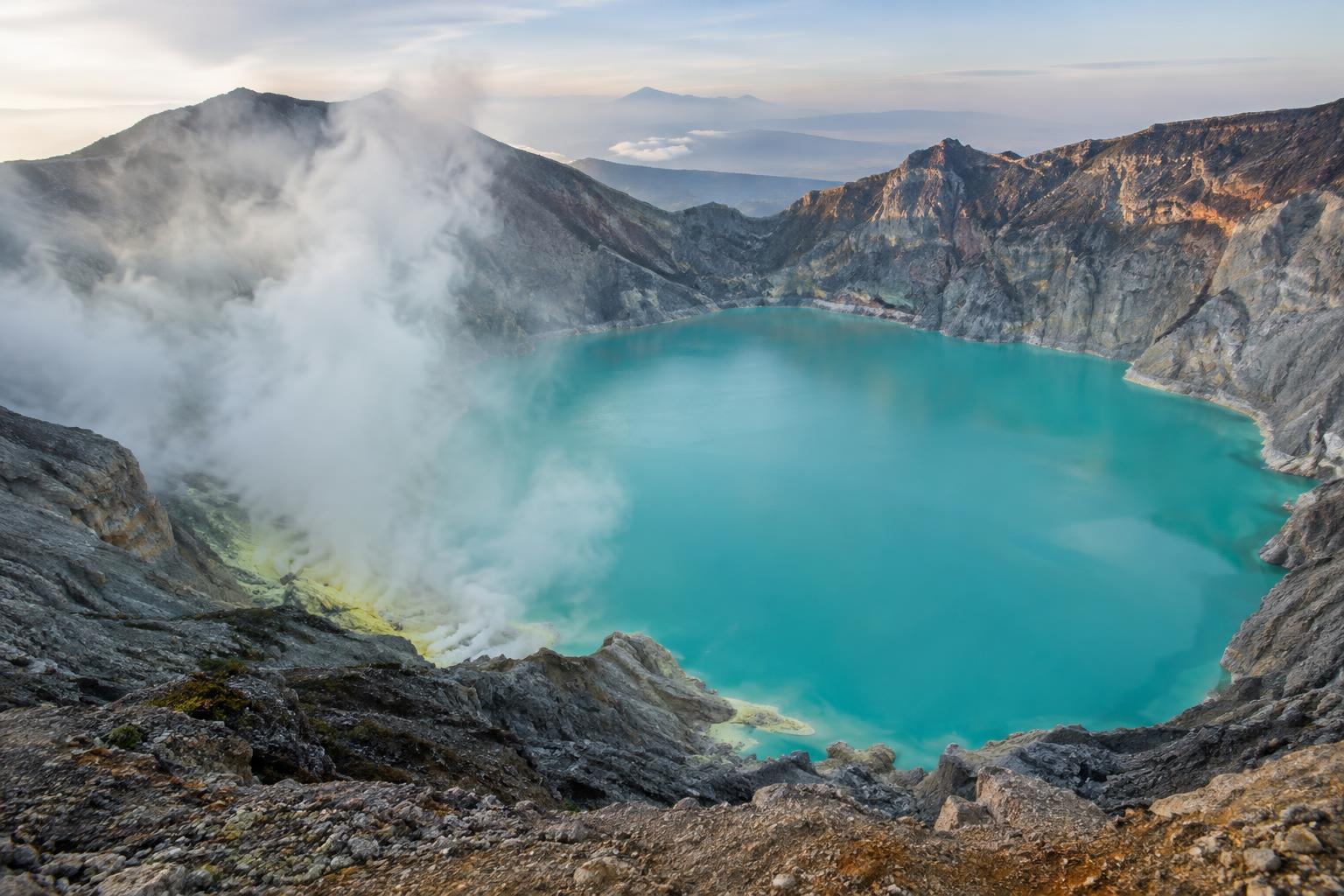
Kawah Ijen, in eastern Java, holds a crater lake unlike an ordinary mountain lake. Volcanic gases and minerals influence its water, while pale slopes, rocky walls and rising vapor frame the view. The lake is often described as turquoise, but its appearance can change with light, weather and the observer’s position. On a clear day, its color may stand out sharply against the surrounding terrain; in mist or harsh glare, the same scene can look muted.
The lake’s beauty should not obscure its character. Its water is highly acidic, and the crater is part of an active volcanic environment. This is a place to observe from permitted viewing areas, not to touch the water or treat the shoreline as a place to explore freely. Keeping that distinction in mind helps visitors appreciate the landscape without mistaking a vivid color for a sign of safety.
What sulfur adds to the scene
Sulfur is one of Ijen’s most recognizable features. Yellow deposits can be visible near vents, and the smell of sulfurous gas may reach visitors when the wind shifts. Fumes are not simply a scenic detail: their concentration and direction can change quickly. A viewpoint that feels comfortable one moment may become unpleasant the next, particularly closer to gas-emitting areas.
The crater is also associated with sulfur mining. If workers are present, give them room on the trail and avoid blocking their route for photographs. Their activity is part of the landscape visitors encounter, but it is not a performance. Ask before making a close portrait, and accept a refusal without pressing the matter.
Ijen’s often-discussed “blue fire” is separate from the color of the lake. It refers to flames associated with burning sulfurous gases under suitable conditions, most visible in darkness. It is not a feature to expect on every visit, and seeking it may involve different visibility and exposure concerns from a daytime view of the lake. Do not leave an authorized route in pursuit of it.
Choosing where and when to look
For many visitors, the crater rim offers the most straightforward way to take in the lake and its setting. Even there, conditions vary. Cloud can hide the water, wind can carry fumes across the path, and loose or uneven ground calls for attention underfoot. A photograph rarely conveys the slope, the exposure or the effort involved in reaching a viewpoint.
Before setting out, check the current access rules and local volcanic safety information through the relevant authorities or your accommodation. Routes and permitted areas may change when conditions warrant it. If a path is closed, a barrier is in place, or staff direct visitors to turn back, treat that as the limit of the visit rather than an invitation to find another way down.
Starting in darkness to reach an early view is common, but it adds navigation challenges. A working light, shoes with reliable grip and enough time to walk at a steady pace are more useful than rushing for a particular photograph. A daylight visit can also be rewarding, depending on conditions and permitted access.
Practical precautions in a changing environment
Stay on open, designated routes and keep well back from unstable edges. Do not descend toward the lake or vents unless that route is explicitly open and conditions allow it. If fumes blow toward you or breathing becomes uncomfortable, move away rather than waiting for the air to clear. Children and anyone who may be more sensitive to poor air quality need particular care; if you are unsure whether the conditions are suitable for you, consider choosing a less exposed outing.
A face covering should not be treated as permission to enter a gassy area. Respiratory protection has limits and depends on the equipment, its fit and the conditions. Follow on-site instructions, and be prepared to abandon the view if the wind or visibility changes. Carry water, a layer for cool or windy conditions and a way to light the path if you expect to walk before sunrise or after sunset.
The best Ijen experience does not depend on getting as close as possible. Watching the lake from an authorized viewpoint, noticing how its color shifts, and giving both the terrain and other people space can make for a more thoughtful visit. In a volcanic landscape, knowing when to step back is part of seeing it well.