Why rice fields form steps
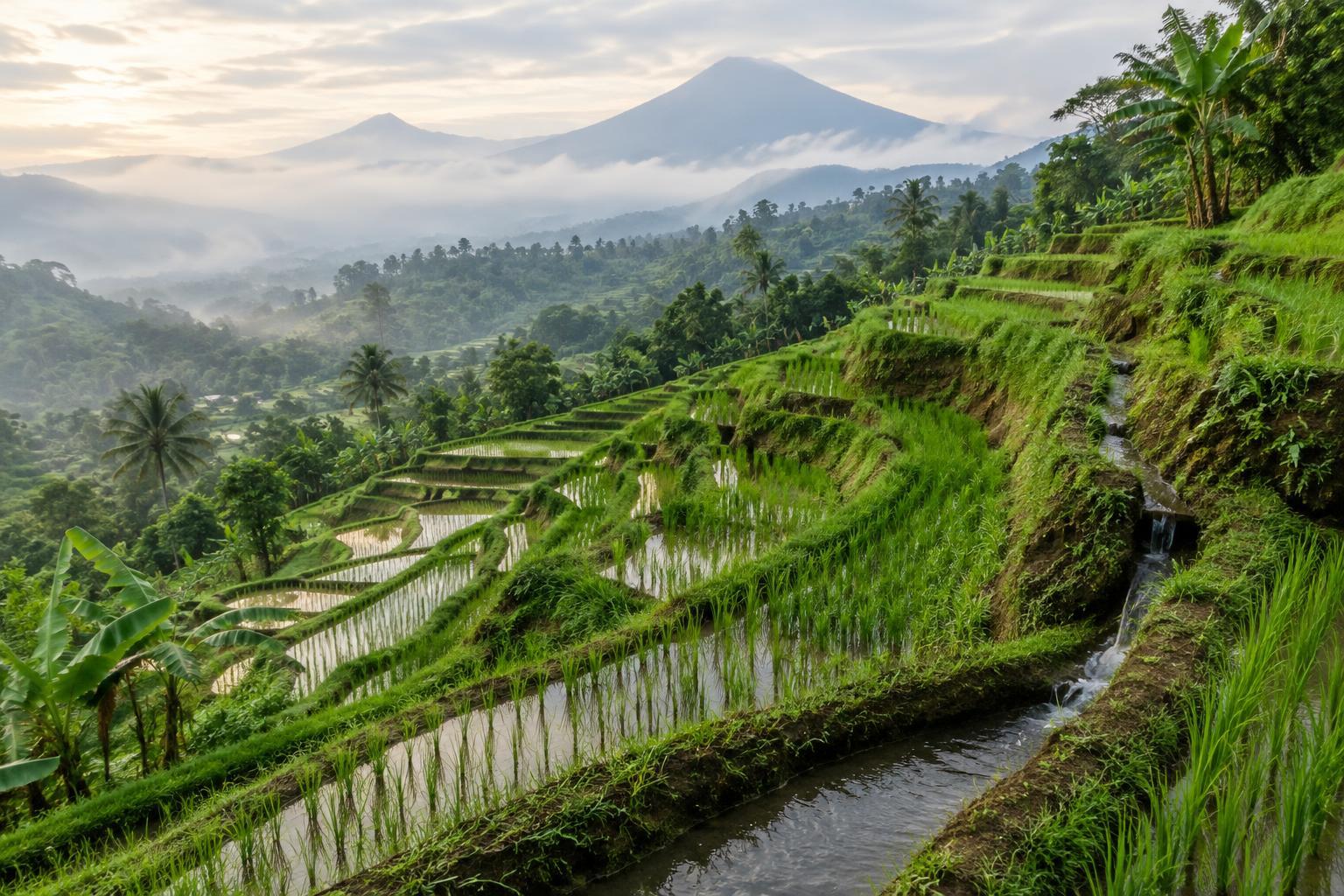
On a steep hillside, a single broad rice field would be difficult to level and water evenly. Terraces divide the slope into smaller, flatter plots held by earthen banks or other retaining edges. From a distance, those plots create the curves and bands that make terraced landscapes so distinctive. Up close, the shapes often look less regular: each terrace responds to the hillside beneath it.
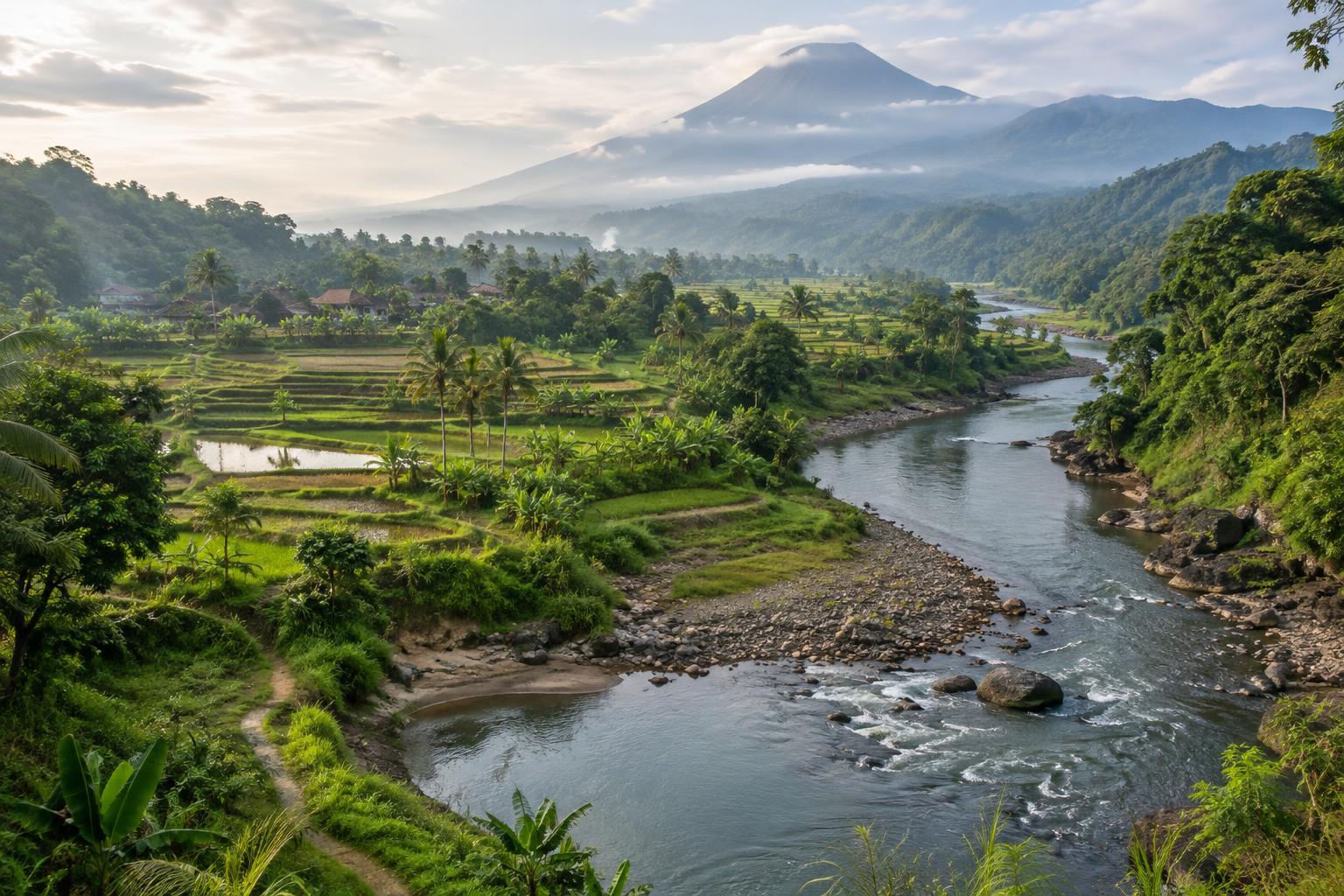
Not every rice field in Java is terraced. On gentler ground, paddies may spread across broad valley floors; on steeper land, plots tend to become narrower and more stepped. Looking across a landscape, you can often trace that change in the terrain through the changing size and shape of the fields. Paths, trees, houses and garden crops add another layer to the view, showing that the terraces are part of a lived-in landscape rather than a stand-alone attraction.
Following the water
Terraces make it possible to hold shallow water on sloping land, but their stepped form is only part of the story. Small channels bring water toward the fields, while openings between plots help direct its movement. Gravity can carry water downhill, so the position of an upper field may affect what reaches those below it. Banks, channels and crossings all need attention to keep that movement useful rather than damaging.
Water availability varies with location and season, and not every paddy is flooded at every stage of cultivation. A dry-looking terrace is not necessarily abandoned. It may be between crops, newly prepared, or used in a way that calls for less standing water. Instead of expecting one familiar image of bright green, it helps to notice where water enters a field, where it leaves, and how the plots fit together across the slope.
A landscape that changes with the growing cycle
The same hillside can look markedly different as work in the fields progresses. Recently prepared plots may reflect the sky in patches of water. Young rice can appear as fine lines or a soft green covering; fuller growth makes terrace edges less prominent. Later, fields may take on warmer tones before cutting, while harvested plots reveal the banks and soil again. Neighboring fields may also be at different stages, creating a patchwork rather than one uniform color.
These changes are a reminder that the scenery is shaped by ongoing work. People maintain banks, tend crops and move along narrow paths that may look, to a visitor, like convenient walking routes. A viewpoint offers a chance to appreciate the pattern, but observing a field at closer range calls for more care: the firm-looking edge of a paddy may be fragile, and stepping off a path can damage a bank or crop.
Reading the wider hillside
Rice terraces rarely fill every part of a slope. Trees may mark a stream, provide shade near homes, or grow where cultivation takes another form. Roads and footpaths connect fields to settlements, while drainage lines cut through the broader pattern. These features help explain why terraces bend, stop or begin again instead of forming perfect parallel stripes.
When taking in a view, try looking beyond the most vivid section of green. Find the upper edge of the cultivated area, then follow the steps downhill. Notice where a channel crosses the slope and where the plots widen as the land becomes gentler. This way of looking reveals both the practical decisions behind the terraces and the varied textures that make the scenery compelling, even when the fields are not at their greenest.
Visiting working fields thoughtfully
A good visit begins with choosing a public road, established path or clearly designated viewpoint. Access that looks open on a map may lead through private land or an area needed for farm work. If a route is unclear, ask locally before continuing, and turn back if a path narrows into a field bank. Avoid blocking channels, moving irrigation barriers or crossing planted plots for a photograph.
Wear footwear suited to uneven, possibly muddy ground, and allow extra time rather than hurrying along narrow edges. A wide view from a safe stopping place can show the hillside and water system better than a close-up taken from inside a field. Rice terraces reward that slower approach: their beauty lies not only in their geometry, but in the relationship between land, water and everyday care.