Think in conditions, not fixed calendar dates
Java is often described as having rainy and dry seasons, but those labels are a starting point rather than a promise about any particular day. Conditions can differ between the coast, inland valleys and mountain slopes. A morning may begin clear and turn cloudy later, while nearby areas receive very different amounts of rain. If an outdoor stop matters to you, leave room in your plans to change the order of your activities.
The two seasons also bring different kinds of beauty. Rain can make vegetation look lush and bring movement to streams and waterfalls. Drier weather may make some paths easier to walk and improve the chances of an open view. Neither season guarantees a particular experience: recent weather, local terrain and conditions on the day matter just as much.
What rain and dryness do to trails
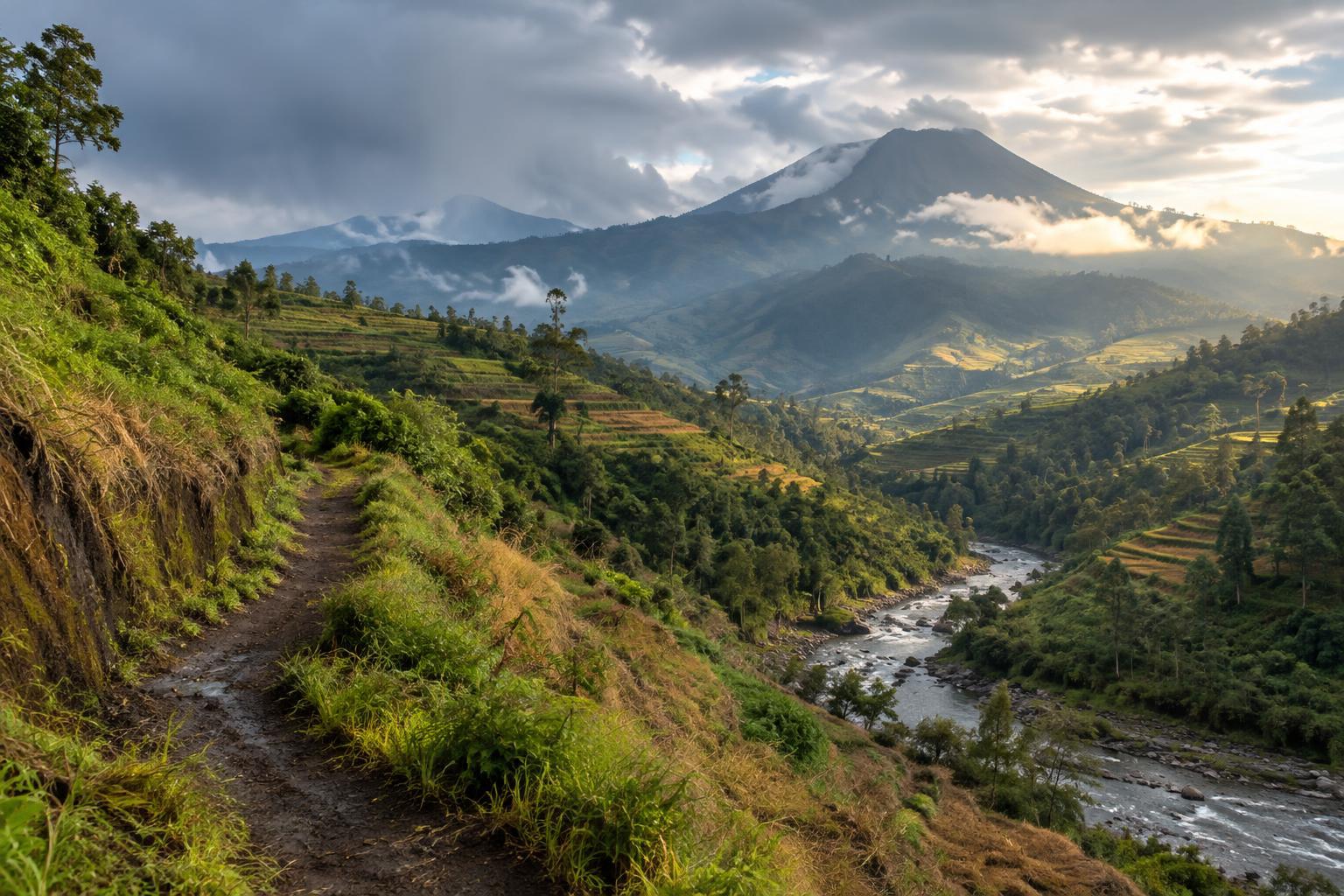
On a rainy-season walk, a path that looks simple on a map may be muddy, slippery or crossed by running water. Stone steps and exposed roots deserve particular care, especially on descents. Shoes with dependable grip are more useful than footwear chosen only for warm temperatures. Carry a light rain layer, protect anything that should stay dry and allow extra time so you do not feel pressed to move quickly.
Dry-season trails can feel firmer underfoot, but they have their own demands. Open sections may offer little shade, and dusty or loose surfaces can still make steep ground awkward. Bring drinking water and consider starting exposed walks earlier in the day. Whether it is wet or dry, turn back if the route no longer feels comfortable; reaching a viewpoint is optional, while getting back safely is essential.
Before setting out, ask locally about the specific route rather than assuming that every trail in an area is in the same condition. Access, maintenance and weather damage can vary from one path to another. On walks through farms or villages, stay on established routes and follow signs so that a nature outing does not disrupt the people who use the landscape every day.
Rivers and waterfalls: more water is not always better
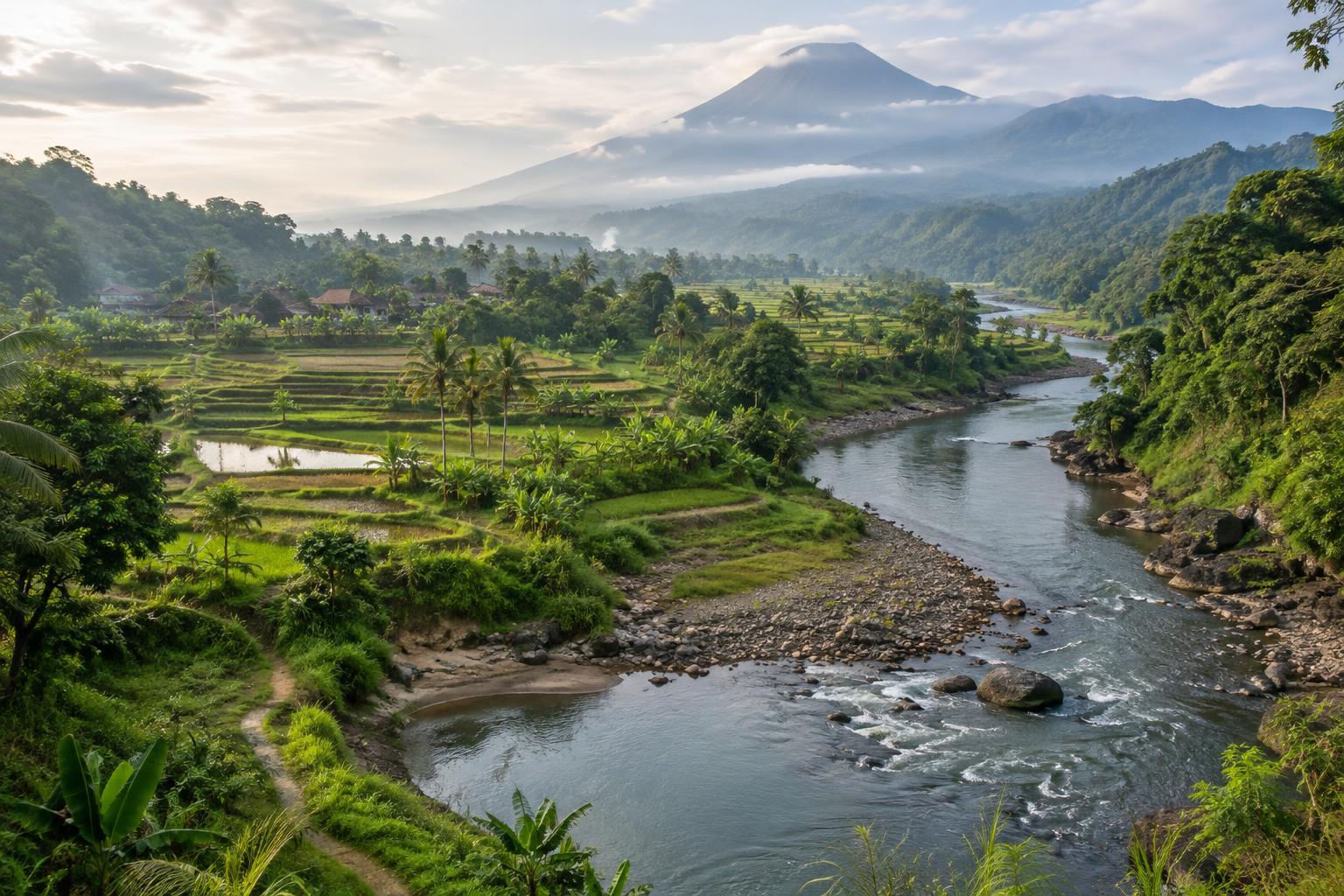
Rain can make rivers and waterfalls especially striking, but it can also make water faster, muddier and harder to judge. Rain upstream may affect a river even when the spot where you are standing looks dry. Keep well back from steep banks and strong currents, and do not treat a shallow-looking crossing as safe without reliable local guidance. A waterfall can still be rewarding when viewed from a designated path or lookout rather than from the water’s edge.
In drier periods, some smaller streams or falls may carry less water. That can change the scene you hoped to photograph, but it may also reveal rock formations and riverbanks that are less visible at other times. Avoid stepping onto smooth-looking rocks simply to get closer: they can be unstable or slick. If a site has marked boundaries, use them as your guide regardless of how calm the water appears.
Views are shaped by clouds, light and patience
Java’s hills and volcano viewpoints can change character within hours. Clouds may hide a distant ridge, then briefly open to show its outline. Rainy weather can add mist and layered greens, while a clear dry day may offer a broader panorama. Haze, however, can soften distant features even when there is no rain. It helps to plan a viewpoint visit as time outdoors, not as a guaranteed photograph.
If you have a choice, give yourself more than one opportunity for a view instead of building a whole trip around a single tightly timed stop. A sheltered café, a village walk or a nearby cultural visit can provide an alternative if clouds settle in. When visibility is poor on a mountain path, pay closer attention to the route than to the prospect of waiting for the sky to clear.
Build flexibility into a landscape day
A useful plan pairs one weather-sensitive activity with a simpler backup. Check the forecast and local conditions before leaving, then reassess when you arrive. Pack for the ground as well as the sky: suitable shoes, water, sun protection and a way to keep belongings dry cover many ordinary changes of weather. For longer or more remote routes, make sure someone knows your intended destination and return plan.
Above all, let the conditions guide the experience rather than trying to force the day you imagined. Rain might turn a long hike into a short walk among green fields; a dry riverbed might lead you to spend more time noticing the surrounding slopes. Seeing how weather reshapes familiar places is part of discovering Java’s landscapes.